Artwork
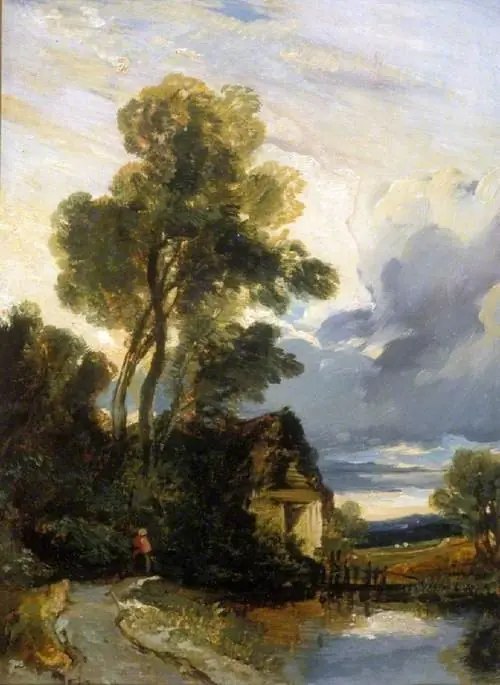
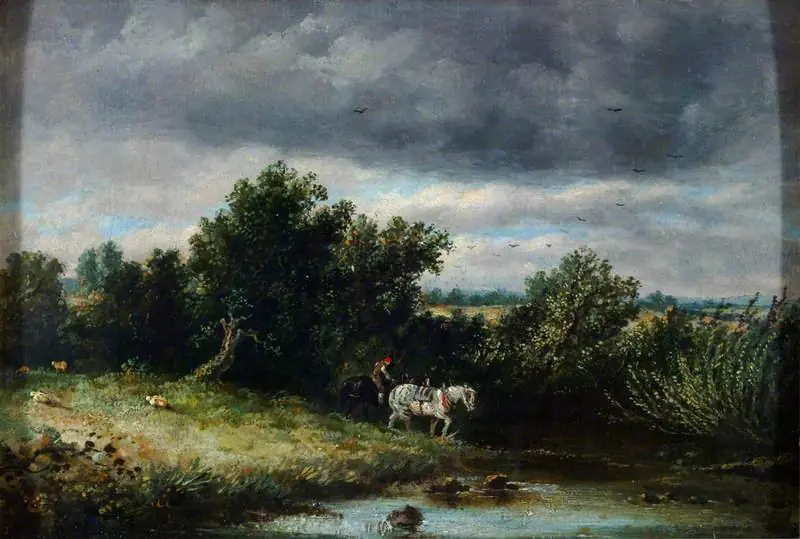
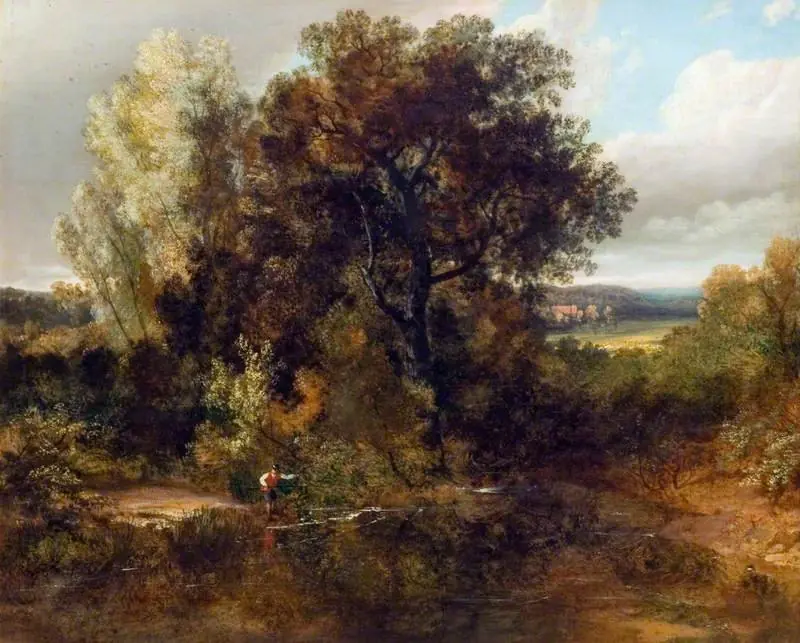
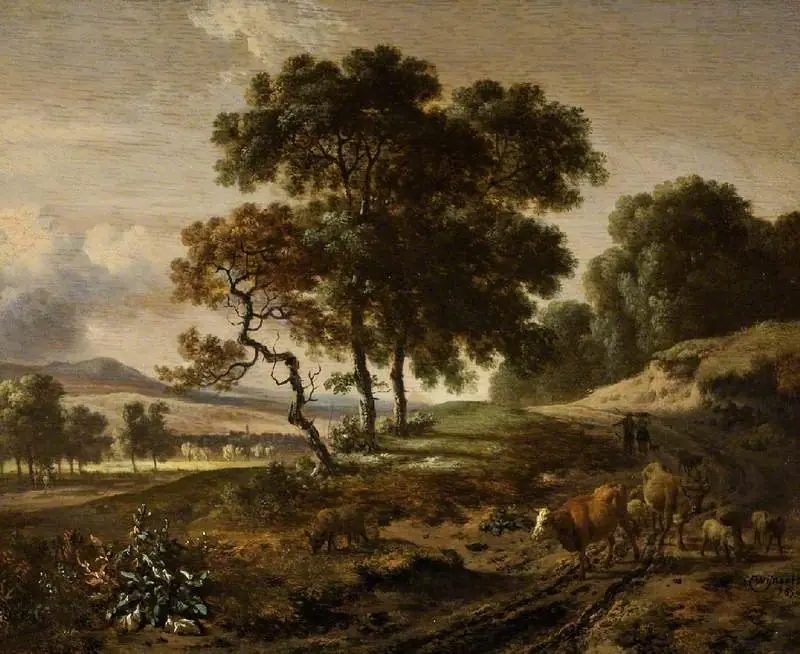
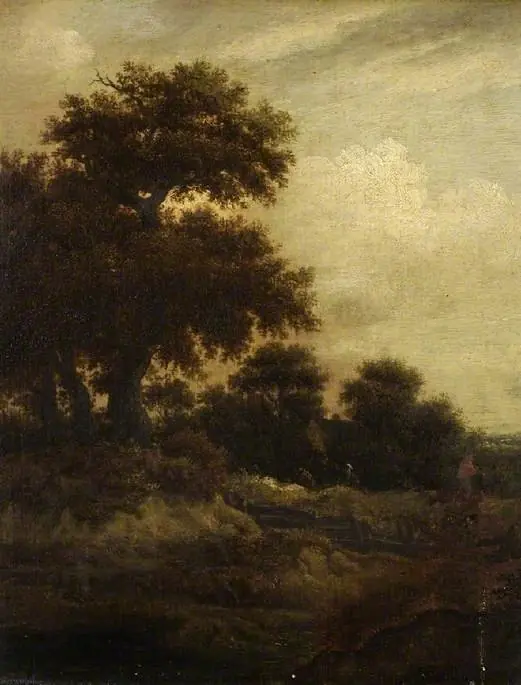
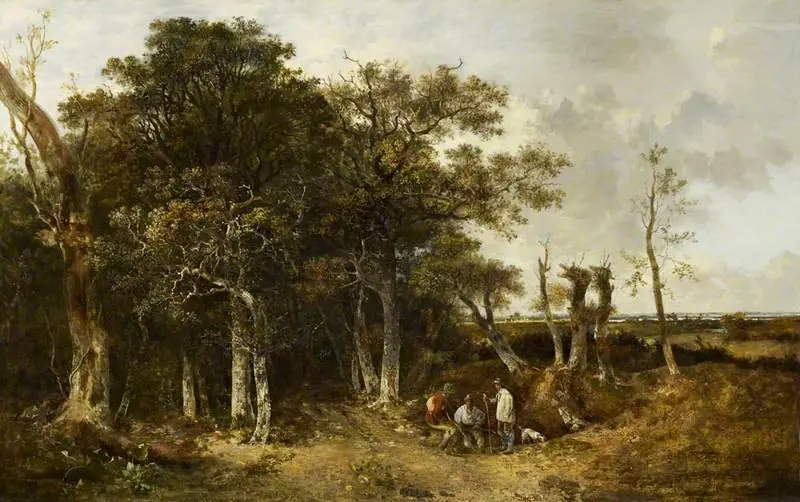
Landscape with a Horseman
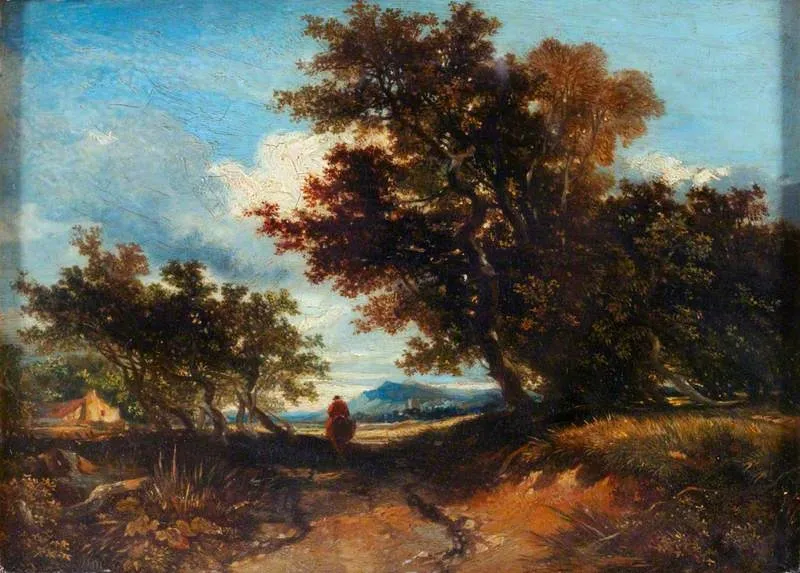
Landscape with a Horseman is an oil painting by William James Müller. It dates from 1838 and is held in the collection of the Victoria and Albert Museum.
About this work
Overview
Painted around 1838 by William James Müller, this small-scale work on copper reflects the Bristol School’s interest in intimate, observed landscapes.
Painted around 1838 by William James Müller, this small-scale work on copper reflects the Bristol School’s interest in intimate, observed landscapes. The use of a metal support allowed for fine detail and a smooth, luminous surface, distinguishing it from canvas-based works of the period. Its quiet composition and restrained palette align with early 19th-century British landscape traditions that favored naturalism over grandeur.
Subject & Meaning
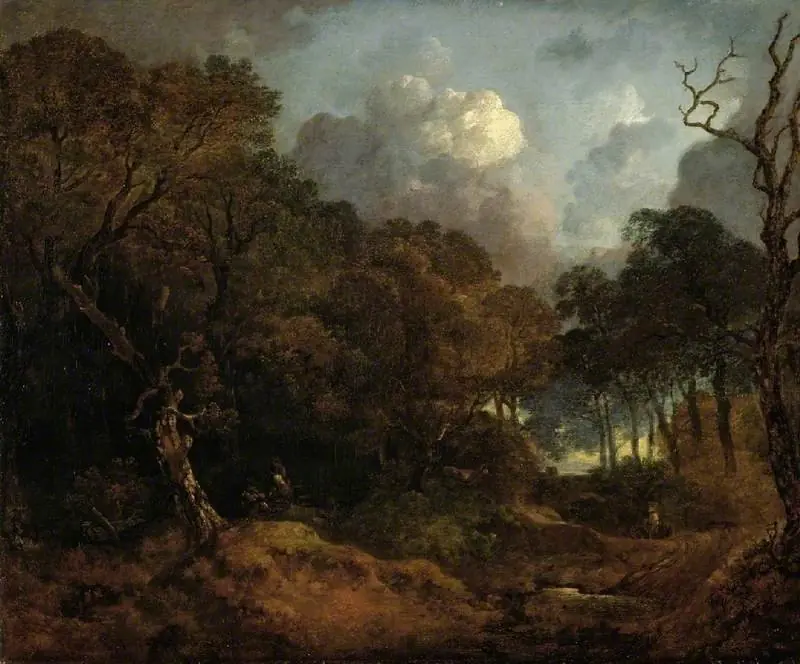
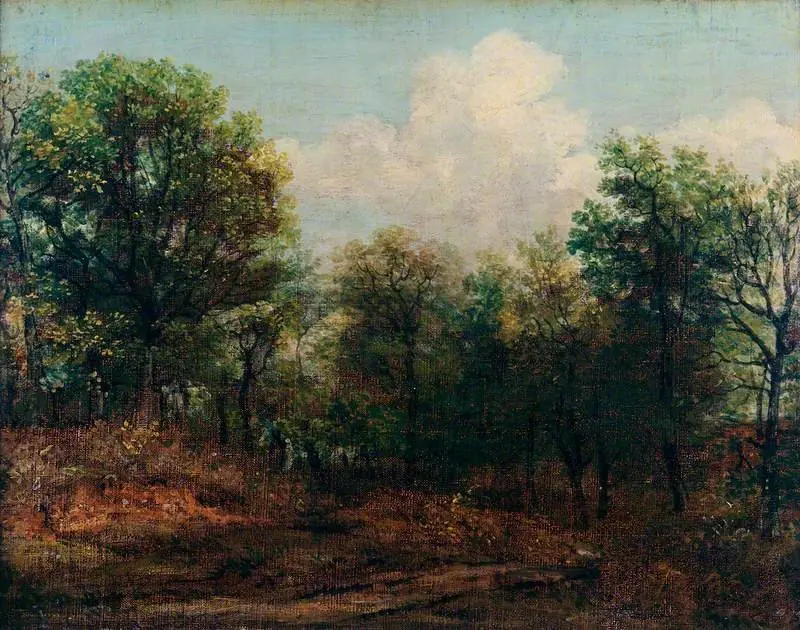
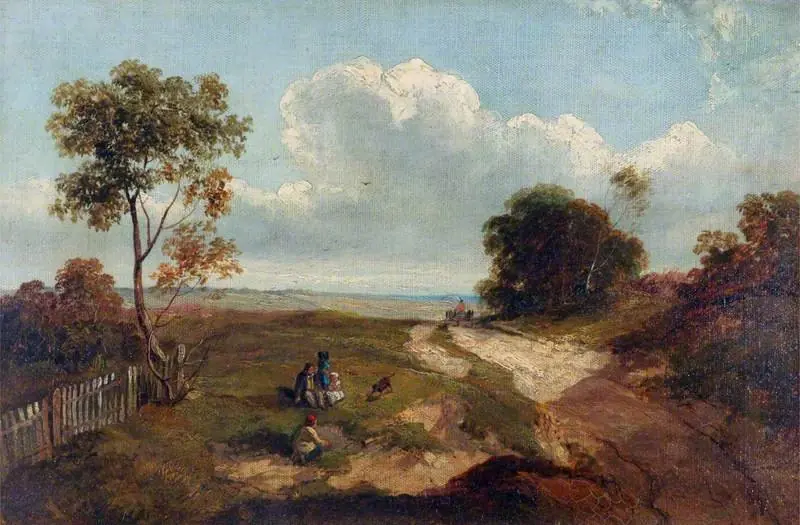
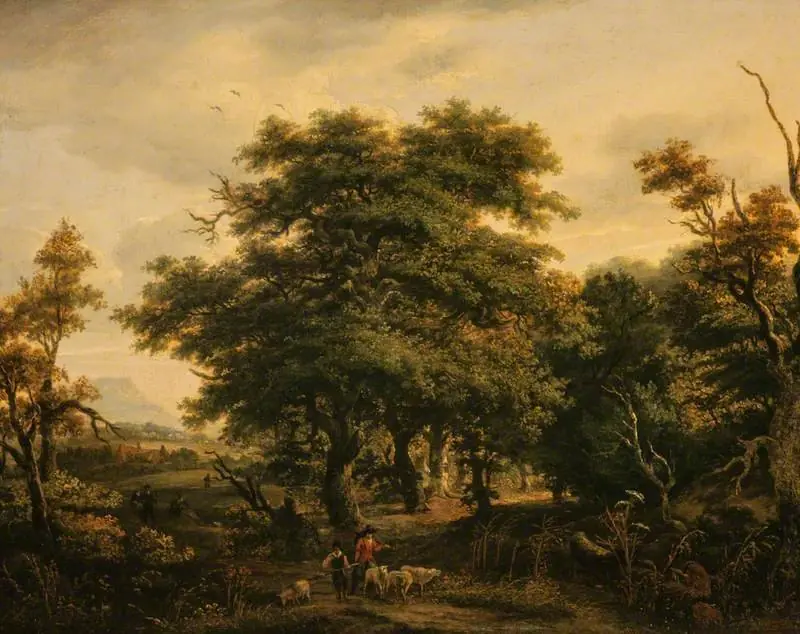
A solitary horseman rides along a winding path, receding into a gentle countryside. His small scale emphasizes the vastness of the natural setting rather than individual narrative. The figure’s motion is subtle, suggesting passage rather than arrival, reinforcing a mood of contemplative solitude. No symbolic or historical context is overt; the focus remains on the harmony between human presence and the quiet rhythms of the land.
Technique & Style
Müller employed fine, visible brushwork to render textures—leafy foliage, the horse’s mane, and the earthy path—with precision. The copper support enhanced the clarity of tones and allowed for delicate glazing, contributing to the muted, earthy palette of greens, browns, and soft blues. Light is diffused evenly, avoiding dramatic contrasts, while the brushstrokes retain a tactile energy that animates the stillness of the scene.
History & Provenance
The painting entered the collection of the Victoria and Albert Museum, where it remains part of its holdings of 19th-century British art. Though not widely exhibited, it reflects Müller’s consistent output during his time in Bristol and his engagement with the region’s artistic circles. Its survival in good condition speaks to its careful preservation within institutional collections.
Context
Created during a period when British artists increasingly turned to rural subjects as industrialization reshaped the landscape, this work embodies a quiet resistance to urbanization. Müller’s approach, rooted in direct observation rather than idealized composition, aligned with contemporaries who sought authenticity in nature. The copper support, though uncommon, was favored by some for its durability and fine finish.
Legacy
While Müller is not among the most widely recognized figures of his era, his works like this one contribute to a nuanced understanding of regional British landscape painting. The piece exemplifies how smaller, less monumental works sustained a tradition of close observation and technical refinement, influencing later generations interested in the everyday beauty of the natural world.
Artist & collection

Artist
William James Müller (28 June 1812 – 8 September 1845), also spelt Muller, was a British landscape and figure painter, the best-known artist of the Bristol School.