Artwork
Stirling Station
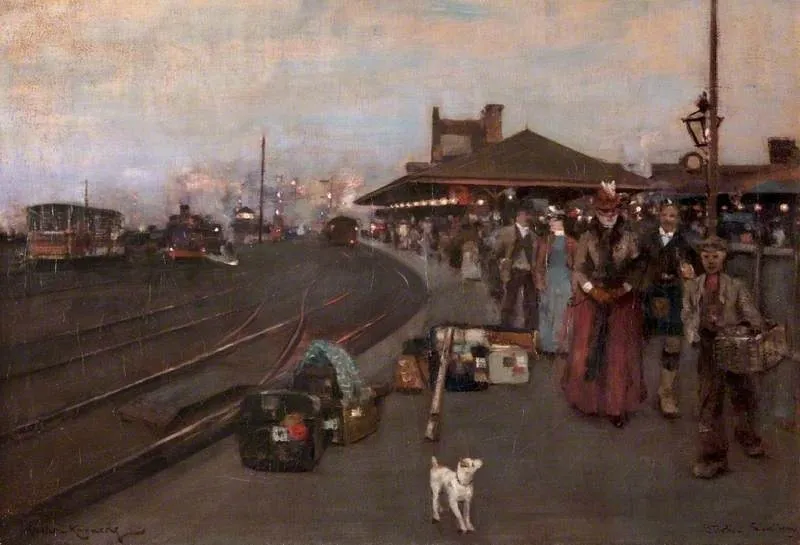
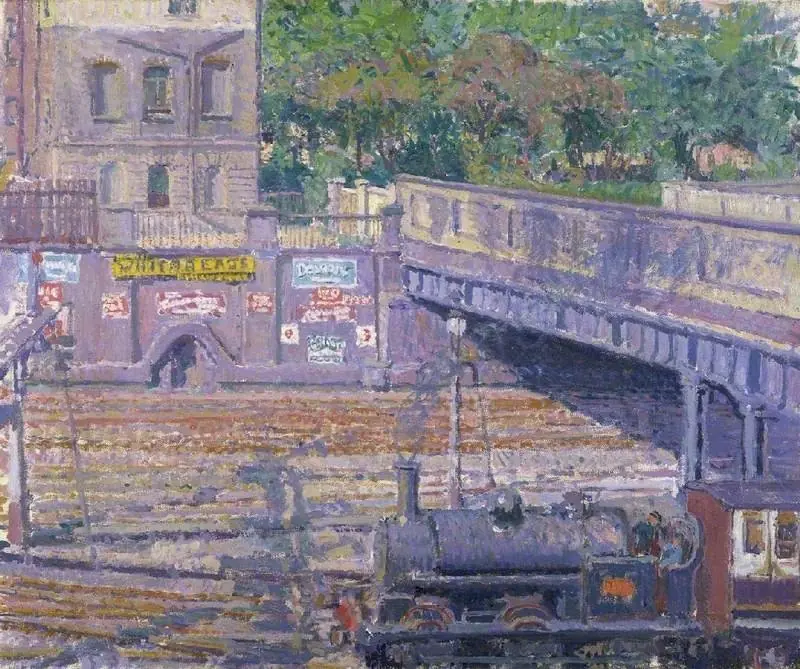
Stirling Station is an oil painting by the Impressionist artist William Kennedy. It dates from 1894 and is held in the collection of the Kelvingrove Art Gallery and Museum.
About this work
Overview
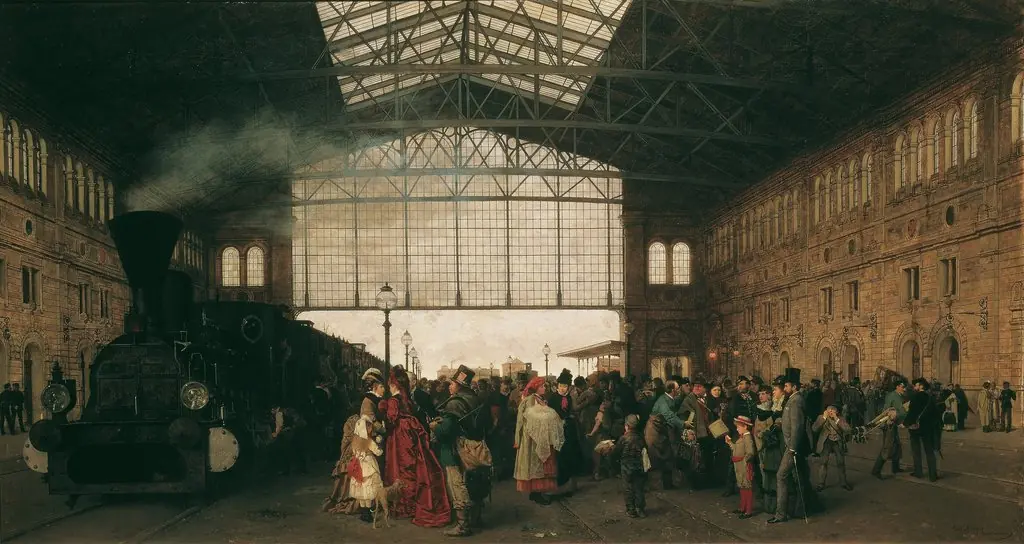
Stirling Station is an 1894 oil painting by William Kennedy, depicting a quiet moment at a Scottish railway station. It resides in the Kelvingrove Art Gallery and Museum in Glasgow. The work captures ordinary travelers and their belongings under a leaden sky, rendered with restrained tones and deliberate brushwork that emphasize texture over polish.
Subject & Meaning
The scene portrays everyday transit life: passengers move with quiet purpose along a platform, suitcases and crates litter the ground, and a dog sits calmly ahead of them. No dramatic events unfold; instead, the painting honors the unremarkable rhythms of daily travel. The absence of spectacle suggests a meditation on routine, where human activity unfolds without ceremony or grandeur.
Technique & Style
Kennedy employed a muted palette dominated by browns, greys, and soft blacks, reinforcing the overcast atmosphere. Visible, loose brushstrokes create a tactile surface, avoiding idealized smoothness. The composition is uncluttered yet dense with subtle detail, balancing the static presence of luggage with the fleeting motion of figures, enhancing the painting’s sense of transient moments.
History & Provenance
Painted in 1894, the work entered the collection of the Kelvingrove Art Gallery and Museum in Glasgow, where it remains today. Its acquisition reflects late 19th-century institutional interest in domestic genre scenes that documented ordinary Scottish life. No significant provenance gaps or ownership changes are documented, suggesting consistent institutional stewardship.
Context
This aligns with broader trends in British realism, where artists turned from grand narratives to intimate, unvarnished scenes of common experience.
Created during the height of Britain’s railway expansion, the painting reflects the growing integration of rail travel into daily life. While many contemporaries celebrated industrial progress, Kennedy focused on its human dimension—quiet, unglamorous, and unheroic. This aligns with broader trends in British realism, where artists turned from grand narratives to intimate, unvarnished scenes of common experience.
Legacy
Stirling Station endures as a quiet testament to late-Victorian genre painting in Scotland. It contributes to a body of work that values observation over drama, capturing the dignity in mundane routines. Though not widely reproduced, it remains a touchstone for understanding how regional artists interpreted modernity through the lens of everyday life.
Artist & collection
Artist
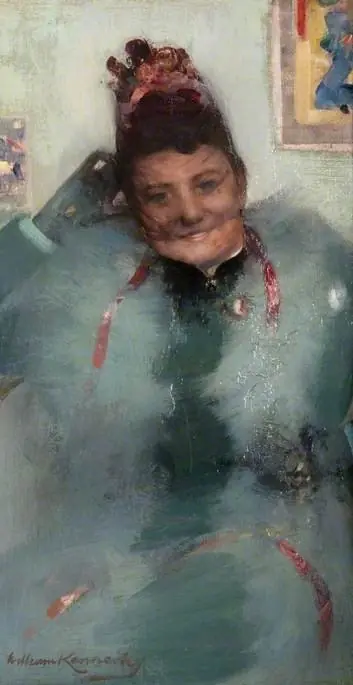
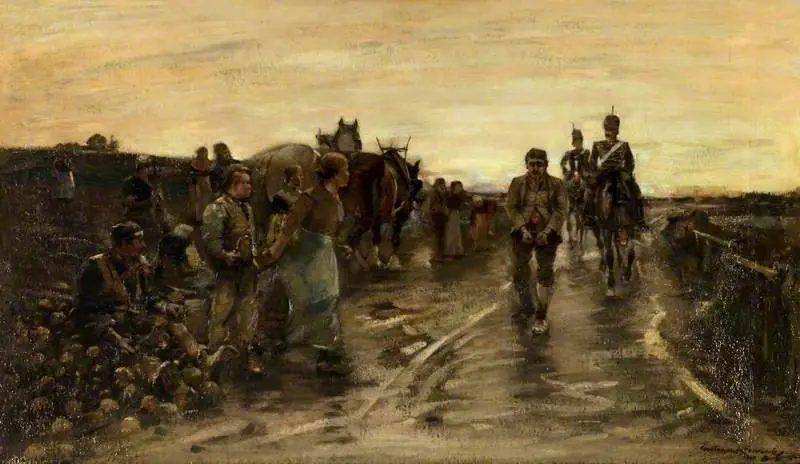
William Kennedy painted quiet scenes of everyday life in the 1880s and ’90s. His brush captured ordinary moments—like *The Fur Boa* with its winter coat or *Homewards*, showing people walking home after a day’s work.…