Artwork
Portrait of a Man
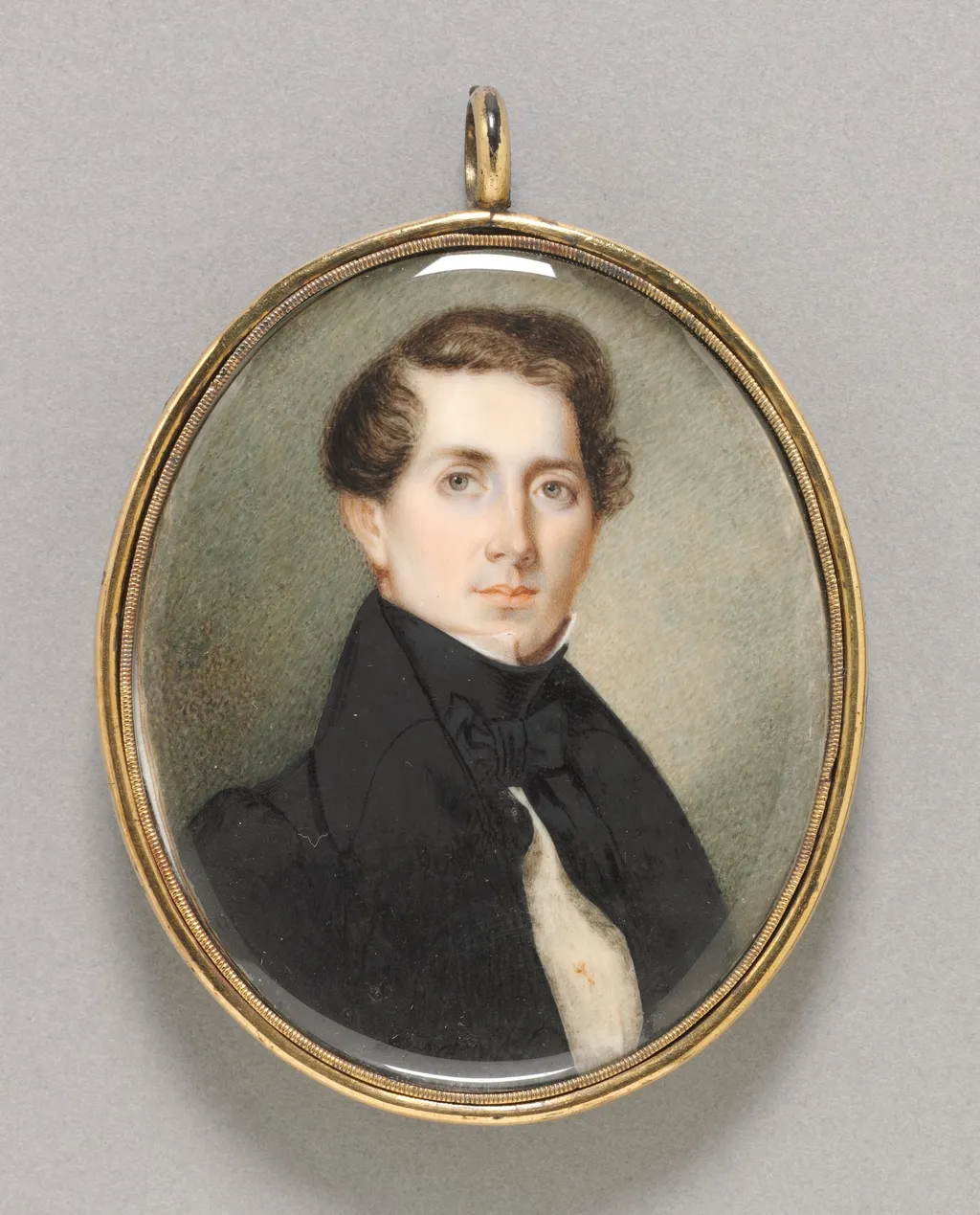
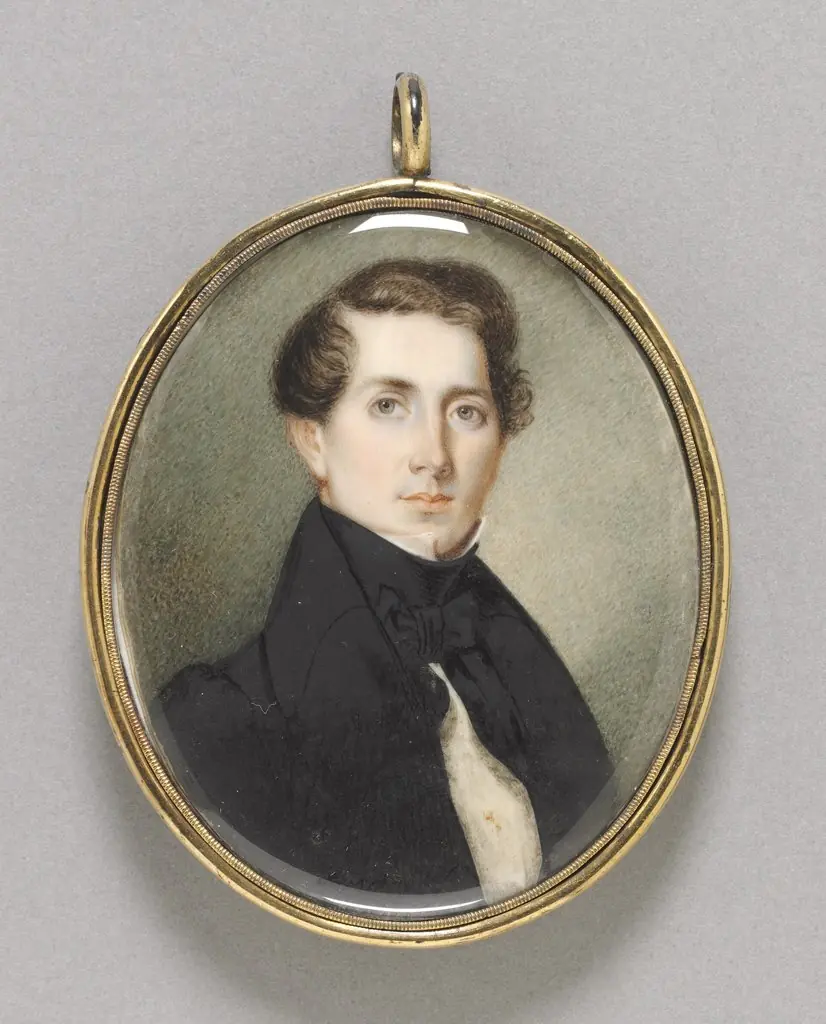
Portrait of a Man is an unspecified portrait miniature by the American Folk Art artist William Lockwood. It dates from 1836 and is held in the collection of the Cleveland Museum of Art.
About this work
Overview
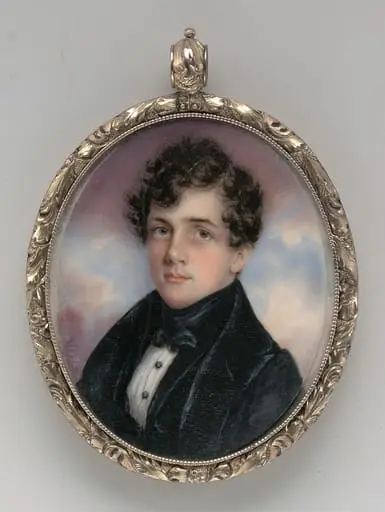
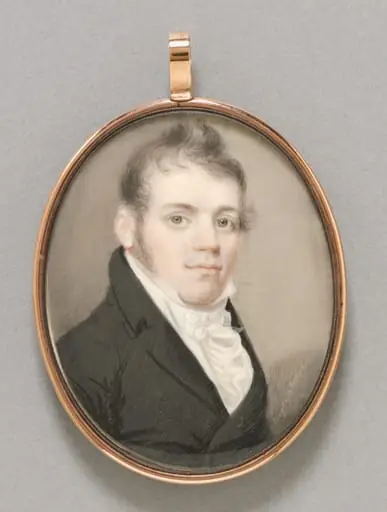
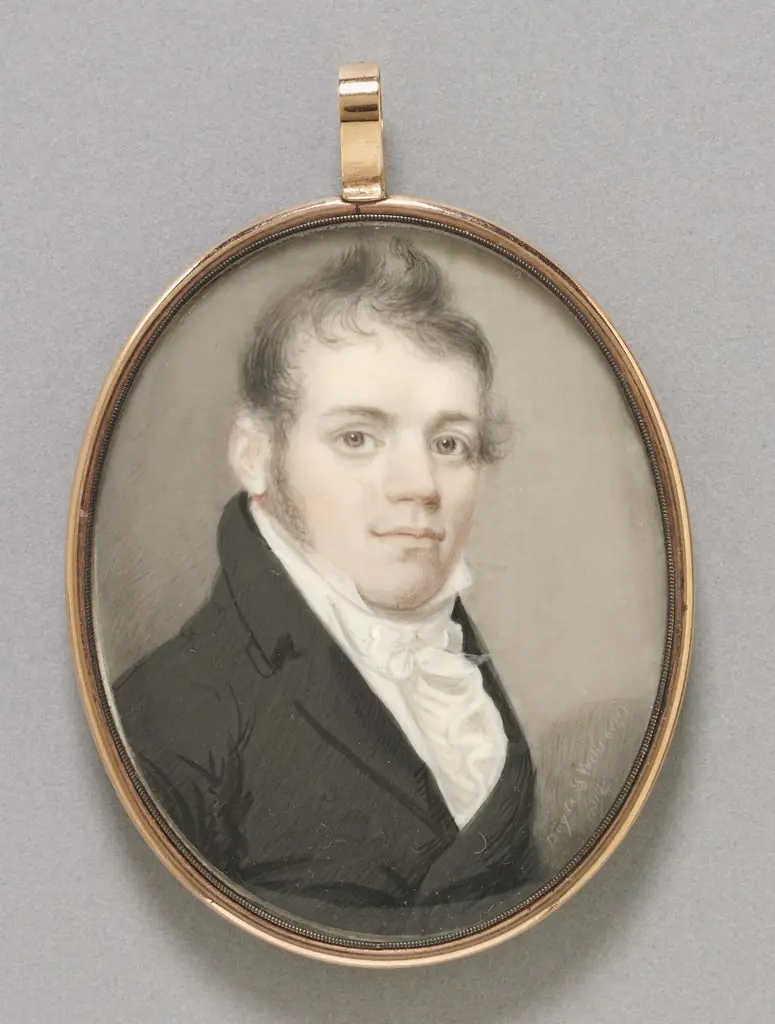
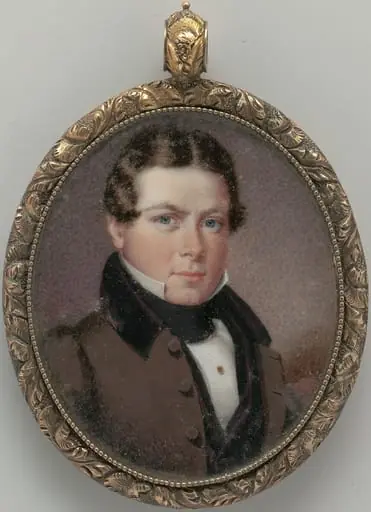
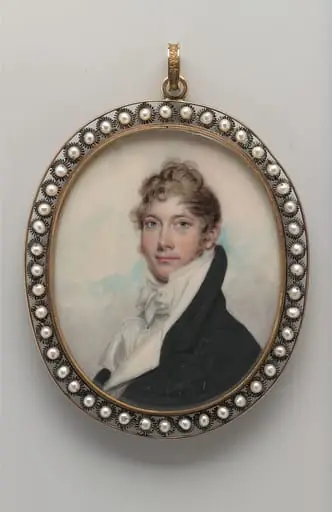
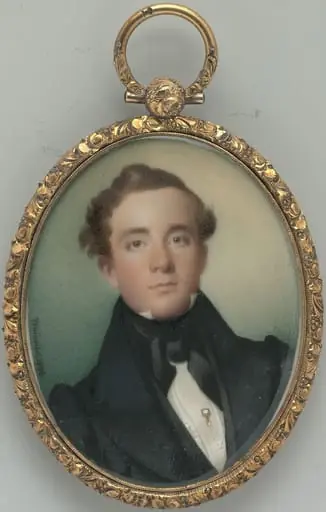
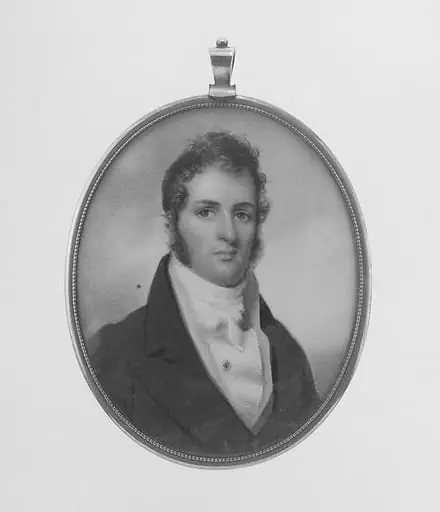
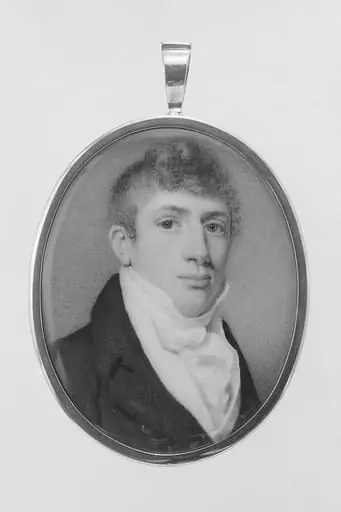
Painted in 1836 by William Lockwood, this small oval miniature depicts a man in formal attire. Executed in watercolor on ivory, the work measures just a few inches across and was likely intended for personal keeping. Its compact size and delicate execution reflect the tradition of portrait miniatures as intimate, portable likenesses, often carried as mementos or worn as jewelry.
Subject & Meaning
The absence of symbolic objects or elaborate setting emphasizes the individual’s presence over status markers, focusing attention on personal character.
The sitter, dressed in a dark suit with a crisp white collar, presents a composed, frontal gaze that conveys quiet dignity. His neatly curled hair and restrained expression suggest a man of social standing, possibly a professional or gentleman of the early Victorian era. The absence of symbolic objects or elaborate setting emphasizes the individual’s presence over status markers, focusing attention on personal character.
Technique & Style
Lockwood employed fine, smooth brushwork to model the man’s face with subtle gradations of tone. Soft chiaroscuro defines the contours of the cheeks and jaw, while the pale background recedes to isolate the figure. The ivory support allowed for luminous skin tones, and the gold frame, resembling a locket, enhances the object’s personal, almost devotional quality.
History & Provenance
The miniature entered the collection of The Cleveland Museum of Art in the 20th century, though its earlier ownership remains undocumented. It was likely commissioned privately, as few records survive for such small-scale works. Its preservation in good condition suggests it was carefully stored and handled, possibly within the sitter’s family before institutional acquisition.
Context
In the 1830s, portrait miniatures were still produced despite the rise of photography. Artists like Lockwood catered to clients who valued the craftsmanship and intimacy of hand-painted likenesses. The format had roots in Renaissance court portraiture and persisted among the middle and upper classes as a refined, personal art form before being largely supplanted by daguerreotypes after 1840.
Legacy
This work exemplifies the quiet persistence of miniature painting in an era of technological change. Though overshadowed by later photographic media, such portraits remain valued for their tactile delicacy and the skill required to render a lifelike presence on a tiny scale. Lockwood’s work contributes to the broader understanding of 19th-century portraiture beyond large-scale oil paintings.
Artist & collection