Artwork
Italian Peasant Boy
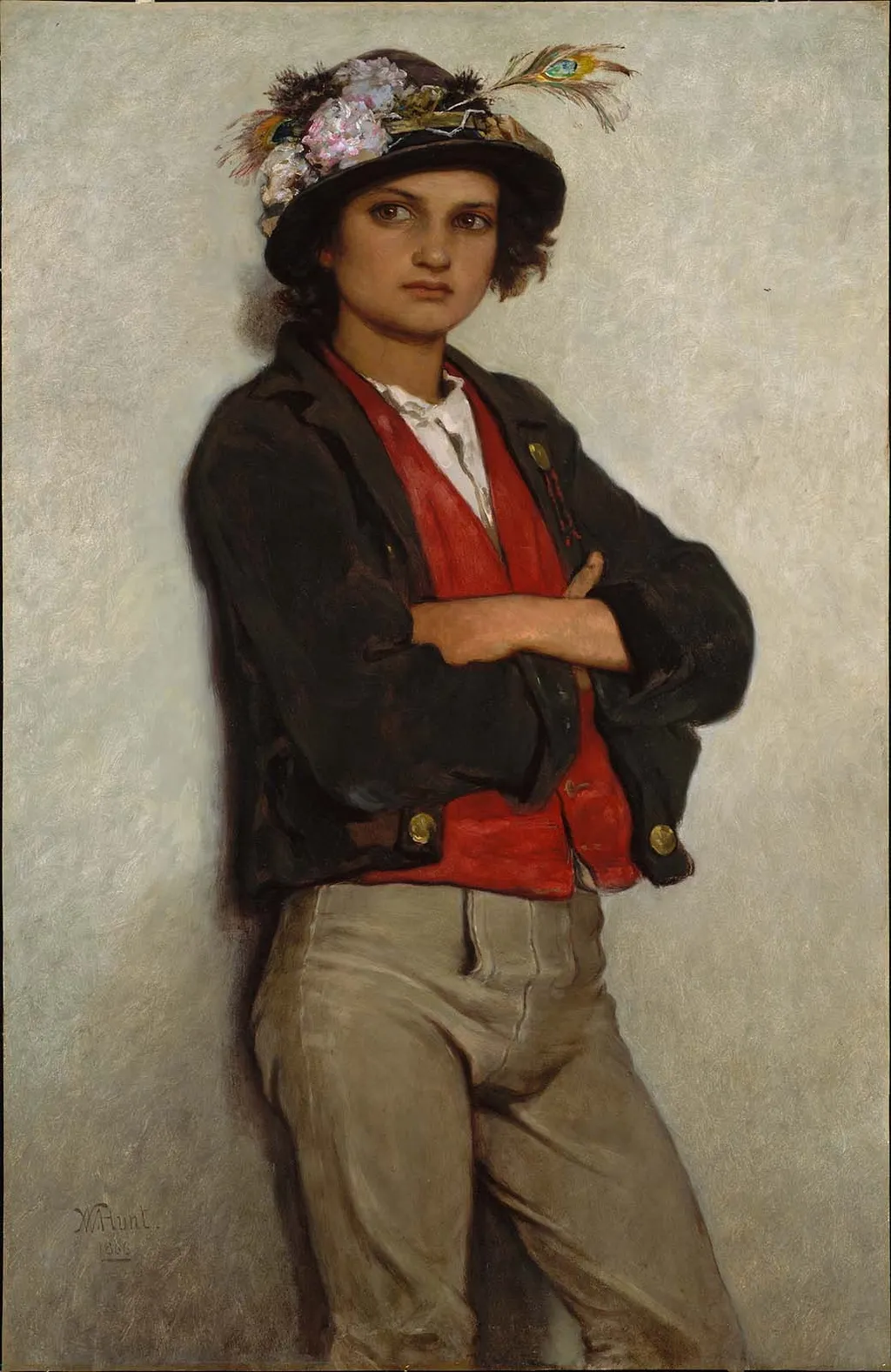
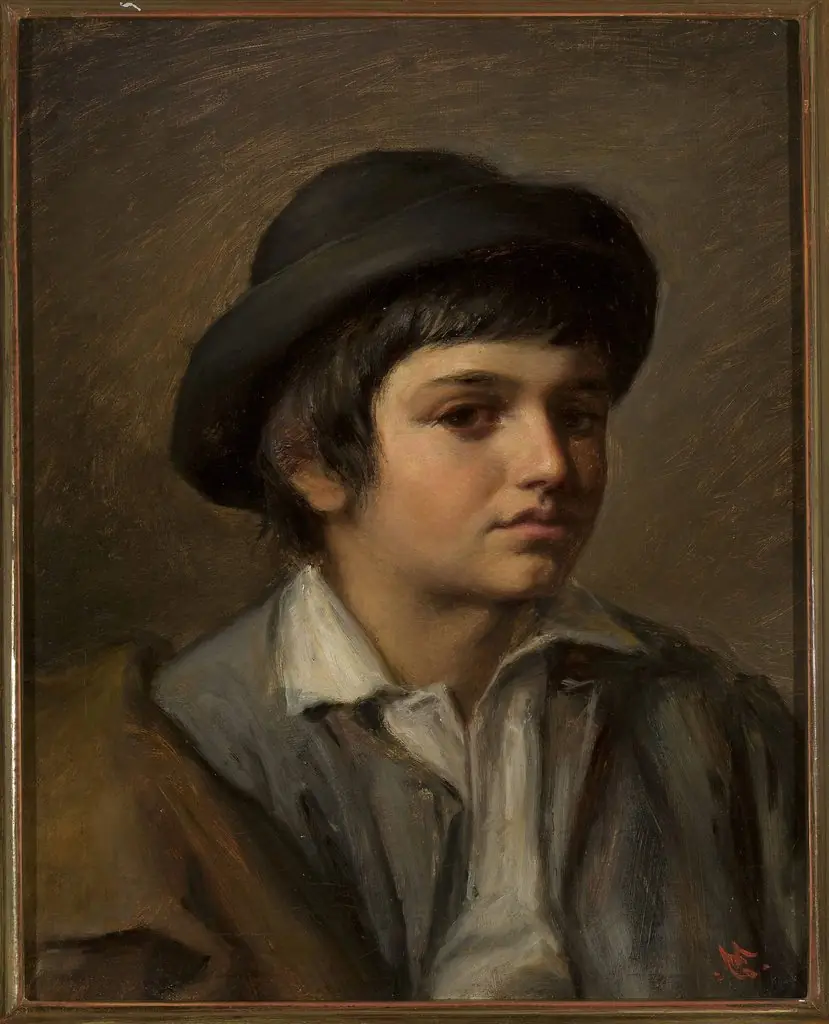
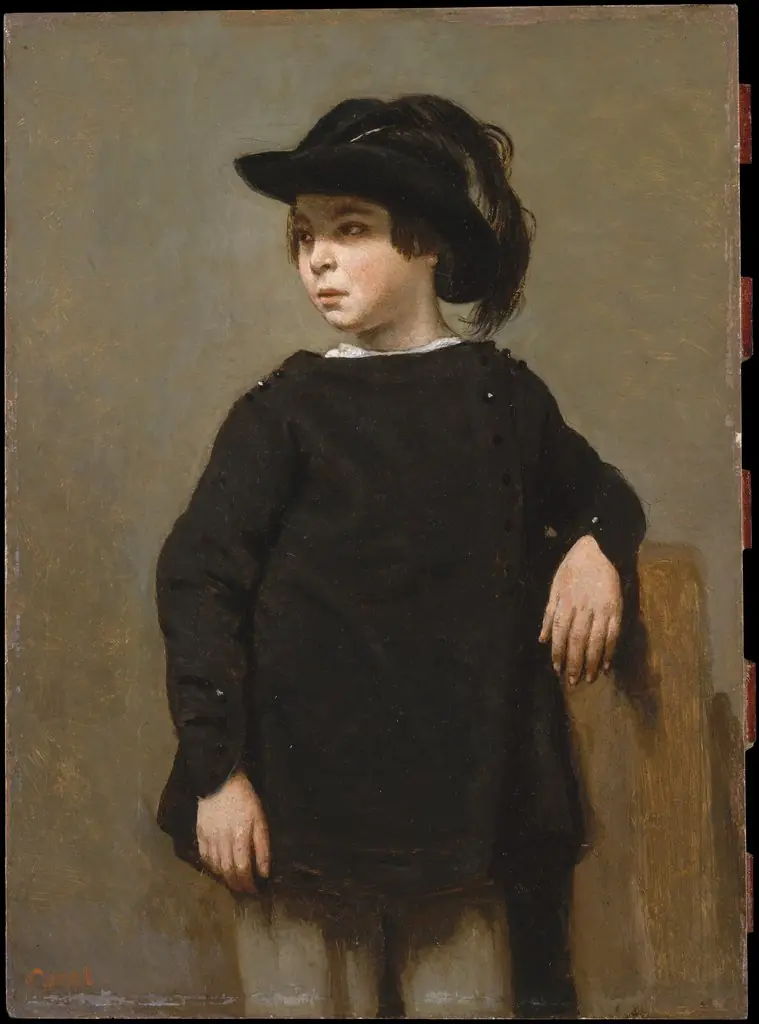
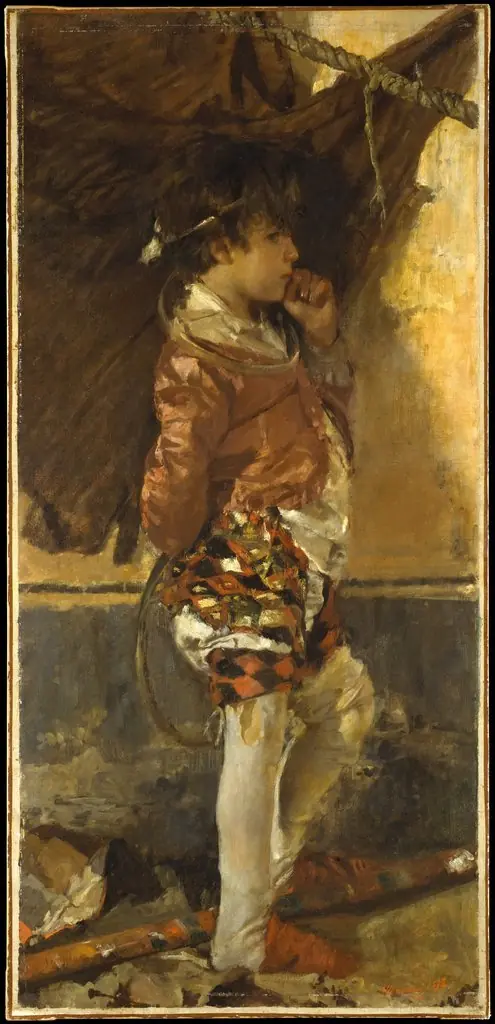
Italian Peasant Boy is an oil painting by the Realist artist William Morris Hunt. It dates from 1866 and is held in the collection of the Museum of Fine Arts Boston.
About this work
Overview
Painted in 1866 by American artist William Morris Hunt, *Italian Peasant Boy* is an oil portrait that reflects the influence of French Realism.
Painted in 1866 by American artist William Morris Hunt, *Italian Peasant Boy* is an oil portrait that reflects the influence of French Realism. Hunt, who studied under Jean-François Millet in Barbizon, turned his attention to ordinary subjects after his time in Europe. This work exemplifies his commitment to depicting rural life with quiet dignity, avoiding idealization in favor of observed truth.
Subject & Meaning
The painting portrays a young boy from a working-class background, standing still with arms crossed and a neutral expression. His attire—black jacket, red vest, feathered hat—suggests regional or seasonal dress rather than formal wear. The direct gaze invites contemplation without narrative, emphasizing the boy’s presence as a person rather than a symbol. The absence of context grounds the image in everyday reality.
Technique & Style
Hunt employed a restrained palette of earth tones and careful brushwork to render the boy’s clothing and hat with tactile precision. The lighting is even and natural, avoiding dramatic contrasts. Details like the texture of fabric, the weave of the hat, and the slight sheen on the boy’s skin contribute to a sense of physical presence. The composition is simple, focusing attention on the figure without distraction.
History & Provenance
Created during Hunt’s return to the United States after years in Europe, the painting reflects his ongoing engagement with European realism. It entered the collection of the Museum of Fine Arts, Boston, where it remains today. While not widely exhibited, it is recognized as a key example of Hunt’s early post-Barbizon work and his role in introducing European aesthetic values to American audiences.
Context
In the mid-19th century, American artists increasingly looked to Europe for models of artistic legitimacy. Hunt’s choice to depict a peasant child aligned with broader trends in Realism that valued the dignity of labor and ordinary life. Though American audiences often favored grand historical or romantic themes, Hunt’s focus on quiet, unadorned subjects marked a subtle shift toward social observation in domestic art.
Legacy
Though Hunt is better known for his portraits and landscapes, *Italian Peasant Boy* stands as a testament to his early commitment to Realist principles. It influenced a generation of American painters who sought to move beyond idealized imagery. The work remains a quiet but significant artifact of how European artistic movements were adapted and localized in the United States during the post-Civil War era.
Artist & collection
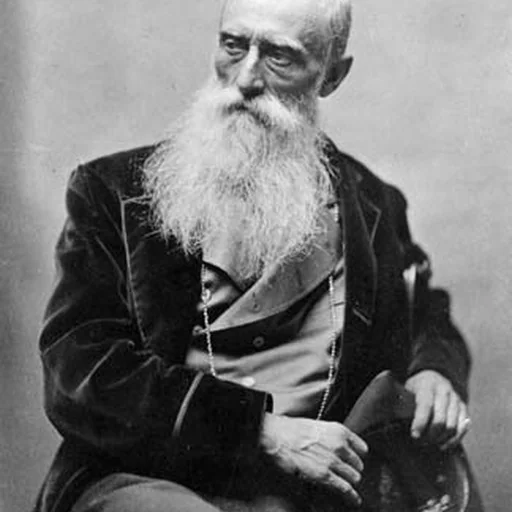
Artist
William Morris Hunt (March 31, 1824 – September 8, 1879) was an American painter.