Artwork
Foligno
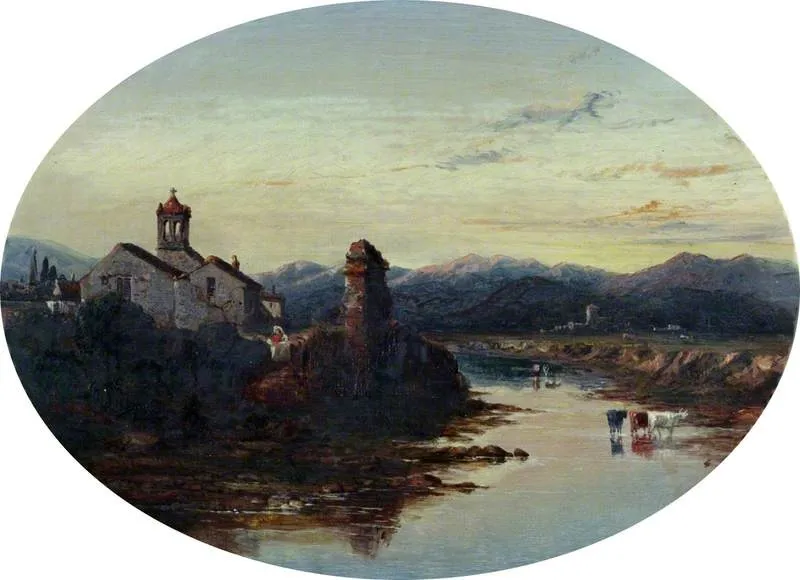
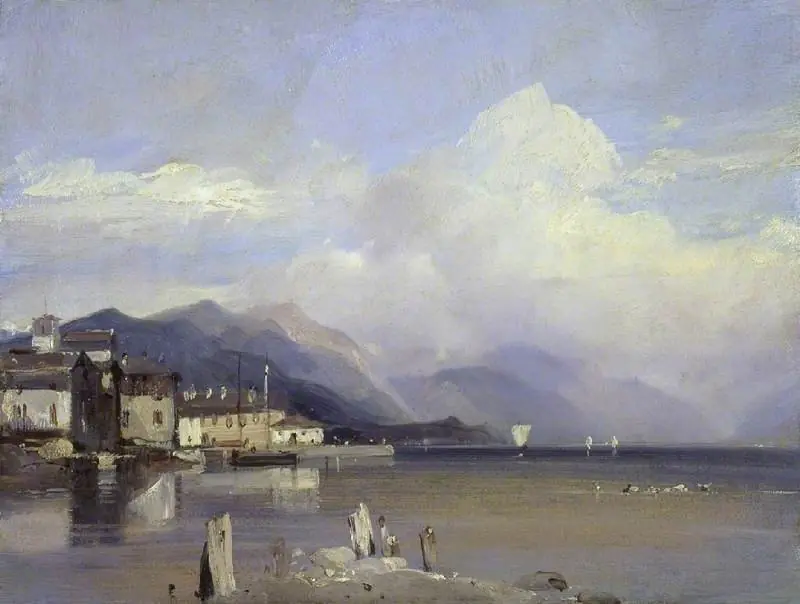
Foligno is an oil painting by the Realist artist William Oliver. It dates from 1849 and is held in the collection of the Victoria and Albert Museum.
About this work
Overview
Created in 1849, this oil painting by English landscape painter William Oliver captures a view of the Italian town of Foligno. The composition centers on a river flanked by a modest church with a tower and cross, while figures stand on the bank and distant mountains rise beneath a cloud‑filled sky. The work is part of the Victoria and Albert Museum’s collection.
Subject & Meaning
The scene presents a tranquil riverside setting that combines architectural and natural elements typical of mid‑nineteenth‑century travel sketches. The church anchors the left side, suggesting the town’s religious presence, while the river and surrounding hills convey a sense of everyday life and the broader landscape of central Italy.
Technique & Style
Oliver employs oil on canvas with a palette that balances dark shadows and bright highlights, using chiaroscuro to model forms and suggest depth. Visible brushwork adds texture to foliage and water, while the rendering of clouds and distant mountains demonstrates a realist approach to atmospheric effects.
History & Provenance
William Oliver, known for his extensive travels across Europe, produced this work during a period of frequent visits to Italy, among other regions such as France, Spain, and the Pyrenees. After its creation, the painting entered the collection of the Victoria and Albert Museum, where it remains on display as part of the institution’s holdings of 19th‑century landscape art.
Artist & collection
Artist
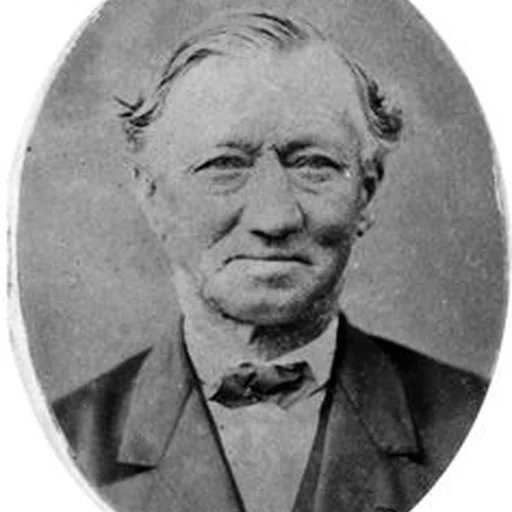
William Oliver (1804–1853) was an English landscape artist who painted in oils but chiefly in watercolours, painting views in England, France, Spain, Italy, Switzerland, Germany and the Tyrol, being especially fond of the Pyrenees.

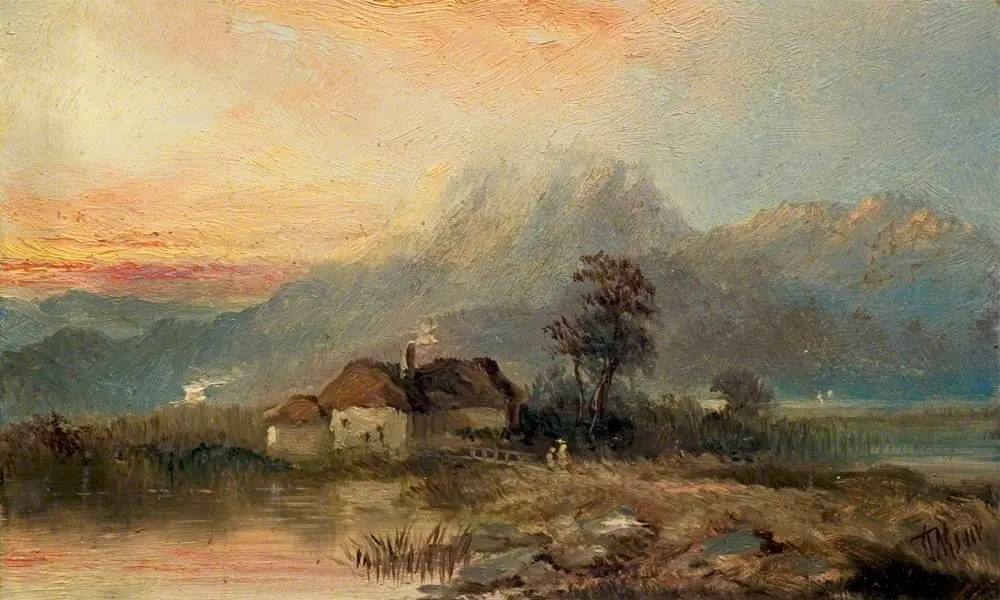 Evening Landscape*
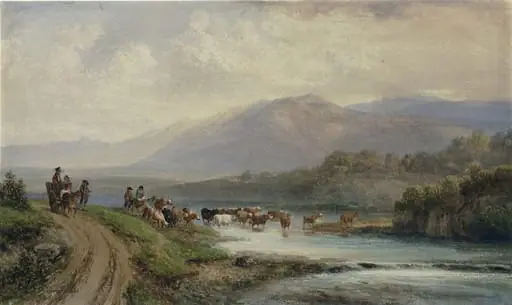 The Ford
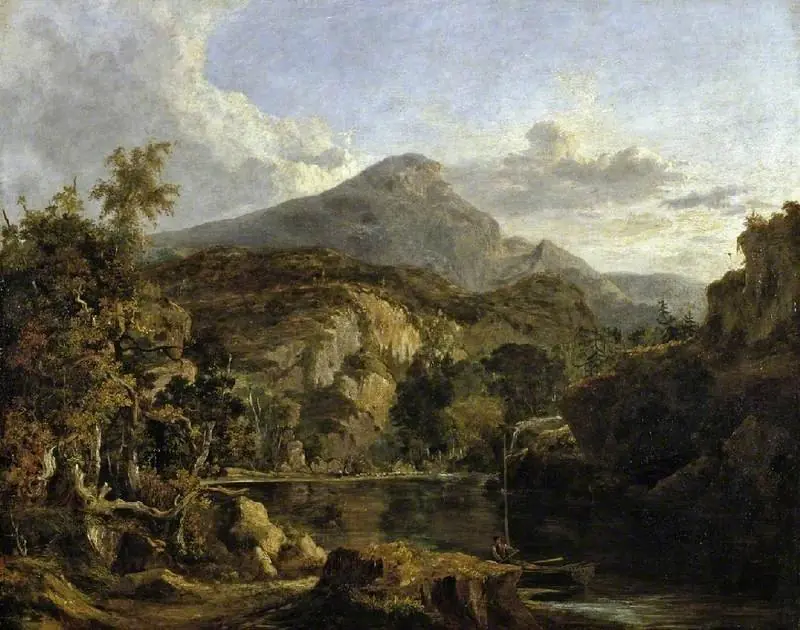 View in the Highlands
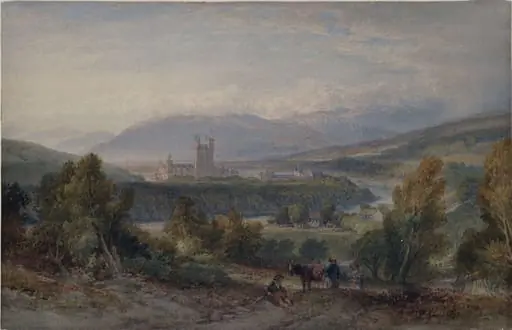 Balmoral Castle and the Surrounding Countryside
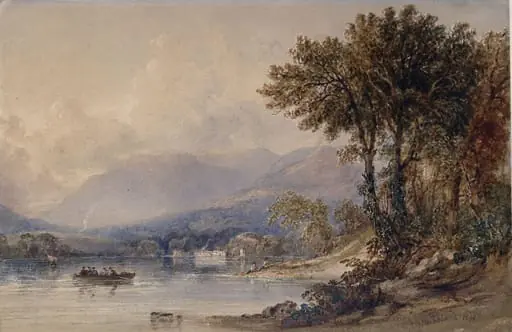 The Rydal mountains near the head of Windermere
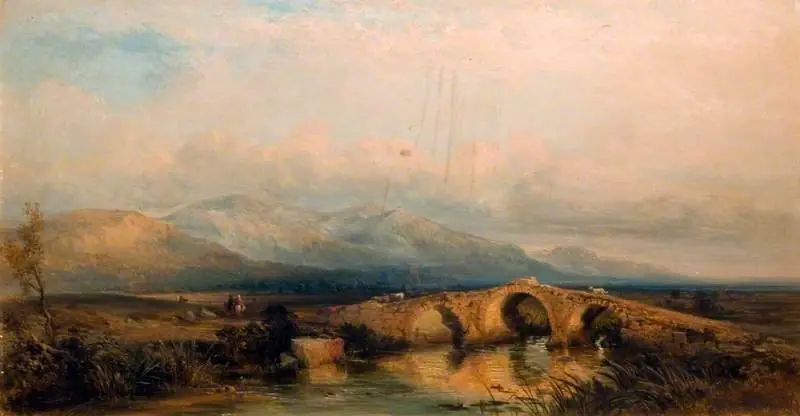 Bridge over a Stream
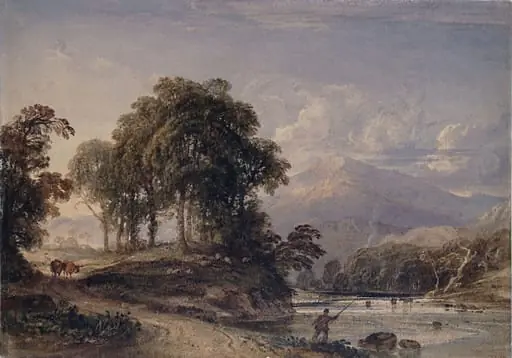 Moel Hebog, looking down the vale from Dinas Emrys, near Beddgelert
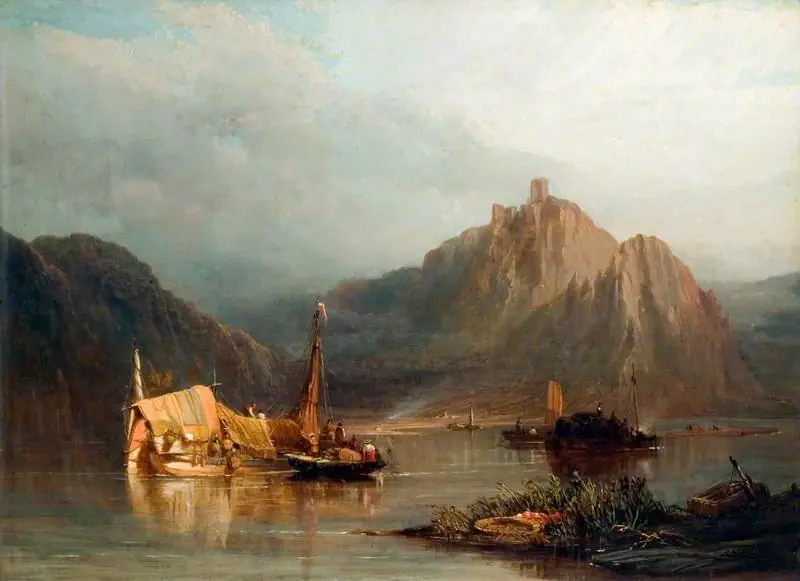 View on the Rhine
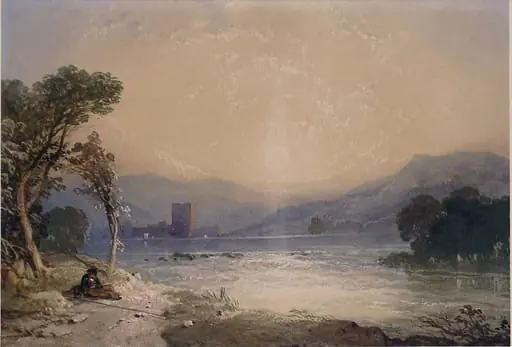 Lochleven Castle
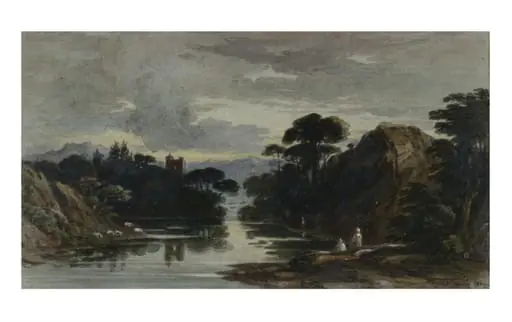 River Scene: A Composition
 Boccadasse, Genoa with Monte Fasce in the background
 Lake scene, Cumberland