Artwork
Colonel William Leete Stone
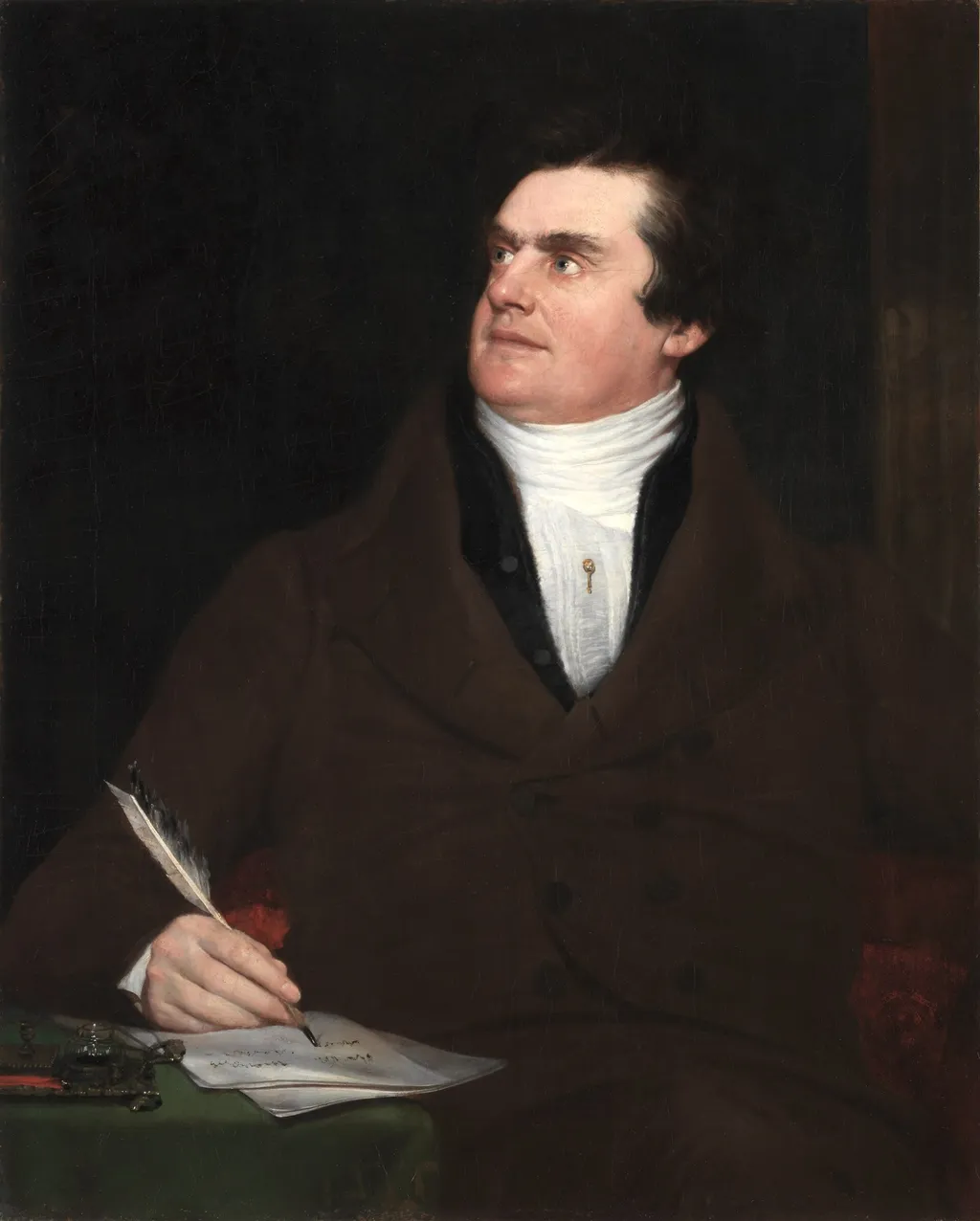
Colonel William Leete Stone is an oil painting by the Realist artist William Page. It dates from 1839 and is held in the collection of the Cleveland Museum of Art.
About this work
Overview
William Page’s 1839 oil on canvas, titled Colonel William Leete Stone, portrays a solitary figure seated at a desk. The composition isolates the subject against a dark, unadorned backdrop, drawing the eye to his facial expression and the precise movements of his hands as he writes with a feather quill.
Subject & Meaning
The sitter, identified as Colonel William Leete Stone, is rendered in a dark coat and white cravat, his left hand steadying the paper while his right hand guides the pen. The inclusion of a small key suspended from his cravat adds a symbolic element, suggesting authority or a hidden narrative beyond the act of writing.
Technique & Style
Page employs a restrained chiaroscuro, allowing a soft, directional light to illuminate the colonel’s face and hands while the surrounding space recedes into shadow. This contrast emphasizes texture—the sheen of the coat, the delicate feather of the pen—and creates a calm, contemplative atmosphere typical of early‑mid‑19th‑century portraiture.
History & Provenance
Executed in 1839, the work entered the collection of the Cleveland Museum of Art, where it remains on display. Its provenance traces back to the artist’s studio, with no recorded intermediate owners, indicating a relatively direct acquisition by the museum.
Context
The portrait reflects the period’s interest in documenting notable public figures through intimate, study‑like compositions. By focusing on the act of writing, Page aligns the colonel’s personal identity with his professional duties, a common approach in American portraiture of the era that sought to convey character through everyday tasks.
Own this work as a print
Artist & collection