Artwork
Capri
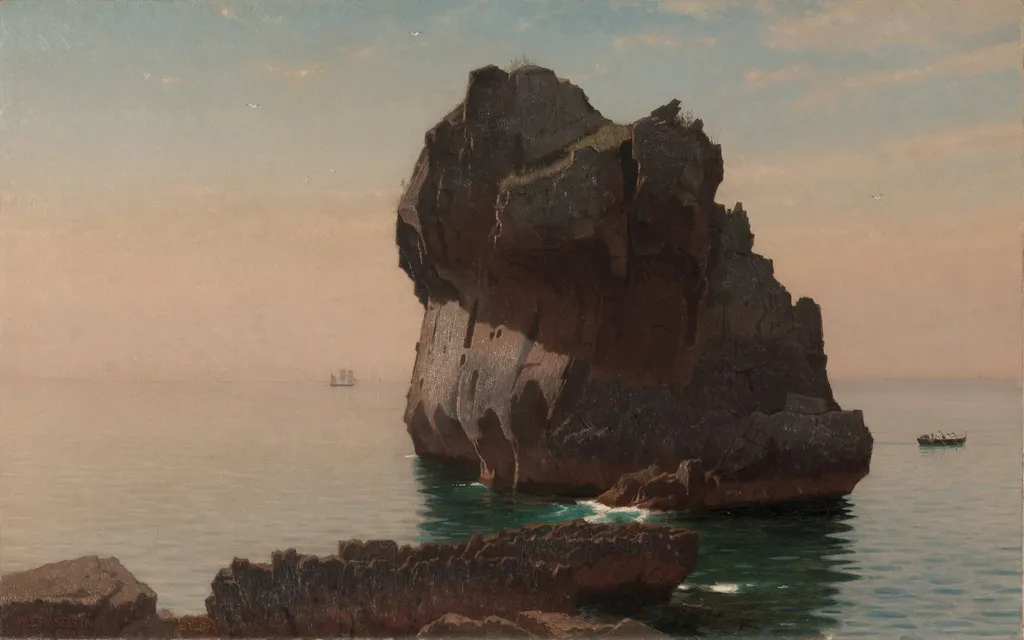
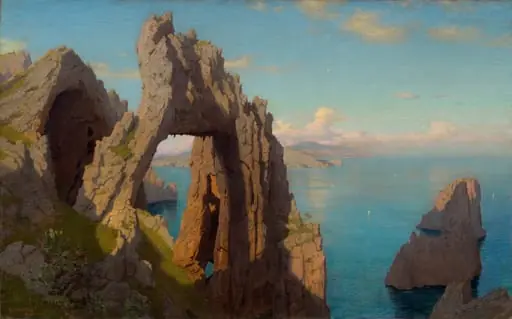
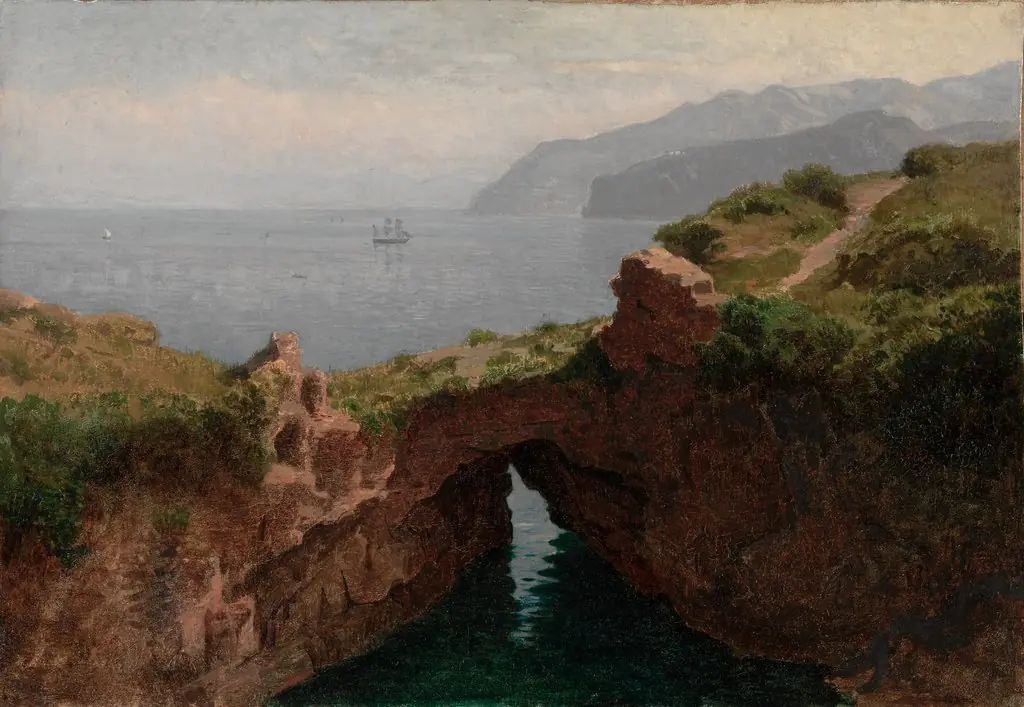
Capri is an oil painting by the American Impressionist artist William Stanley Haseltine. It dates from 1869 and is held in the collection of the Cleveland Museum of Art.
About this work
Overview
William Stanley Haseltine’s 1869 oil on canvas, titled “Capri,” is part of the collection at the Cleveland Museum of Art. The work depicts a stark limestone formation jutting into a tranquil sea, under a muted sky. Two vessels—one near the shore and a larger one farther out—navigate the calm waters, providing a sense of scale and human presence.
Subject & Meaning
The central focus is a rugged outcrop that dominates the composition, suggesting the dramatic coastline of the island of Capri. The juxtaposition of the solid rock against the gentle horizon evokes a contrast between permanence and the fleeting nature of the sea and sky, while the distant boats hint at travel and observation.
Technique & Style
Haseltine employs a smooth, almost seamless handling of the sky and water, allowing soft tonal transitions to convey atmospheric calm. In contrast, the rock is rendered with precise, angular brushwork that emphasizes its texture and irregularity. The limited palette of pale blues, greys, and muted greens reinforces the serene yet stark mood of the scene.
History & Provenance
Created in 1869, the painting entered the Cleveland Museum of Art’s holdings through acquisition, though specific details of its earlier ownership are not recorded in the museum’s public records. Its presence in the collection reflects the institution’s interest in 19th‑century American landscape painters who engaged with European subjects.
Own this work as a print
Artist & collection