Artwork
Untitled
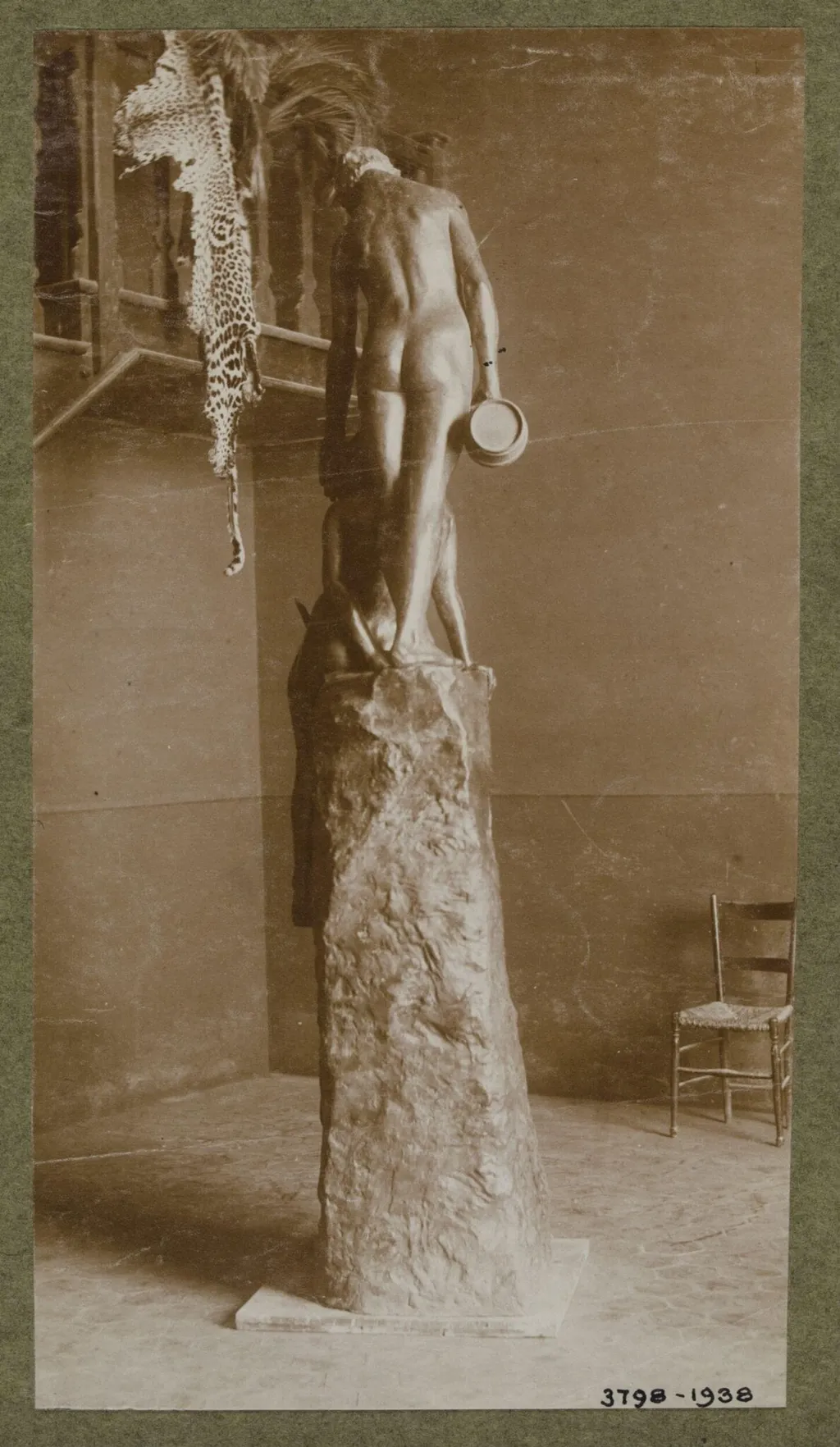
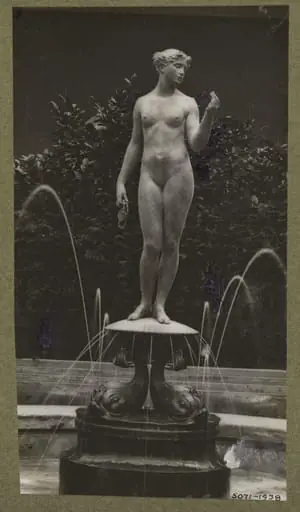
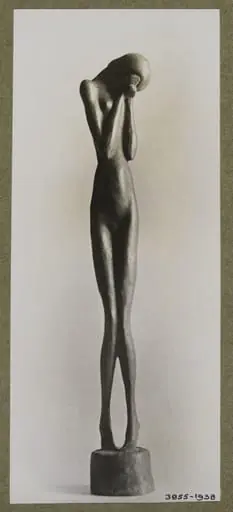
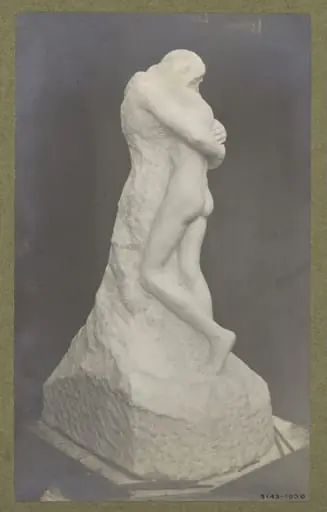
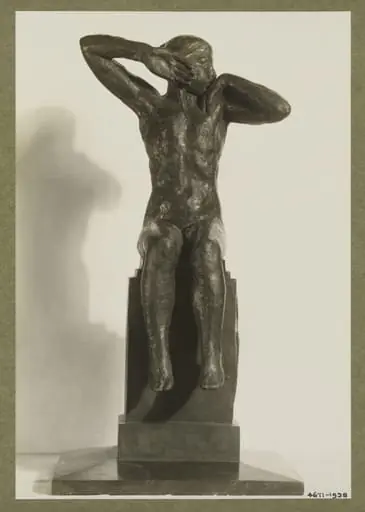
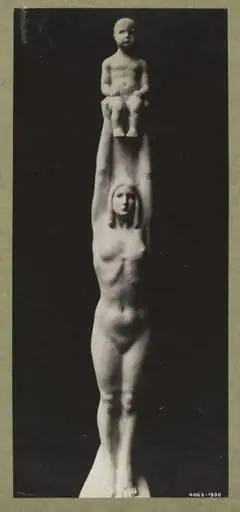
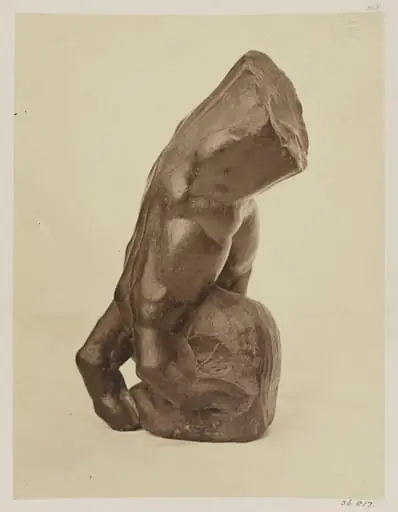
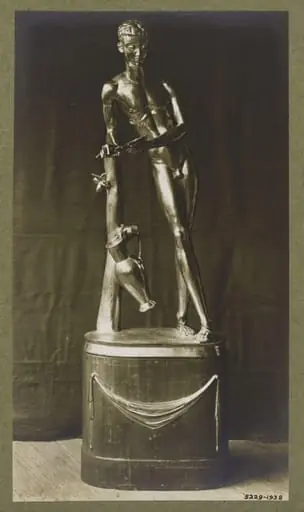
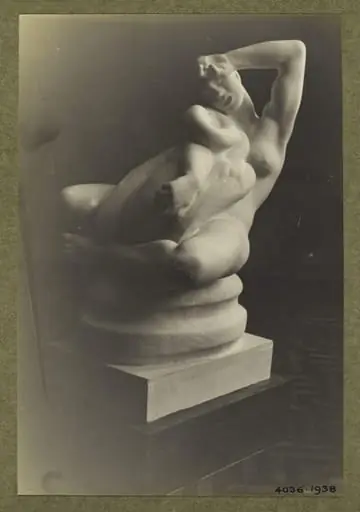
Untitled is a photographic photography by Georges Winter. It is held in the collection of the Victoria and Albert Museum.
About this work
Overview
This photograph, part of the Archive of Art and Design, was submitted to William Kineton Parkes during the 1920s in response to his survey of sculptors.
This photograph, part of the Archive of Art and Design, was submitted to William Kineton Parkes during the 1920s in response to his survey of sculptors. Mounted on green cardstock, it documents an unattributed, unfinished sculptural form. The image was preserved as part of a broader archival effort to record contemporary sculptural practices, reflecting Parkes’s interest in the creative process rather than finished works.
Subject & Meaning
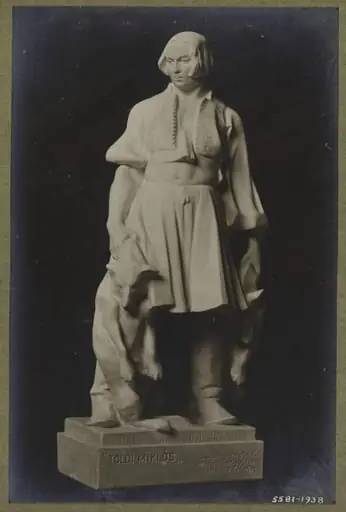
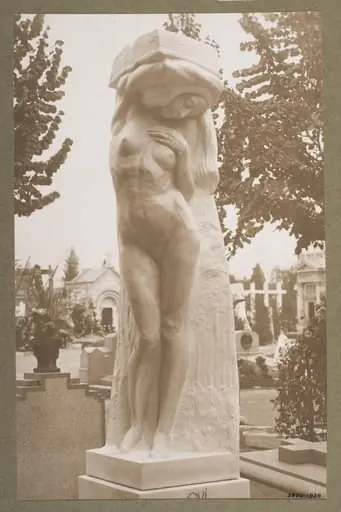
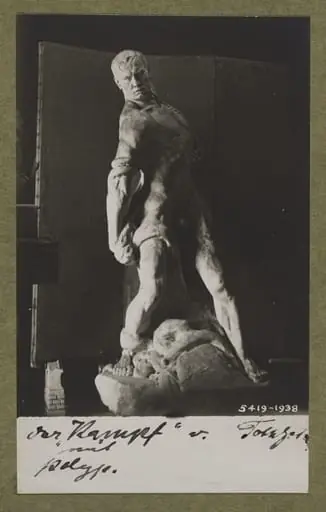
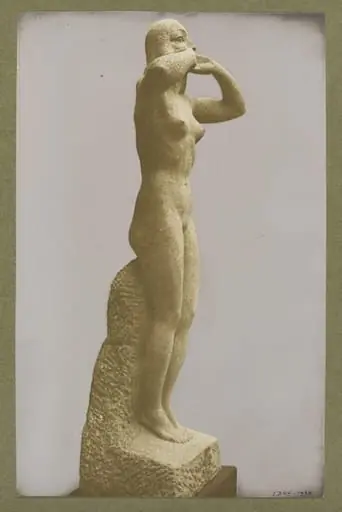
The sculpture depicts a standing figure with wild hair and a leopard-skin drape, holding a small, ambiguous object. Its rough, sketch-like carving suggests immediacy and experimentation. The animal skin and untamed posture imply a primal or mythic character, though no definitive narrative is established. The setting—a dim room with a chair and staircase—hints at a studio environment, grounding the work in the artist’s daily practice rather than public display.
Technique & Style
The sculpture’s surface is aggressively textured, with visible tool marks and uneven contours, indicating rapid, direct carving. The form appears deliberately unrefined, prioritizing gesture over polish. The leopard skin drapery contrasts with the raw stone base, enhancing the sense of untamed energy. The photograph captures these qualities faithfully, emphasizing materiality and process over idealized form, aligning with early 20th-century interests in artistic authenticity.
History & Provenance
The photograph entered the Archive of Art and Design through William Kineton Parkes’s personal collection, bequeathed in 1938. Parkes, an art historian and librarian, collected responses from sculptors nationwide to document evolving practices. This image was one of many submissions, selected not for fame but as evidence of working methods. Its origin remains anonymous, preserved as a record rather than a celebrated object.
Context
In the 1920s, artists and scholars increasingly valued the creative process over finished masterpieces. Parkes’s questionnaire initiative reflected this shift, seeking insight into how sculptors worked. The submission of such raw, unpolished images signaled a growing interest in studio practice, material experimentation, and the artist’s hand. This photograph contributes to a broader archive documenting the transition toward modernist approaches in British sculpture.
Legacy
Though the sculptor remains unknown, the photograph endures as a document of artistic inquiry. It illustrates how archival practices preserved marginal or unpublished works, offering insight into underrepresented creative voices. Today, it serves researchers studying early modernist sculpture, studio culture, and the role of documentation in art history—valued for its evidentiary clarity rather than aesthetic prominence.
Artist & collection
Artist
Georges Winter snapped pictures like he was stealing moments from the street. He carried the same camera for years, always black and white, no fancy filters—just the city’s raw edges. One photo shows a shadow stretching…