Artwork
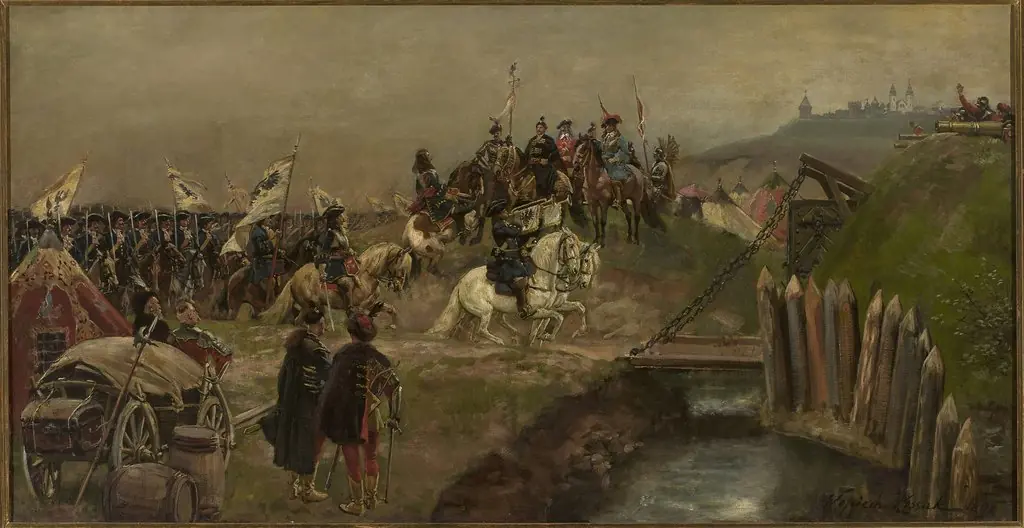
Polish Hussars Parading in Front of King John III Sobieski
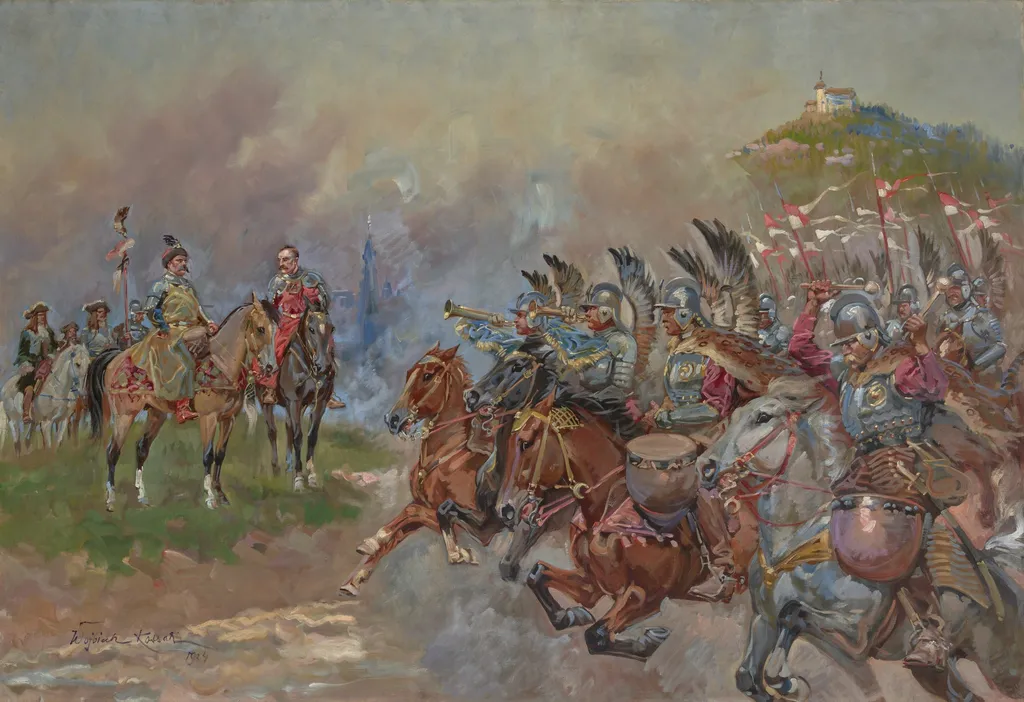
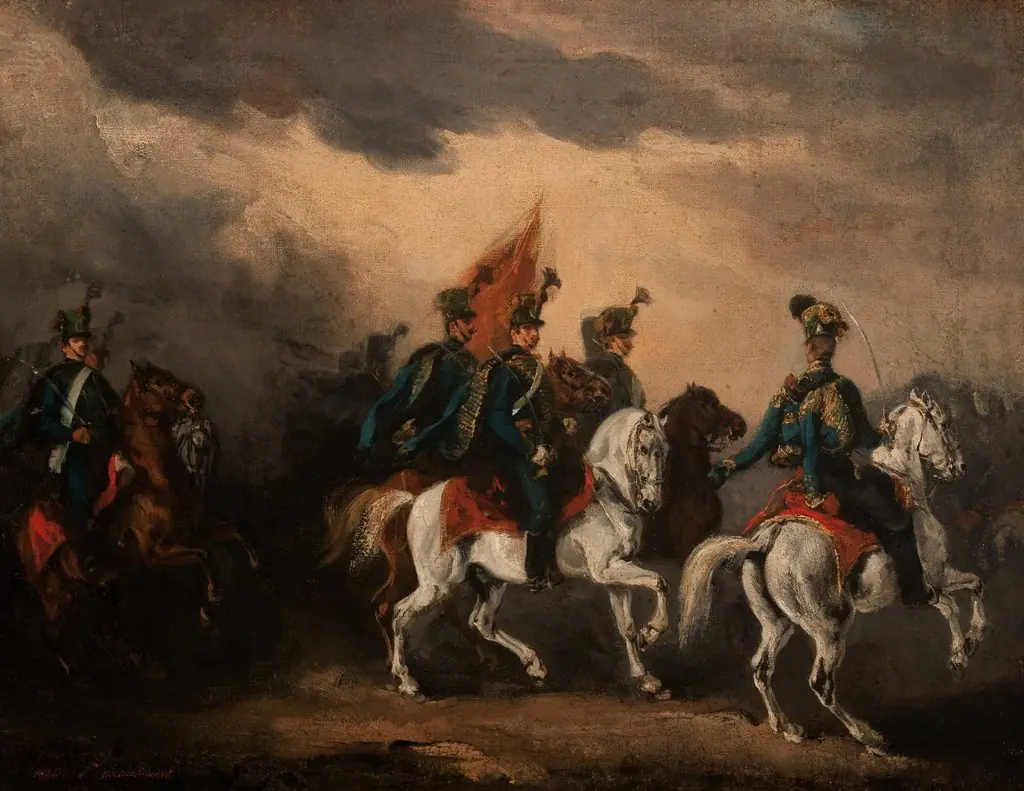
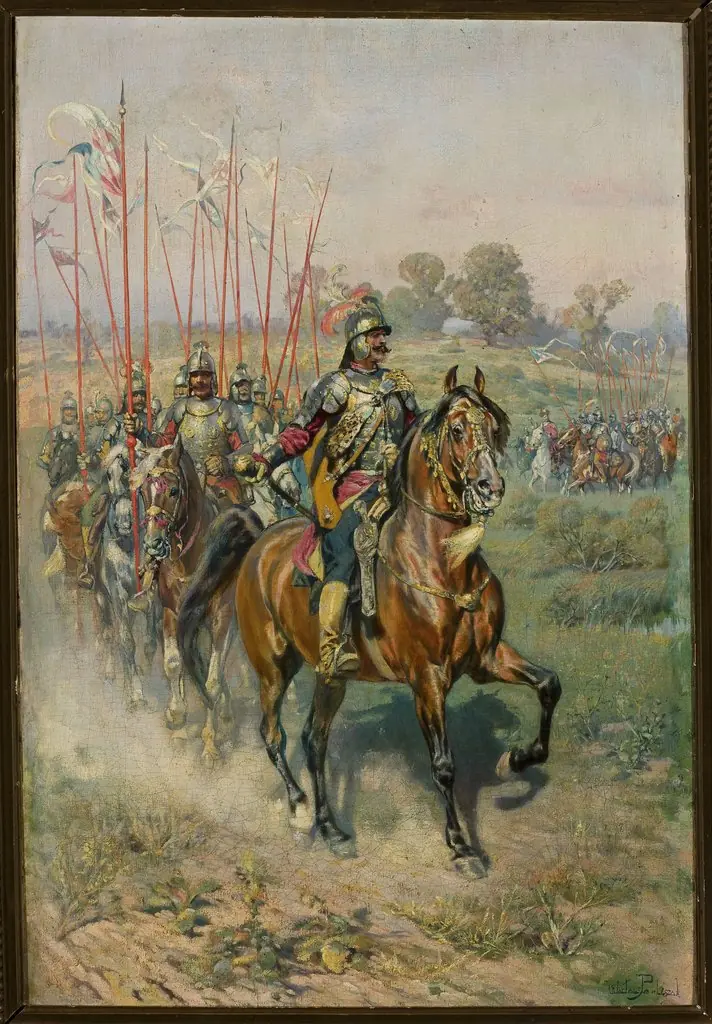
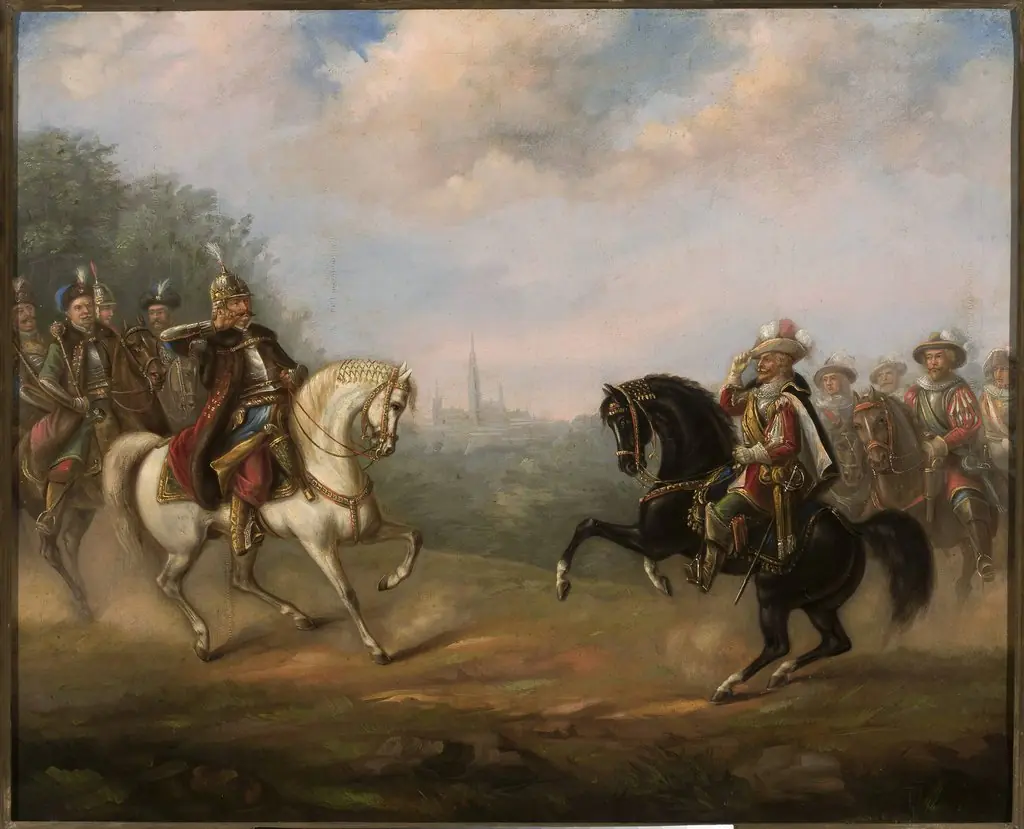
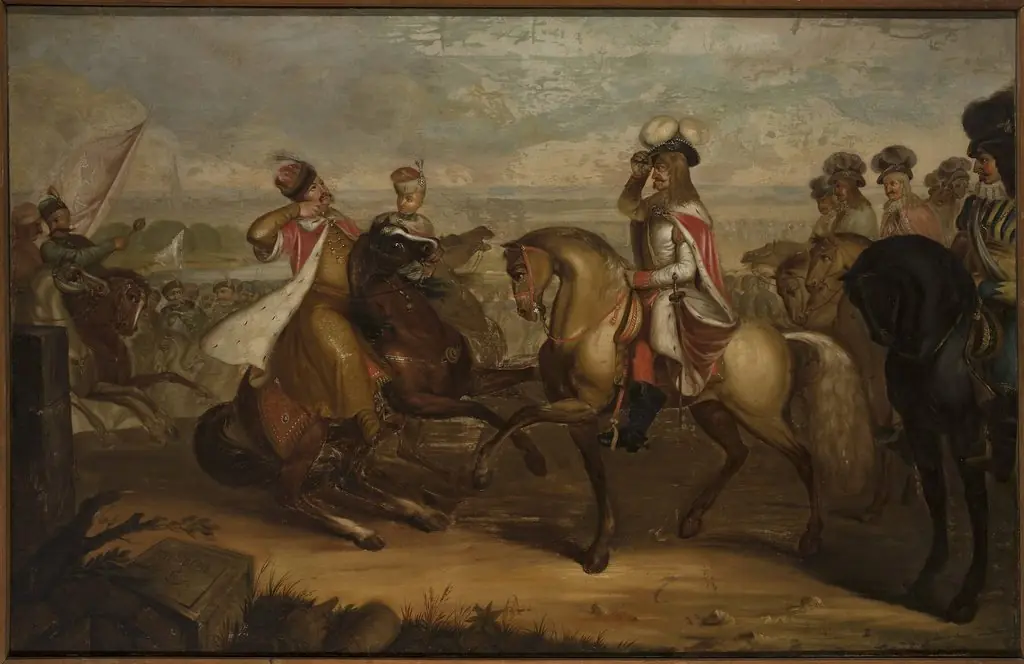
Polish Hussars Parading in Front of King John III Sobieski is an oil painting by the Biedermeier artist Wojciech Kossak. It dates from 1924 and is held in the collection of the National Museum in Kraków.
About this work
Overview
Though created in the 20th century, the scene evokes the late 17th century, reflecting Kossak’s interest in historical military tradition.
Wojciech Kossak completed this oil painting in 1924, depicting a ceremonial parade of Polish hussars before King John III Sobieski. Though created in the 20th century, the scene evokes the late 17th century, reflecting Kossak’s interest in historical military tradition. The work is part of the National Museum in Kraków’s collection and exemplifies his dedication to reconstructing Poland’s martial heritage through visual narrative.
Subject & Meaning
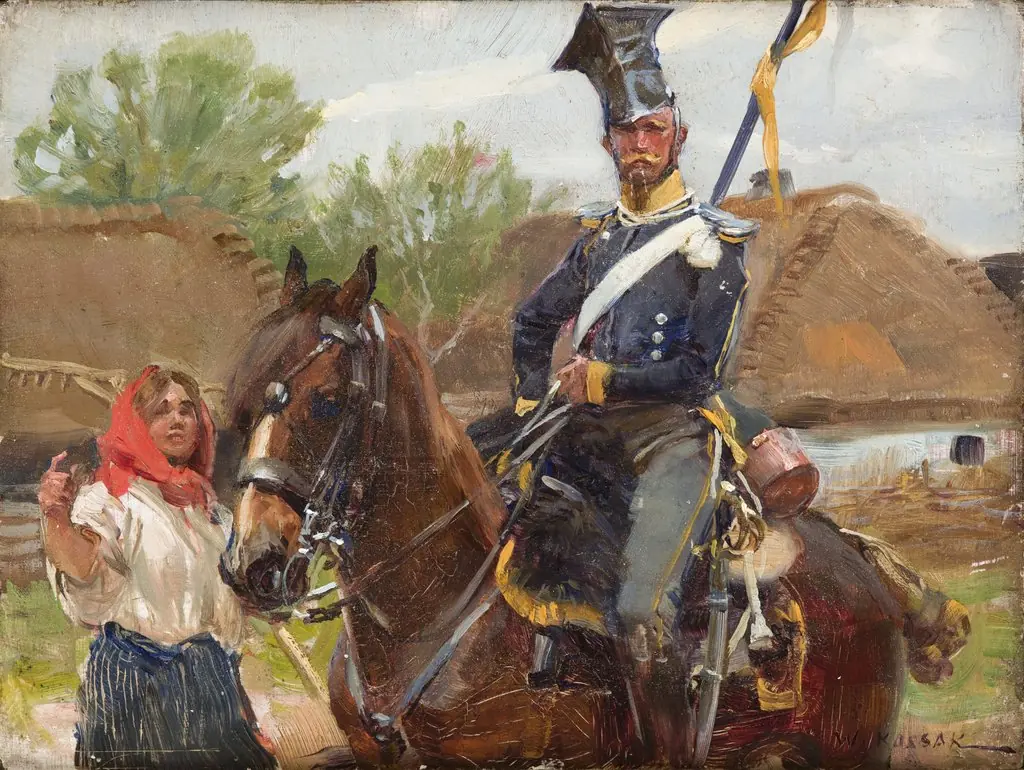
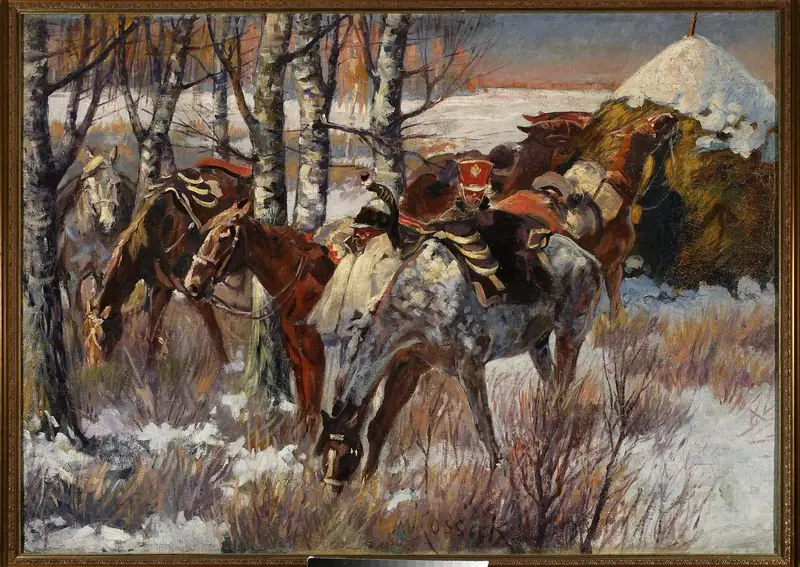
The painting portrays a formal military procession of hussars, elite cavalry known for their distinctive armor and feathered helmets, advancing before King Sobieski, who rides centrally in ornate regalia. The scene suggests loyalty, discipline, and national pride, framing the hussars as symbols of Poland’s martial legacy. Onlookers and the distant hilltop structure imply a public ceremony, reinforcing the monarch’s role as commander and unifying figure.
Technique & Style
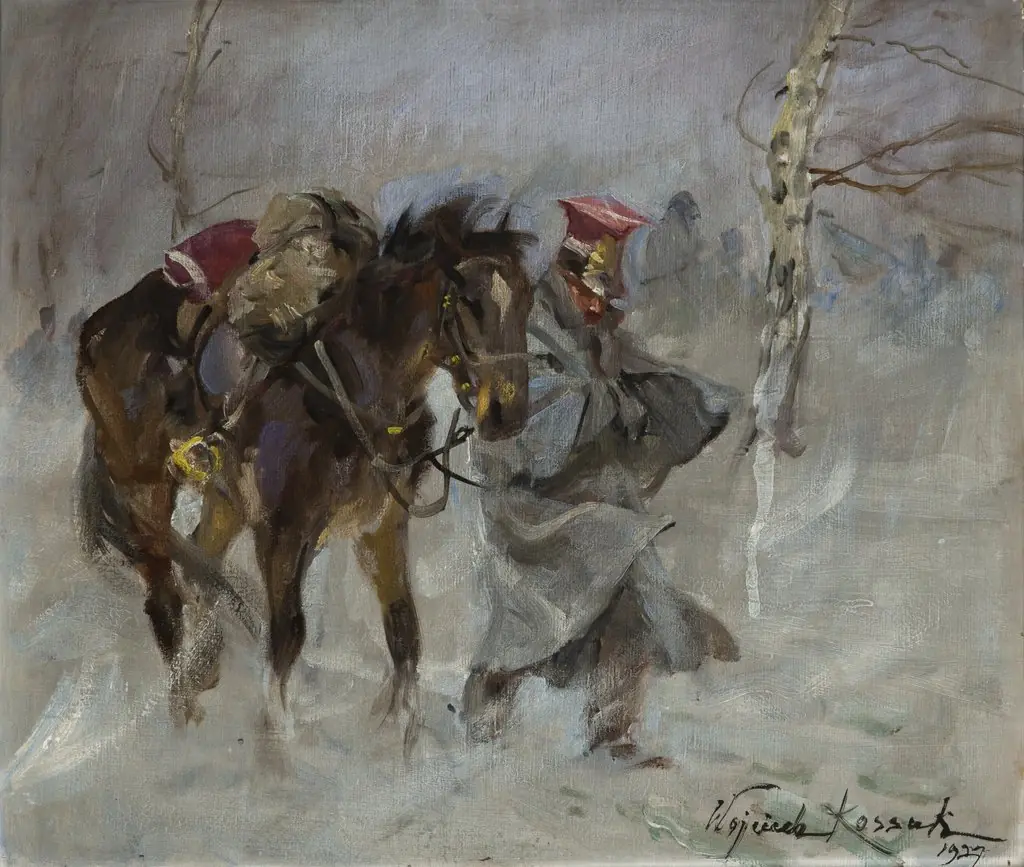
Kossak employed oil paint to render dynamic movement and textured detail, capturing the flutter of feathers, the sheen of armor, and the swirl of dust beneath hooves. His brushwork balances precise realism with energetic composition, avoiding static formality. Earth tones ground the scene, while accents of red and gold highlight the king and key figures, directing the viewer’s eye through the parade’s rhythm.
History & Provenance
Painted in 1924, the work emerged during Poland’s interwar revival of national identity after over a century of partition. Kossak, from a prominent artistic family, drew on historical sources and family tradition to reconstruct past glories. The painting entered the National Museum in Kraków’s collection shortly after completion, where it remains as part of Poland’s curated cultural memory.
Context
In the early 20th century, Polish artists frequently turned to historical themes to reinforce national consciousness under foreign rule. Kossak’s depiction of the hussars, famed for their victory at Vienna in 1683, resonated with contemporary efforts to reclaim a sovereign past. The painting reflects a broader trend in Polish art that idealized military heroism as a foundation for modern identity.
Legacy
Wojciech Kossak’s work contributed to a sustained visual language of Polish military history, influencing later generations of historical painters. Though not avant-garde, his compositions became reference points for public memory, displayed in national institutions and reproduced in educational materials. The painting endures as a documented expression of cultural continuity rather than artistic innovation.
Own this work as a print
Artist & collection
Artist
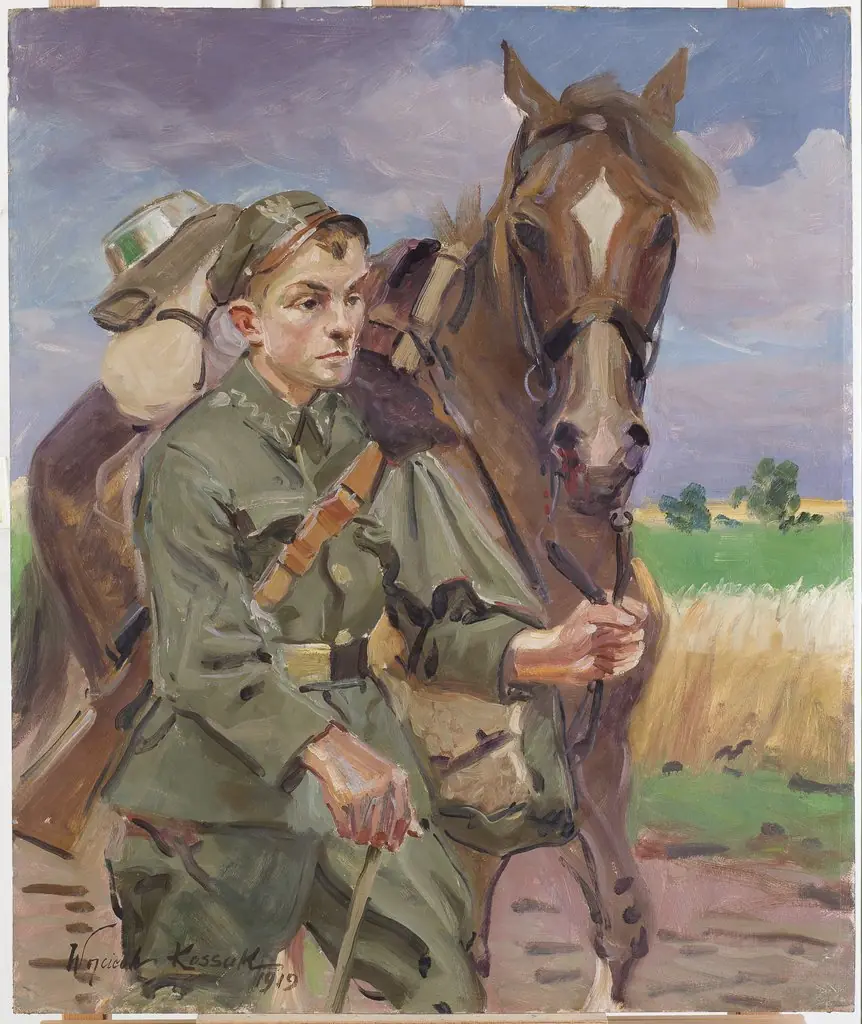
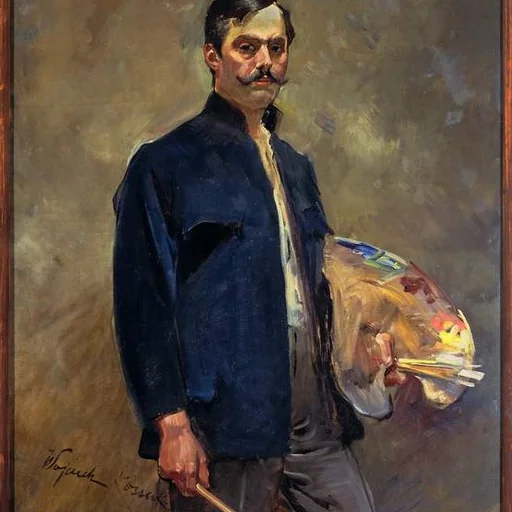
Wojciech Horacy Kossak (31 December 1856 – 29 July 1942) was a Polish painter and member of the celebrated Kossak family of artists and writers.