Artwork
A Duck Pond
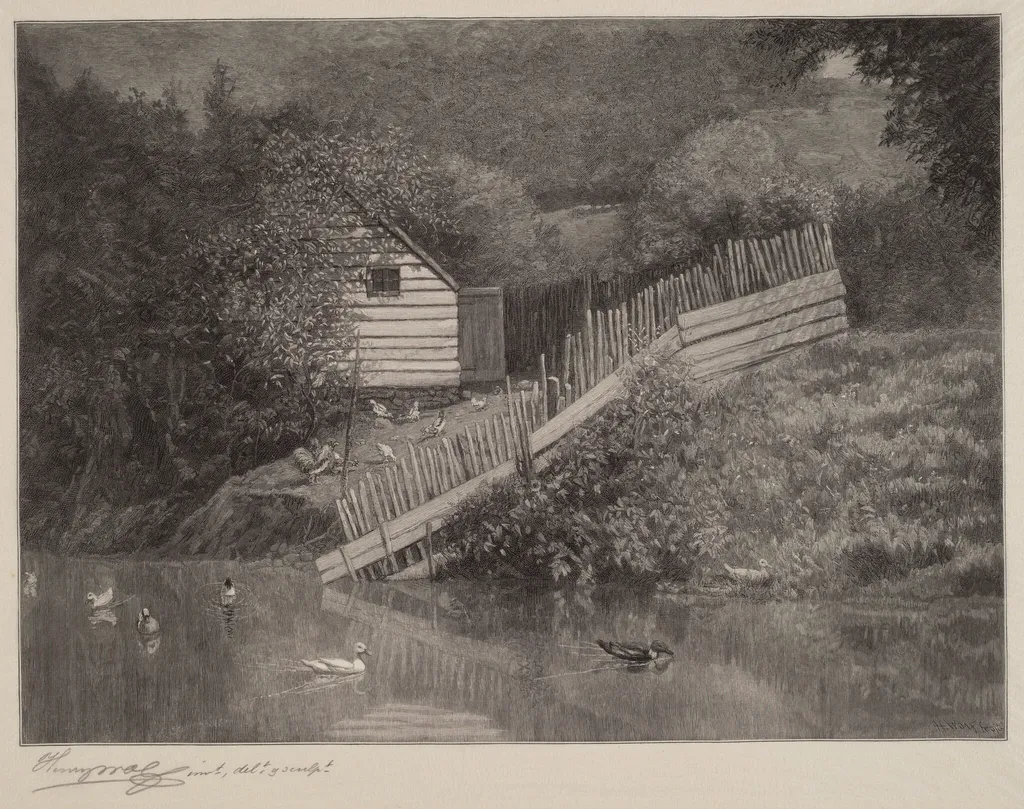
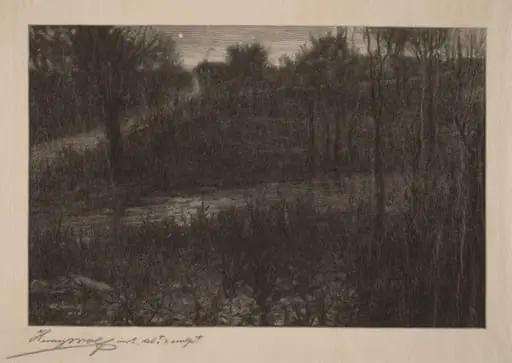
A Duck Pond is an ink print by Henry Wolf. It dates from 1906 and is held in the collection of the National Gallery of Art.
About this work
Overview
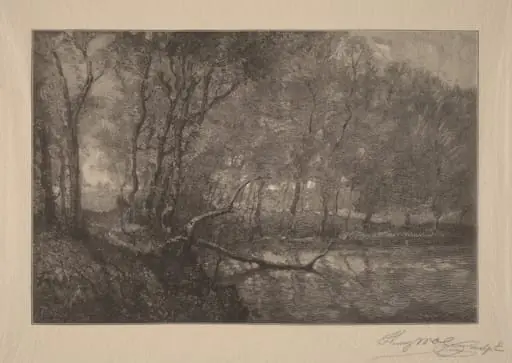
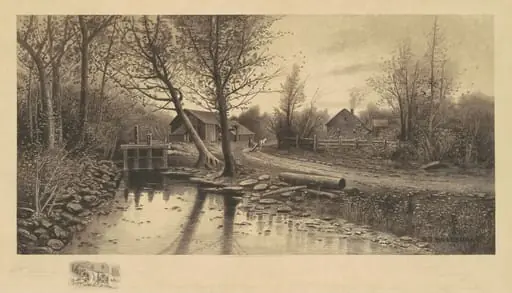
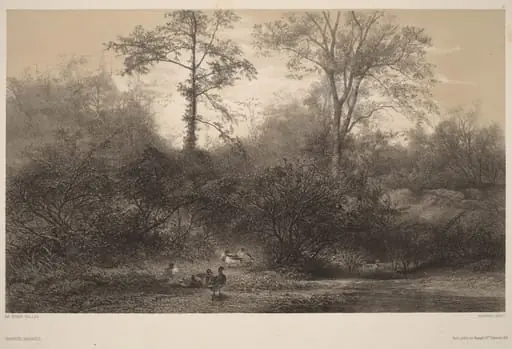
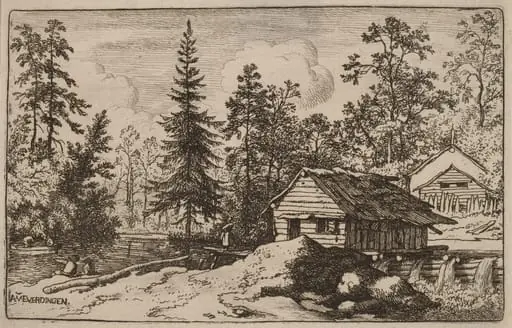
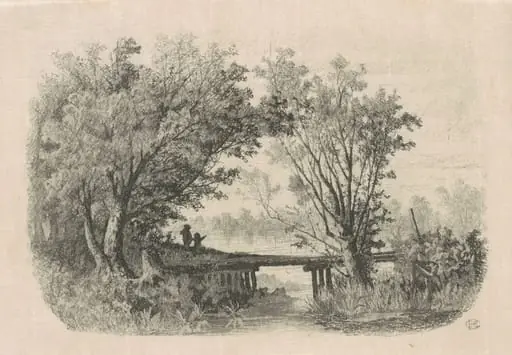
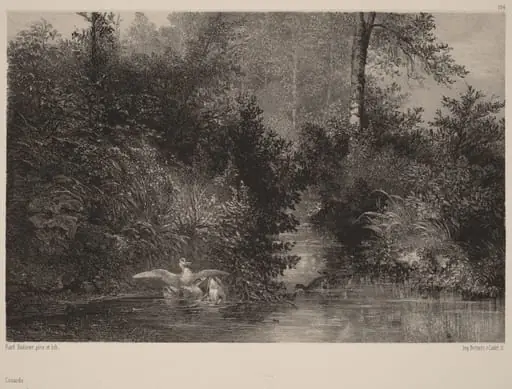
Created in 1906, *A Duck Pond* is a wood engraving by Henry Wolf, a French-born printmaker who established his career in New York after arriving in 1871. The image presents a calm pond populated by ducks, a modest cabin, and a surrounding fence, all rendered in a monochrome palette of grays.
Subject & Meaning
The composition captures a quiet, rural moment: waterfowl glide near the shoreline while a simple wooden cabin and split‑rail fence suggest a pastoral setting. Trees and shrubbery frame the scene, emphasizing the tranquility of everyday life in the early twentieth‑century countryside.
Technique & Style
Wolf employed the fine, linear incisions characteristic of wood engraving, carving intricate textures into a wood block to depict water ripples, grass blades, and feather detail. The resulting print relies on subtle gradations of tone, achieved through closely spaced lines, to convey depth and atmosphere without color.
History & Provenance
Trained under Jacques Levy in Strasbourg, Wolf emigrated to the United States where he built a reputation for translating paintings by artists such as John Singer Sargent and Édouard Manet into engravings. *A Duck Pond* reflects his independent work, produced after he had settled in New York and begun publishing his own prints.
Context
At the turn of the twentieth century, wood engraving remained a popular medium for reproducing artworks and illustrating books. Wolf’s practice bridged European academic training and American commercial printing, situating this piece within a period when detailed black‑and‑white prints were widely circulated for both artistic and editorial purposes.
Artist & collection

Artist
Henry Wolf (1852–1916) was a French-born wood engraver who lived and worked in the United States during his most influential work period and until his death.