Artwork
Buddha's Flowers: Lotus, Tokyo
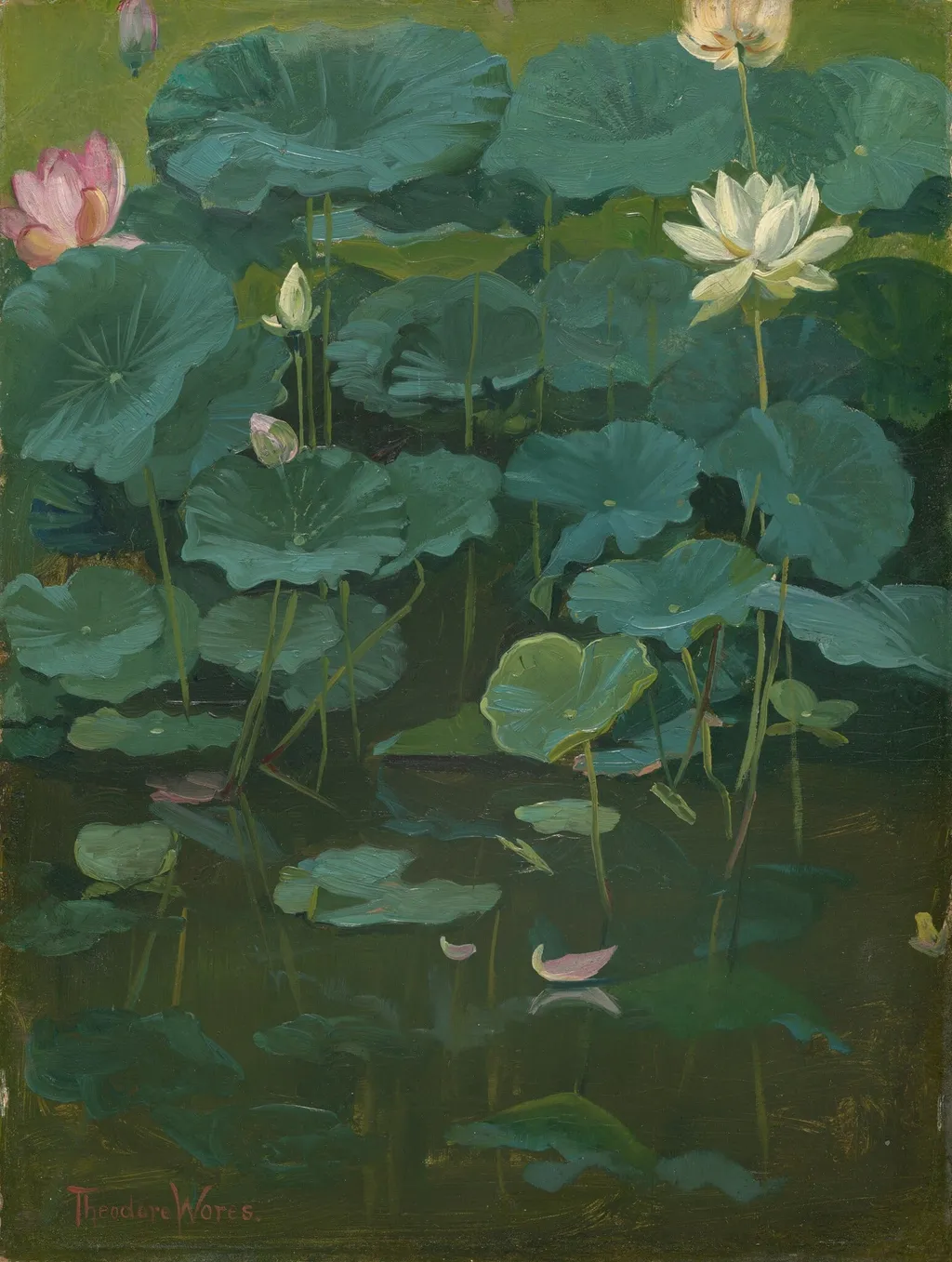
Buddha's Flowers: Lotus, Tokyo is an oil painting by the Impressionist artist Theodore Wores. It dates from 1894 and is held in the collection of the National Gallery of Art. The 1894 oil on board work titled *Buddha’s Flowers: Lotus, Tokyo* was painted by Theodore Wares, an American artist based in San Francisco.
About this work
Overview
The 1894 oil on board work titled *Buddha’s Flowers: Lotus, Tokyo* was painted by Theodore Wares, an American artist based in San Francisco. Executed in the post‑impressionist idiom, the canvas presents a quiet still‑life of lotus blossoms set among broad green lily pads.
Subject & Meaning
The composition centers on a cluster of pink and white lotus flowers floating on a pond surface, their delicate petals contrasting with the dark, glossy leaves. The tranquil arrangement evokes the contemplative atmosphere associated with Buddhist symbolism and Japanese garden aesthetics.
Technique & Style
Visible brushwork gives the surface a textured quality, while a restrained palette of greens, pinks, and whites creates a calm visual rhythm. The handling of light and color reflects post‑impressionist concerns with atmosphere and emotional tone rather than strict realism.
History & Provenance
Wares produced the painting after extensive travels that included Japan, where he encountered local artistic conventions. The work entered the artist’s oeuvre during a period when Western painters were increasingly incorporating Japanese motifs into their practice.
Context
Created at a time when Japonisme influenced many American and European artists, the piece demonstrates how Eastern visual elements were adapted within a Western post‑impressionist framework, merging decorative patterning with a focus on mood.
Own this work as a print
Artist & collection
Artist
Theodore Wores (August 1, 1859 – September 11, 1939) was an American painter. He was from San Francisco, and travelled extensively including periods in Germany, Japan, Hawaii, and Samoa.
