Artwork
Scene from the Ten Days' Campaign against the Belgian Revolt, August 1831
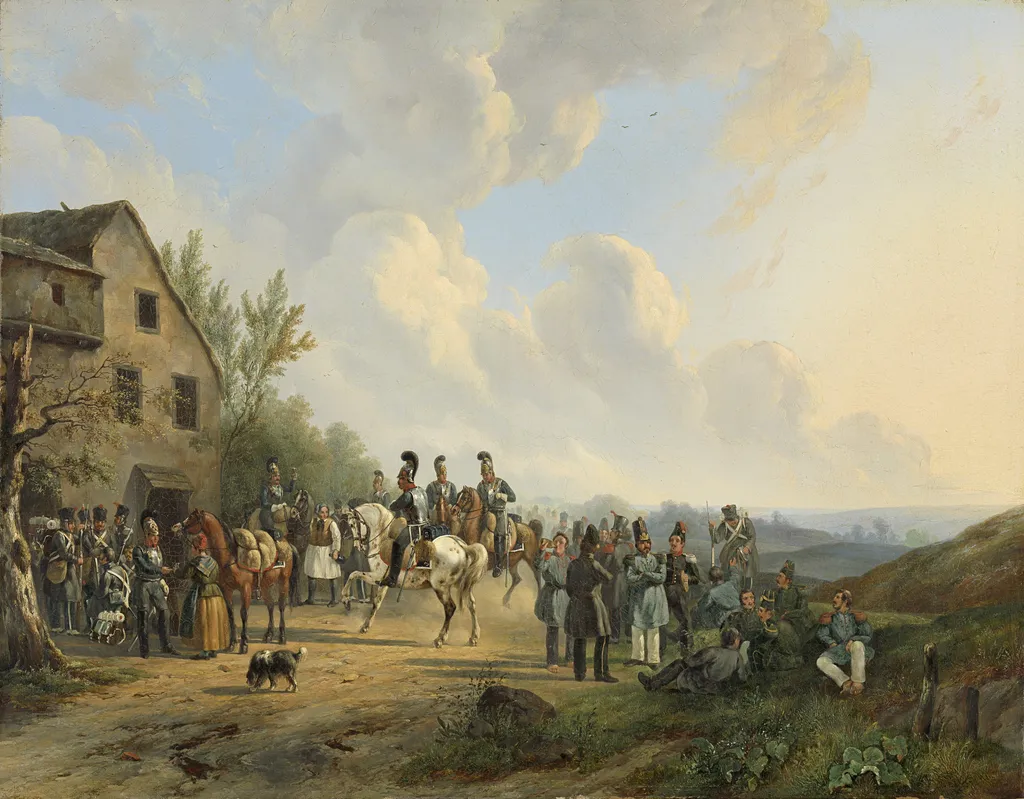
Scene from the Ten Days' Campaign against the Belgian Revolt, August 1831 is an oil painting by Wouterus Verschuur. It dates from 1831 and is held in the collection of the Rijksmuseum.
About this work
Overview
Executed the same year as the events it depicts, the work records a moment from the Dutch military operation that sought to suppress the Belgian uprising.
Wouterus Verschuur’s 1831 oil on canvas, titled *Scene from the Ten Days’ Campaign against the Belgian Revolt, August 1831*, belongs to the history painting tradition. Executed the same year as the events it depicts, the work records a moment from the Dutch military operation that sought to suppress the Belgian uprising. The composition combines a bustling village setting with a mixture of mounted and foot soldiers, offering a narrative snapshot of the campaign.
Subject & Meaning
The painting centers on a small thatched‑roofed settlement where Dutch troops are stationed. Soldiers in varied uniforms—some with feathered shakos, others in long coats—are shown conversing, resting on the grass, or attending to their horses. A lone dog wanders near the road, while tied horses complete the scene, suggesting a temporary pause in the advance and highlighting the everyday reality of military life amid conflict.
Technique & Style
Verschuur employs a Romantic sensibility, emphasizing atmospheric light and vivid detail. The sky is rendered with bright, billowy clouds that illuminate the landscape, while the figures are modeled with careful attention to facial expression and posture. The artist’s handling of texture—particularly in the thatch, horsehair, and fabric—creates a tactile sense of the village’s environment, aligning with Dutch Romanticism’s focus on naturalism and emotional resonance.
History & Provenance
Created in the same year as the Ten Days’ Campaign, the work reflects contemporary interest in documenting national events. Though primarily known for animal and landscape subjects, Verschuur turned to this historical episode as part of a broader 19th‑century Dutch trend of commemorating recent military actions. The painting’s later ownership records are sparse, but it has been cited in catalogues of Dutch Romantic art and displayed in exhibitions concerning the Belgian Revolt.
Context
The Ten Days’ Campaign (August 1831) was a brief Dutch offensive aimed at re‑asserting control over the newly declared Belgian state. Verschuur’s depiction situates the conflict within a civilian setting, contrasting the orderly presence of soldiers with the ordinary village life surrounding them. This juxtaposition mirrors the period’s preoccupation with the impact of warfare on everyday society and the nation’s struggle for identity.
Own this work as a print
Artist & collection
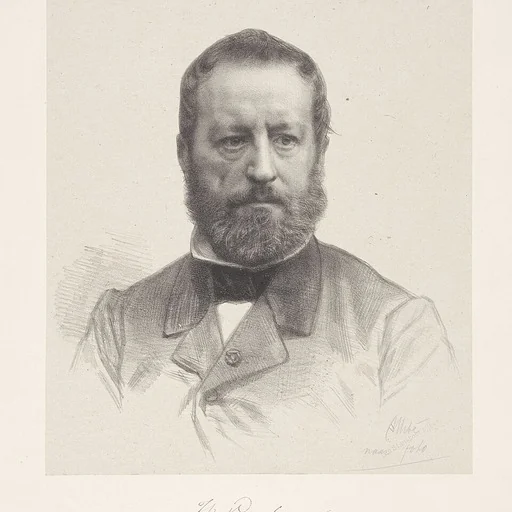
Artist
Wouterus Verschuur (11 June 1812 – 4 July 1874) was a Dutch painter of animal subjects – mainly horses – and of landscapes. He is one of the later representatives of Romanticism in Dutch art.