Artwork
The Five Hundred Arhats

The Five Hundred Arhats is an unspecified painting by the Ming dynasty painting artist Wu Bin. It dates from 1608 and is held in the collection of the Cleveland Museum of Art.
About this work
Overview
The work serves both as a devotional object and a demonstration of the artist's technical virtuosity and encyclopedic knowledge of Buddhist hagiography.
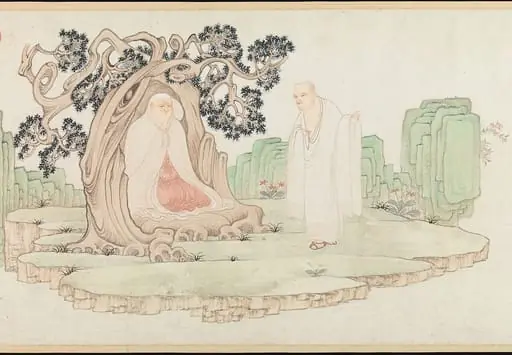
Wu Bin's 'The Five Hundred Arhats,' completed in 1608, is a monumental handscroll depicting the legendary assembly of five hundred enlightened disciples of the Buddha. Executed in ink and color on silk, the work presents a vast procession of figures arranged in rhythmic, dense rows that traverse a landscape of rocks, trees, and distant architectural elements. Wu Bin employs a distinctive, often archaic style characterized by elongated proportions and intricate, linear detail, reflecting his interest in ancient models from the Song and Yuan dynasties. The figures, clad in varied robes of red, black, and earth tones, display a wide range of gestures and expressions, from meditative stillness to animated interaction, emphasizing their individual spiritual attainments. Created during the late Ming dynasty, this painting stands as a significant example of Wu Bin's mature output, showcasing his ability to synthesize traditional iconography with a highly personal, almost fantastical approach to figure painting. The work serves both as a devotional object and a demonstration of the artist's technical virtuosity and encyclopedic knowledge of Buddhist hagiography.
Subject & Meaning
The artwork portrays the Five Hundred Arhats, a group of disciples of the Buddha who achieved enlightenment and are revered for their spiritual accomplishments. Wu Bin arranges these figures in a structured manner, suggesting their collective presence and individual significance within the Buddhist tradition. Their varied postures, including some with clasped hands, convey a sense of reverence and contemplation, central to their spiritual role.
Technique & Style
Wu Bin employs a distinctive visual approach in this painting, characterized by its elongated format and detailed rendering of numerous figures. The artist utilizes a palette primarily of red and black for the robes, creating a dynamic contrast that energizes the composition. These figures are meticulously placed in rows, with some appearing more prominent, demonstrating a careful consideration of spatial arrangement and visual hierarchy within the expansive scene.
Artist & collection