Artwork
Black Escarpment
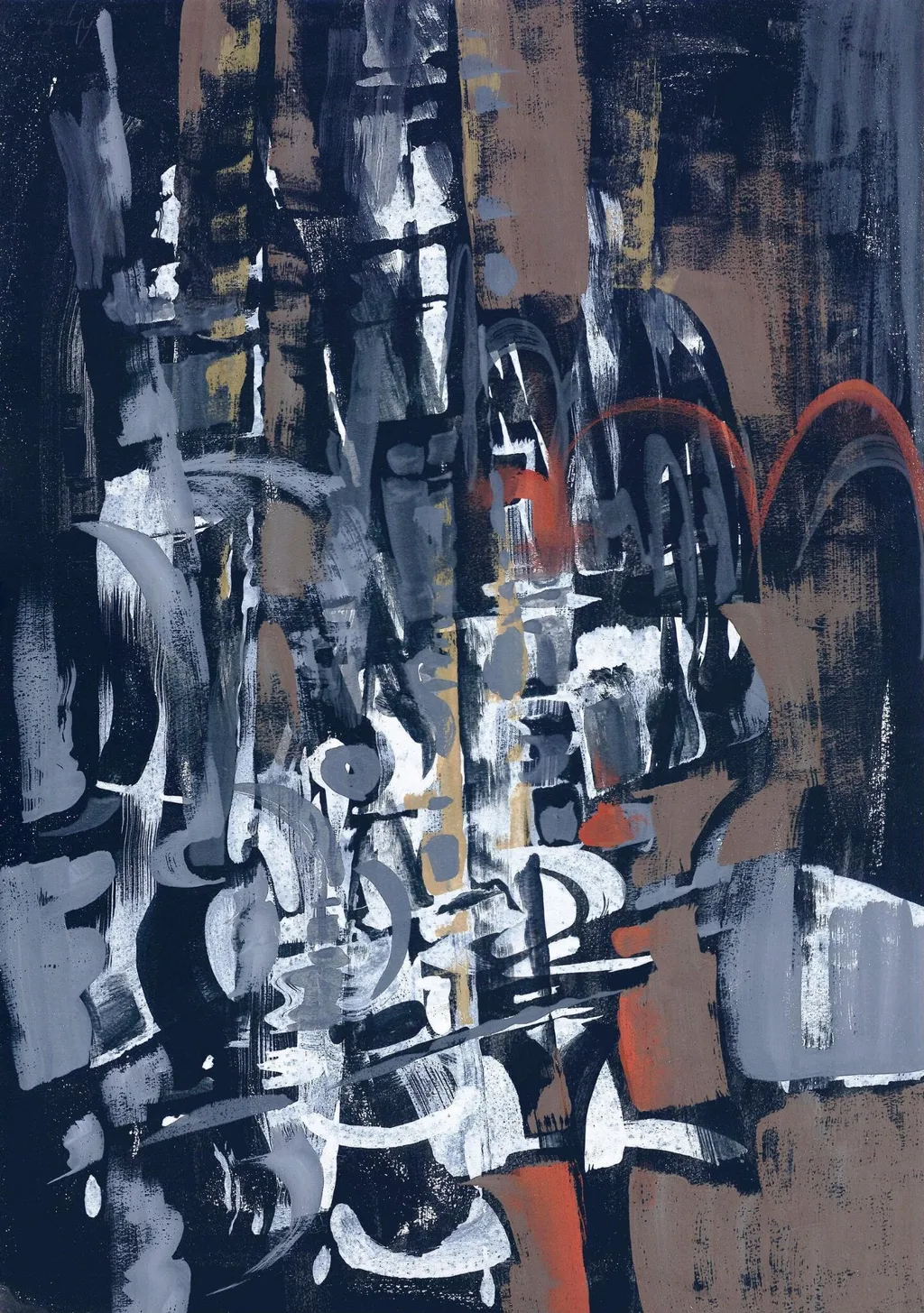
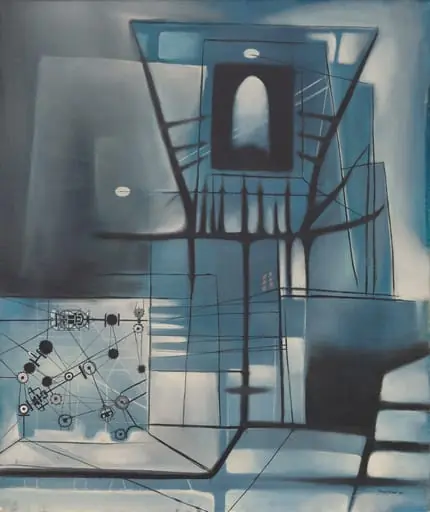
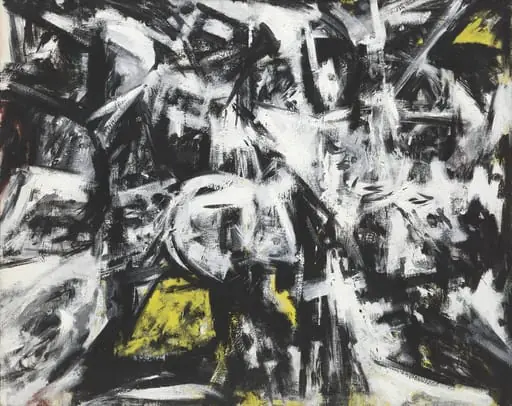
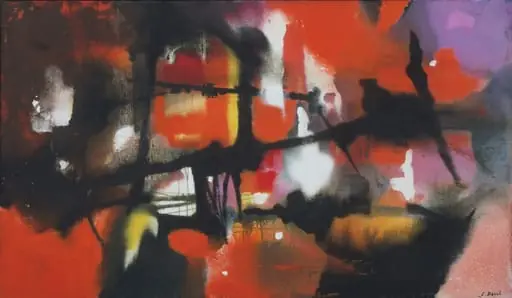
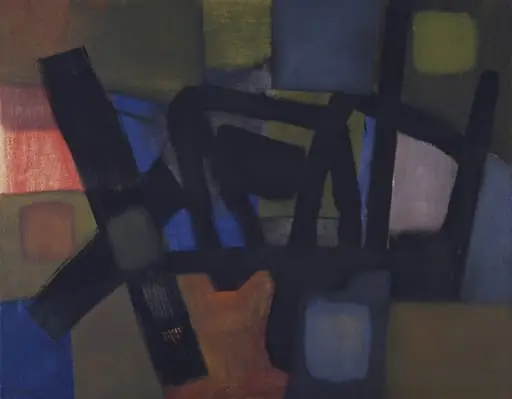
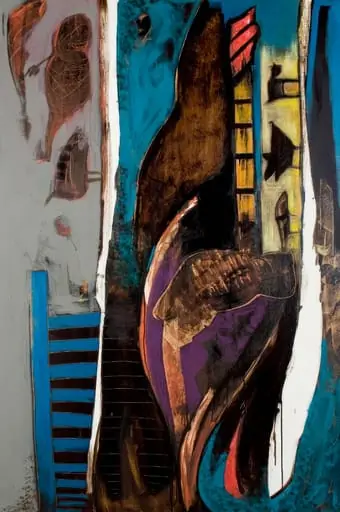
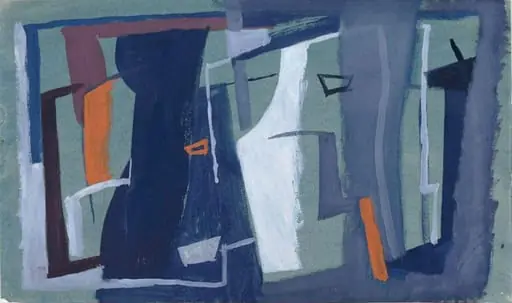
Black Escarpment is a watercolor work on paper by the Abstract Expressionist artist Bryan Wynter. It dates from 1960 and is held in the collection of the Victoria and Albert Museum.
About this work
Overview
Bryan Wynter’s 1960 watercolour, titled Black Escarpion, presents an abstract composition dominated by dense, irregular brushwork. The work bears the artist’s signature and date on its front, while the title and year are also noted on the mounting board. Its visual field is saturated with deep blues, stark whites, and rust‑colored reds, arranged in a way that resists immediate identification.
Subject & Meaning
The painting suggests a rugged landscape, with forms that may hint at cliffs or trees, yet the blurred boundaries keep the scene ambiguous. By allowing the colors to merge and the shapes to dissolve, Wynter invites viewers to contemplate the tension between natural solidity and the fleeting, atmospheric qualities of watercolour.
Technique & Style
Although watercolour typically yields smooth washes, Wynter builds up the medium in thick, uneven strokes that resemble impasto, creating a tactile surface reminiscent of a craggy hillside. The deliberate clumping of pigment produces a rough texture, contrasting with the medium’s usual fluidity and emphasizing the work’s abstract, gestural energy.
History & Provenance
Signed and dated “Wynter ’60,” the piece reflects the artist’s mature period in the early 1960s, when he explored abstracted natural forms through unconventional watercolour applications. The title and date inscribed on the mount confirm its provenance, linking the work directly to Wynter’s documented output of that year.
Artist & collection
Artist
Bryan Wynter’s later works drift into semi-abstract shapes and layered washes. Black Escarpment, a 1960 watercolour, piles inky blues and blacks into a cliff-like form that dissolves at the edges. The piece belongs to…