Artwork
Northwest D6
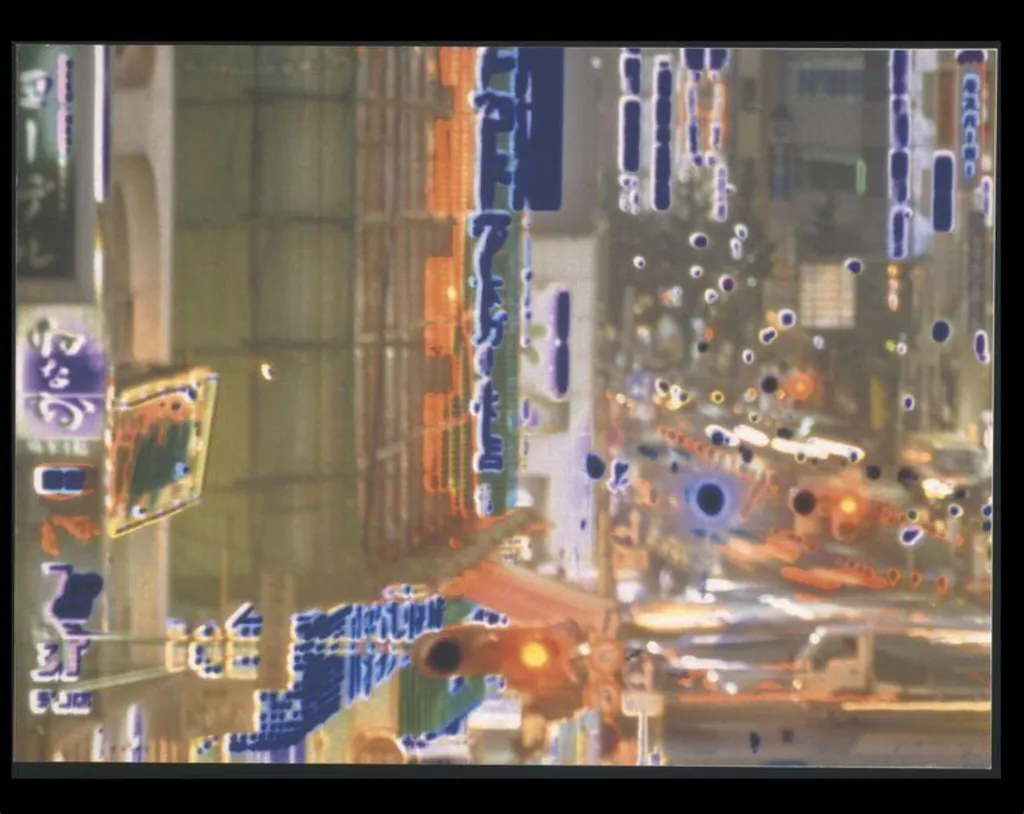
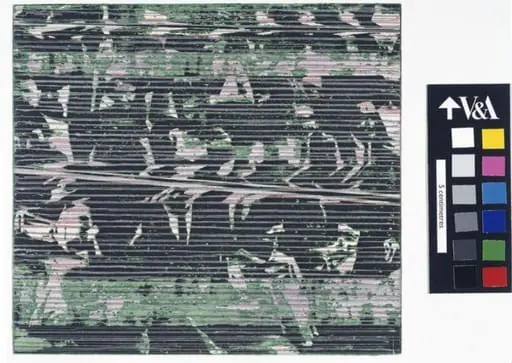
Northwest D6 is a print by Catherine Yass. It dates from 2001 and is held in the collection of the Victoria and Albert Museum.
About this work
Overview
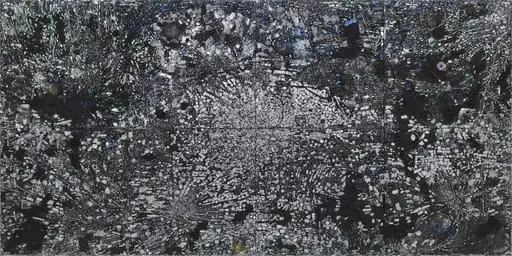
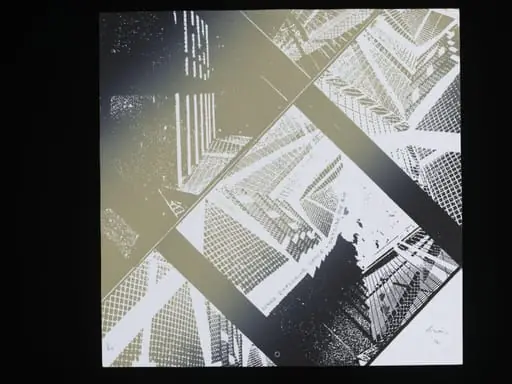
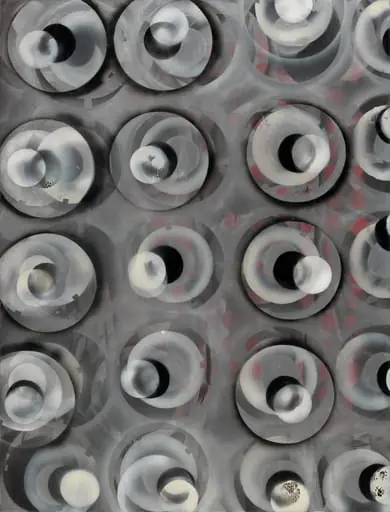
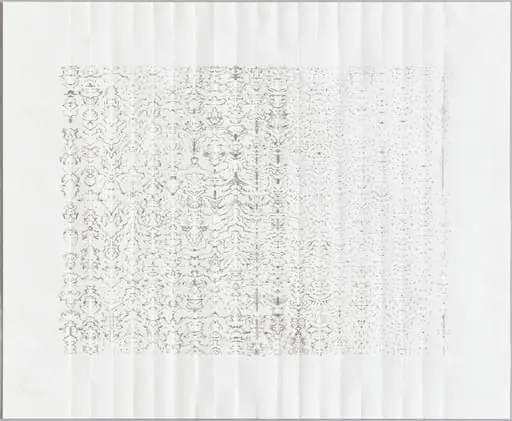
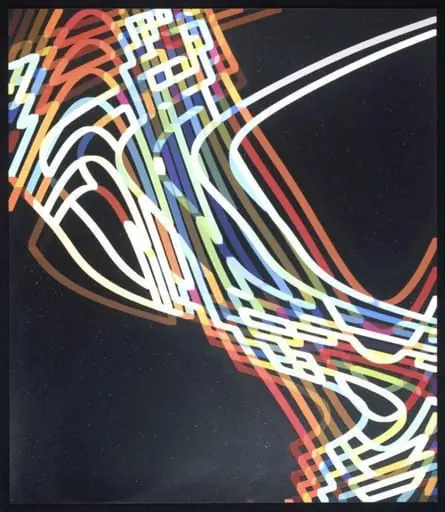
Catherine Yass created this digital ink-jet print as part of her Northwest D6 series, derived from a nighttime photograph taken in Tokyo. By isolating and magnifying a minor fragment of the original image, she transforms a fleeting urban moment into a structured, repetitive composition that blurs the line between documentary photography and abstract printmaking.
Subject & Meaning
The subject is a fragment of a Tokyo street at night, rendered unrecognizable through enlargement and duplication. Rather than depicting a specific location, the work evokes the intensity of urban sensory experience—flashing signs, overlapping lights, and visual noise—conveying the disorienting rhythm of a densely lit metropolis through abstraction.
Technique & Style
Yass employs digital ink-jet printing to replicate the photographic detail in both positive and negative forms, layering them to generate chromatic complexity. The repetition of the motif creates rhythmic patterns that dissolve the image’s original context, emphasizing texture and color over narrative, and foregrounding the materiality of the print process.
History & Provenance
Northwest D6 belongs to a series Yass developed in the early 2000s, responding to her photographic studies of urban environments in Japan. The work emerged from her interest in how photographic fragments, when reconfigured, can generate new visual languages, positioning it within her broader exploration of perception and representation.
Context
The piece reflects a broader artistic interest in the 2000s in deconstructing photographic realism through repetition and abstraction. Yass’s approach aligns with contemporaneous practices that questioned the indexical nature of photography, using digital tools to explore how images can be transformed into sensory experiences rather than records.
Legacy
Northwest D6 contributes to ongoing dialogues about the boundaries between photography and printmaking in the digital age. Its influence lies in demonstrating how algorithmic repetition and scale can convert documentary material into abstract compositions, expanding the possibilities of photographic-based art beyond traditional framing.
Artist & collection