Artwork
Villa in a Wintry Landscape
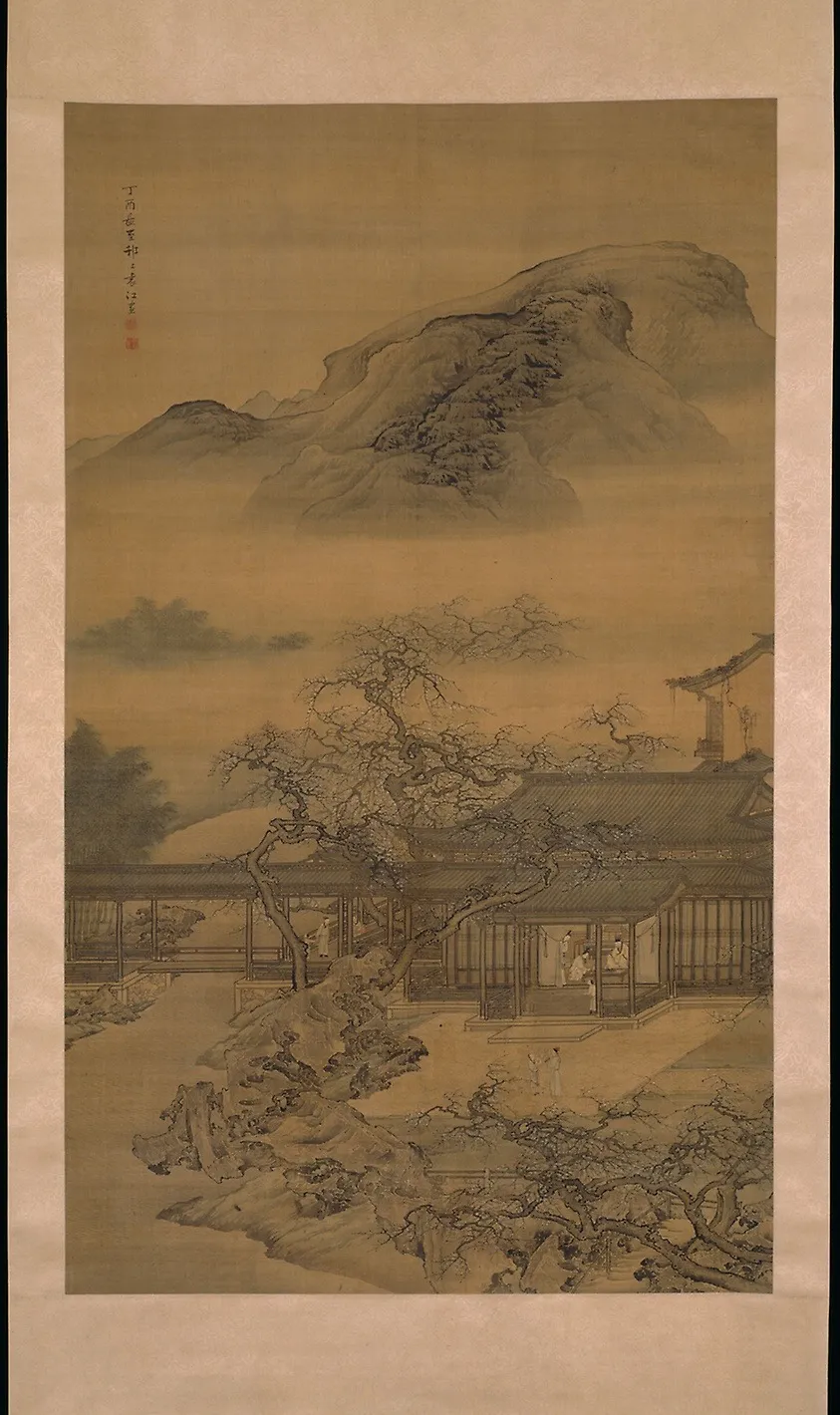
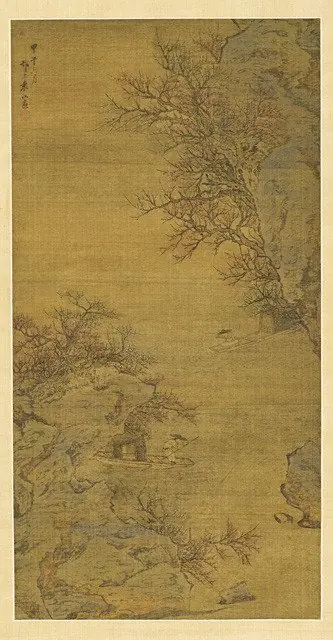
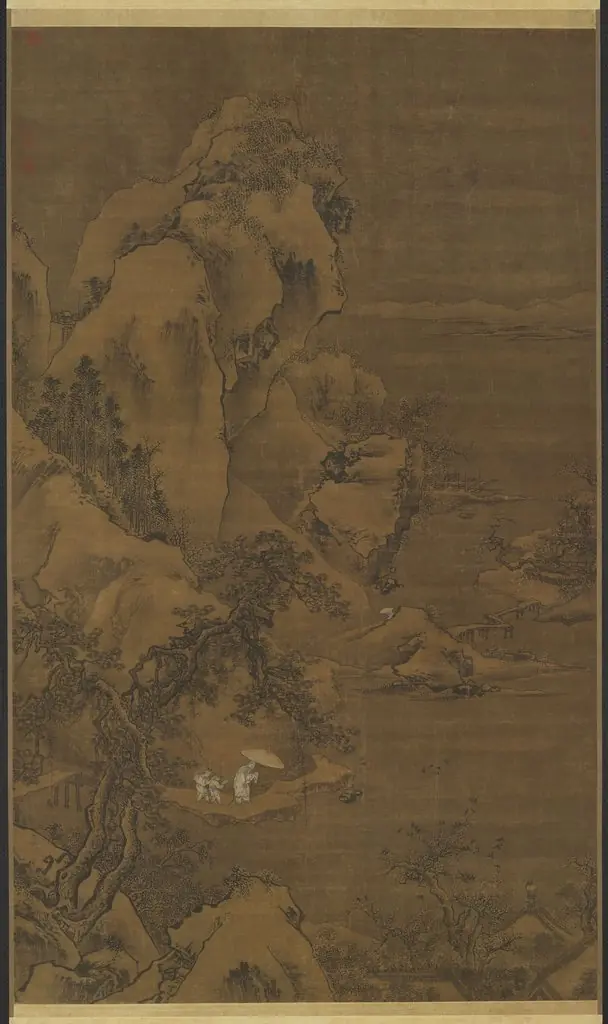
Villa in a Wintry Landscape is an unspecified painting by Yuan Jiang. It dates from 1717 and is held in the collection of the Art Institute of Chicago.
About this work
Overview
Painted in 1717 by Yuan Jiang, this landscape depicts a quiet winter scene centered on a secluded villa. The work is executed in traditional Chinese ink and color on silk, reflecting the literati aesthetic of the early Qing dynasty. It is currently held in the collection of the Art Institute of Chicago, where it serves as an example of court-sponsored landscape painting from the period.
Subject & Meaning
The villa, nestled among bare winter trees, suggests retreat and contemplation. A solitary figure stands near the structure, reinforcing themes of solitude and harmony with nature. The distant mountains and hazy sky evoke a sense of vastness and stillness, aligning with Daoist ideals of quietude and the impermanence of human presence within the natural world.
Technique & Style
Subtle gradations of ink and muted pigments create atmospheric depth, while layered perspectives guide the viewer’s eye from foreground to distant peaks.
Yuan Jiang employs fine brushwork to render textures of snow-laden branches, rocky outcrops, and tiled roofs with precision. Subtle gradations of ink and muted pigments create atmospheric depth, while layered perspectives guide the viewer’s eye from foreground to distant peaks. The composition balances architectural detail with natural elements, characteristic of the professional painter tradition in early 18th-century China.
History & Provenance
Commissioned during the reign of the Kangxi Emperor, the painting reflects the imperial court’s patronage of artists skilled in classical landscape traditions. Yuan Jiang, known for his architectural precision, likely produced this work for elite collectors. It entered the Art Institute of Chicago’s collection in the 20th century, having passed through private hands in China and later abroad.
Context
In early 18th-century China, landscape painting remained a dominant genre among scholar-officials and court artists. While literati painters favored spontaneity, professionals like Yuan Jiang maintained meticulous techniques rooted in Song and Yuan precedents. This painting exemplifies the fusion of imperial taste with enduring aesthetic principles, bridging artistic heritage and contemporary patronage.
Legacy
Yuan Jiang’s work contributed to the continuity of Chinese landscape painting during a period of stylistic transition. His attention to architectural detail and atmospheric space influenced later court artists. Today, this painting is studied as a representative example of professional painting in the Qing dynasty, offering insight into the relationship between power, aesthetics, and nature in early modern China.
Artist & collection


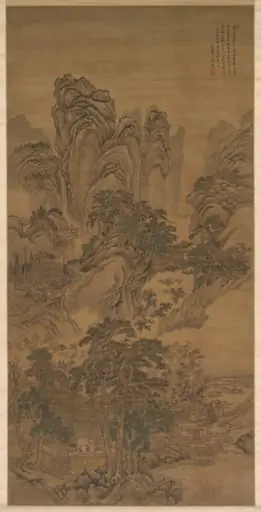 Landscape
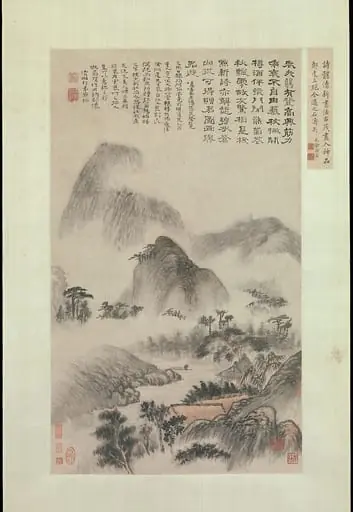 清 石濤(朱若極) 重陽山水圖 軸|Landscape Painted on the Double Ninth Festival
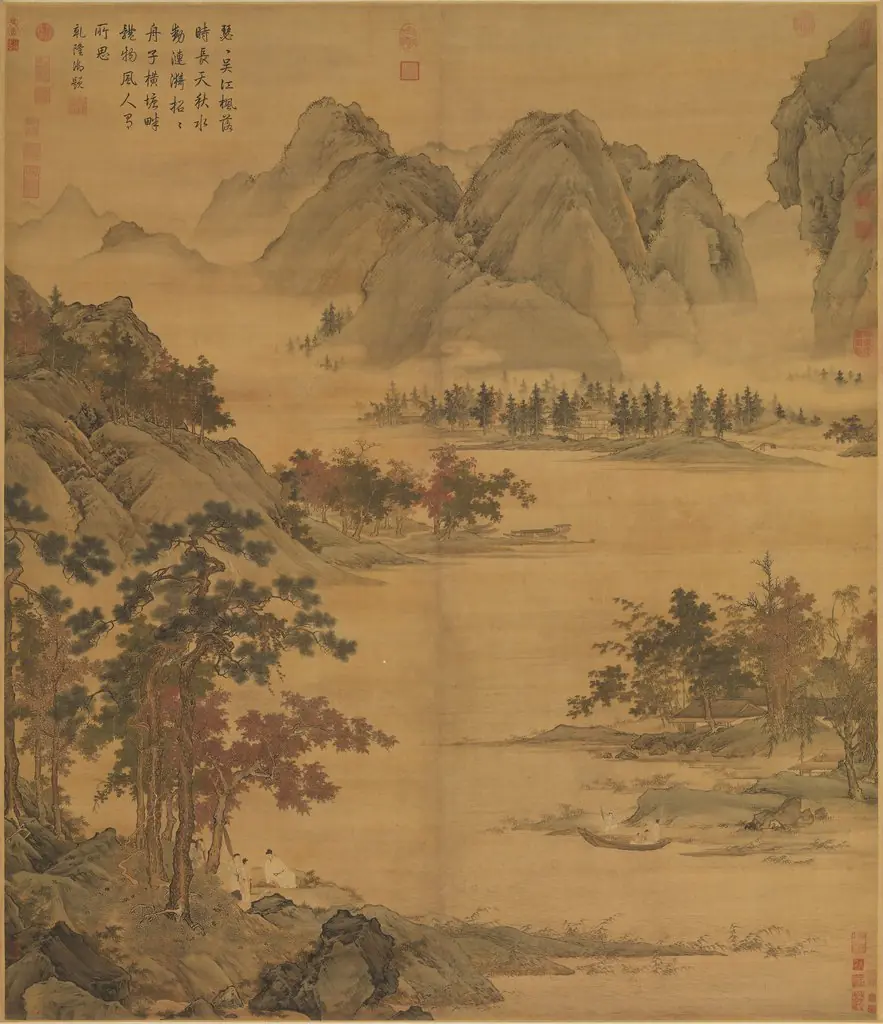 Waiting for the Ferry on an Autumn River
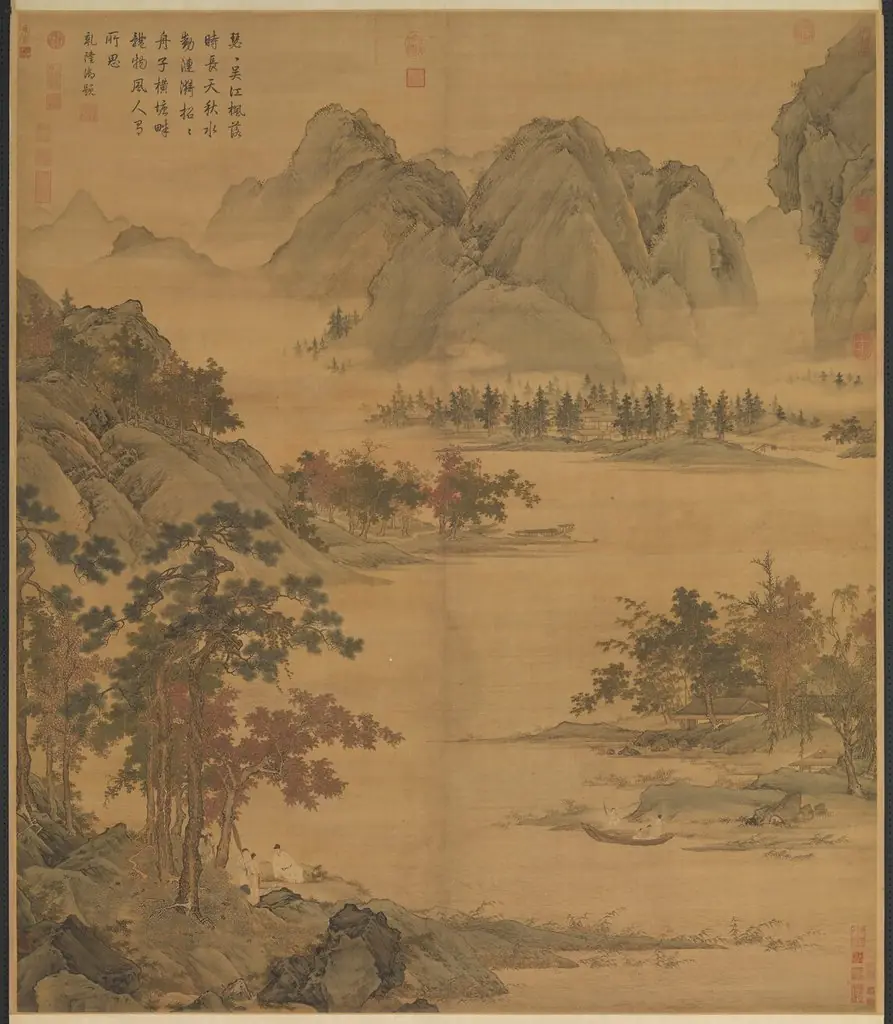 明仇英秋江待渡 軸
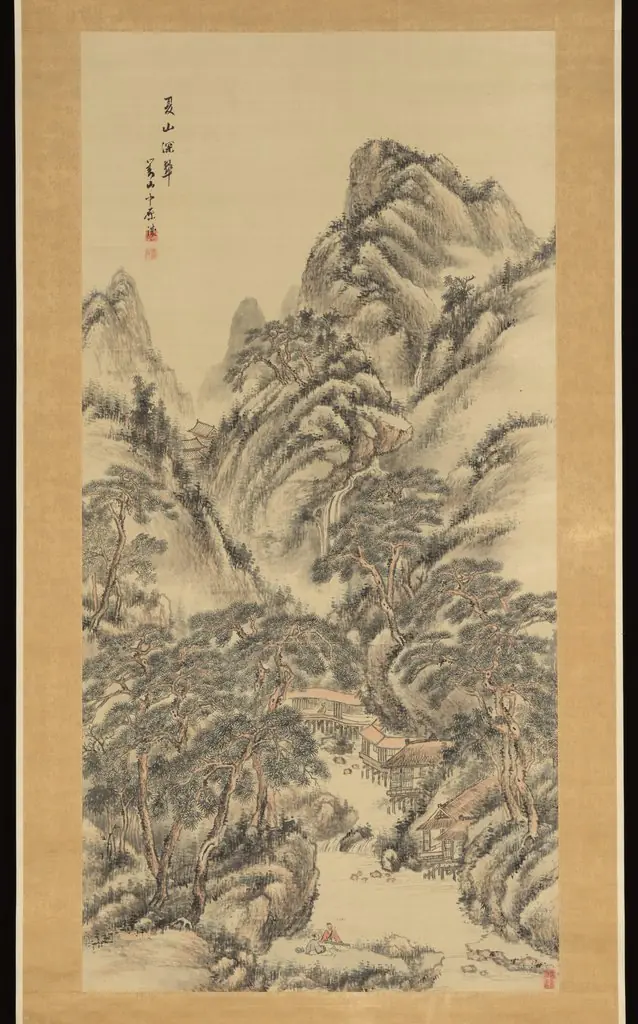 “The Deep Green of Summer Mountains”
 Untitled
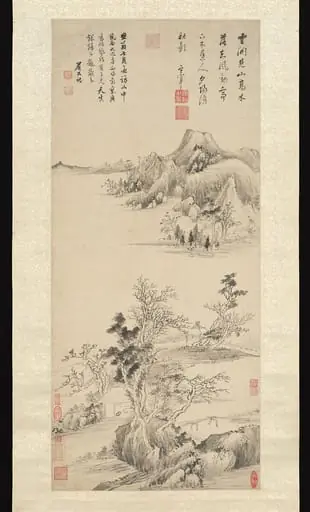 明 董其昌 秋山圖 軸|Autumn Mountains
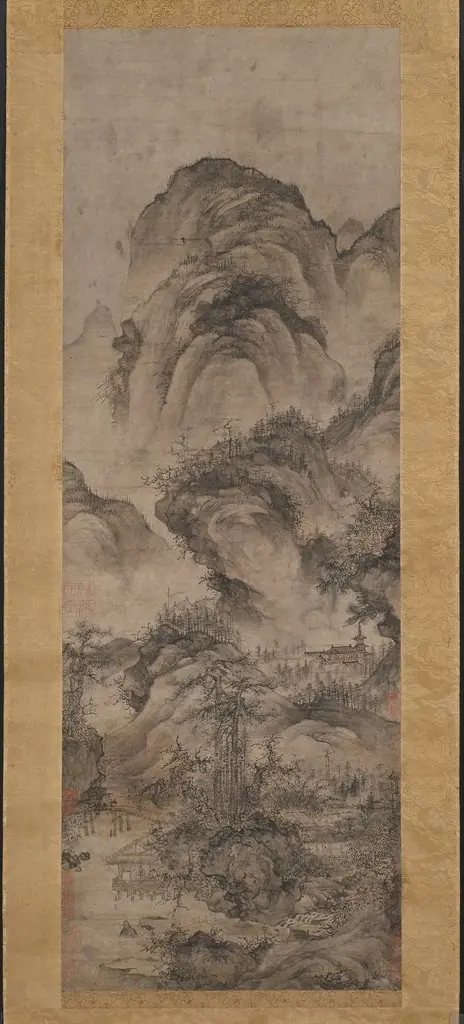 Water Pavilion by Twin Pines
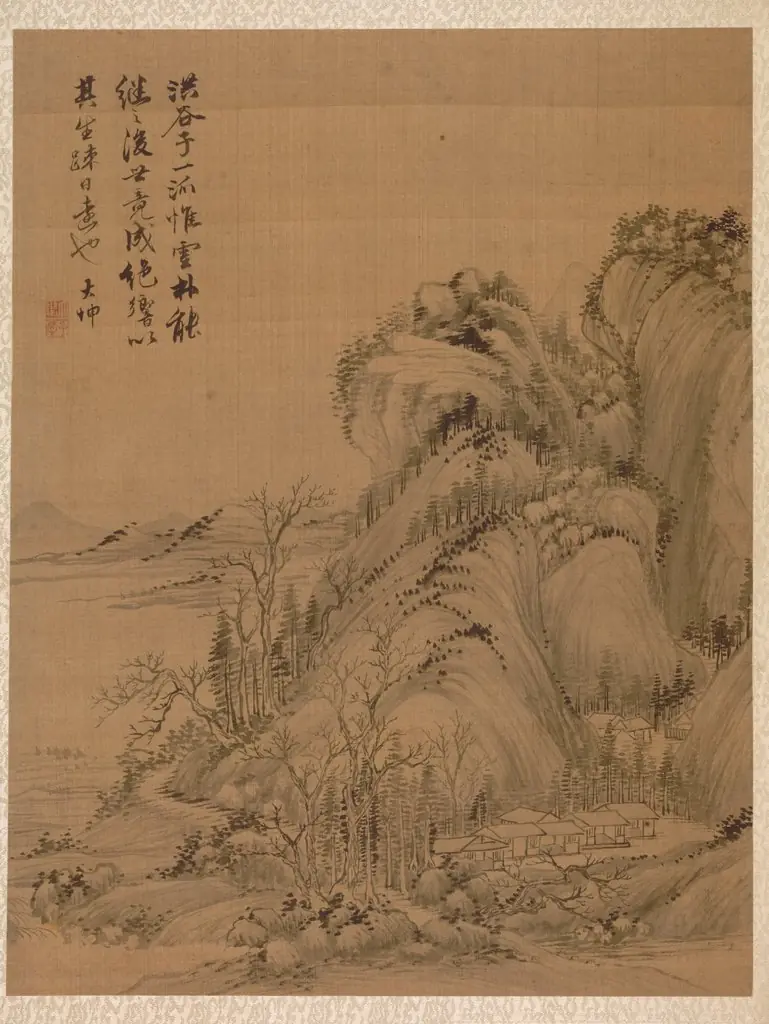 Landscape in the Style of Ching Hao
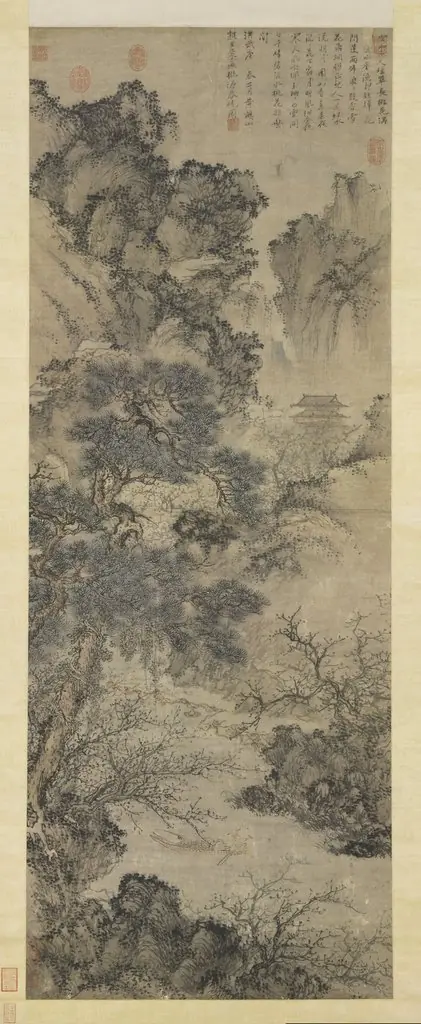 Vernal Dawn at the Peach Blossom Spring
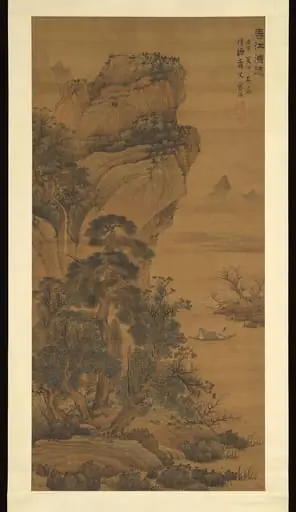 明 藍瑛 春江漁隱圖 軸|Hermit-Fisherman on a Spring River
 Searching for Plum Blossoms