Artwork
The Barnyard
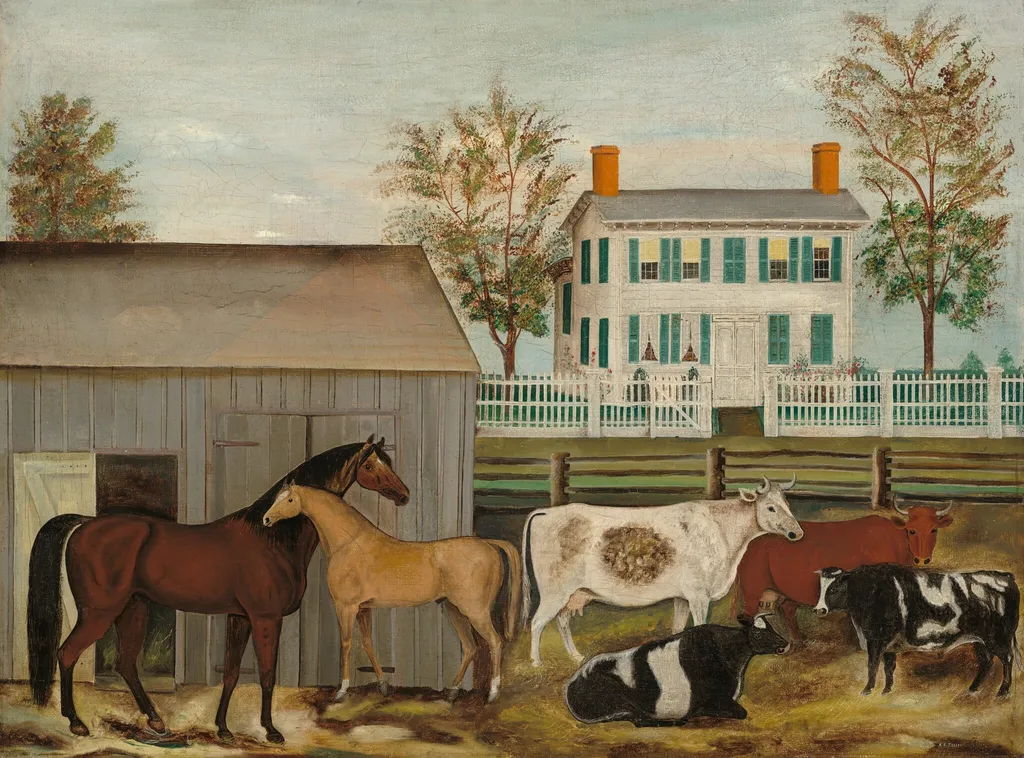
The Barnyard is an oil painting by the Impressionist artist Amzi Emmons Zeliff. It dates from 1850 and is held in the collection of the National Gallery of Art.
About this work
Overview
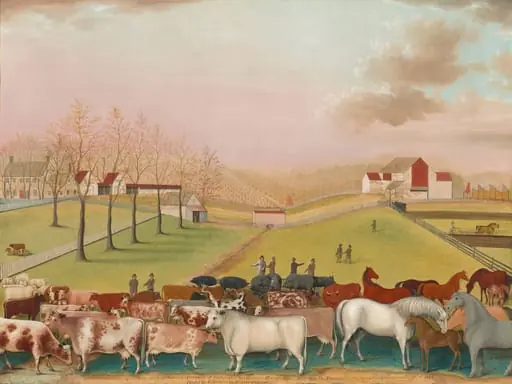
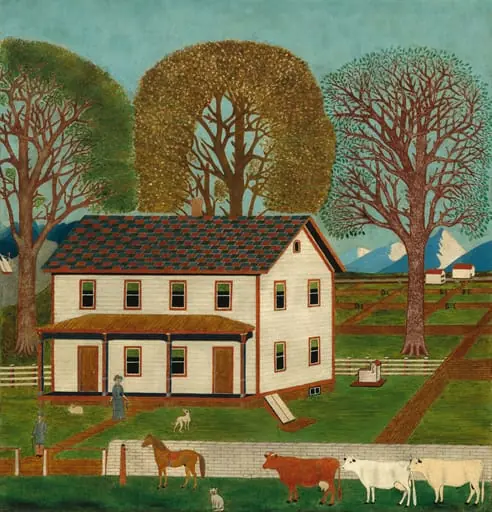
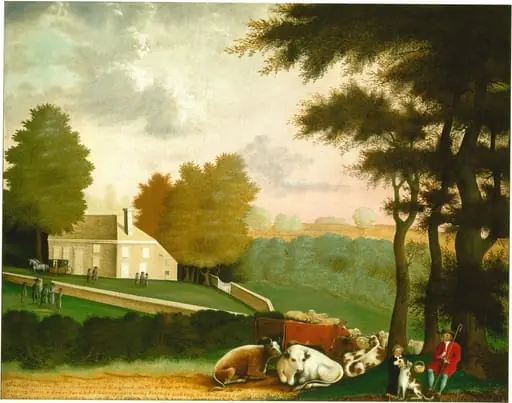
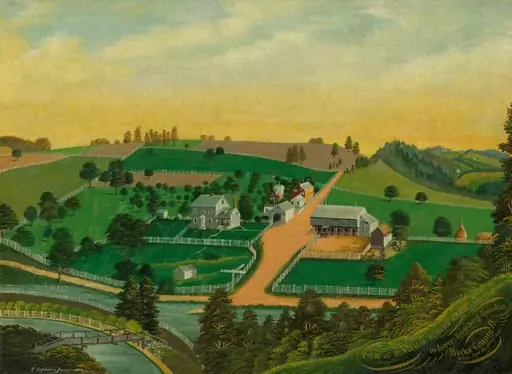
Amzi Emmons Zeliff’s oil on canvas, The Barnyard, dates to around 1850. The work depicts a rural setting populated by livestock and structures, arranged in a compact composition that foregrounds the daily rhythms of a working farm.
Subject & Meaning
At the center, two horses—one dark brown, the other light tan—stand beside a timber barn. A white cow with a smudge of earth lies on the ground, while a red cow and a black‑and‑white calf occupy the foreground. Behind the barn, a white house with green shutters and a chimney completes the scene, suggesting a self‑contained farmstead.
Technique & Style
Zeliff employs a palette of straightforward, unadorned colors, allowing each animal and building to be readily identified. The brushwork is relatively loose, lending a softened, natural atmosphere that avoids meticulous detail in favor of an overall impression of farm life.
History & Provenance
Created circa 1850, The Barnyard reflects mid‑nineteenth‑century American interest in rural subjects. While specific ownership records are limited, the painting has been cited in surveys of American genre painting as an example of Zeliff’s focus on everyday agricultural scenes.
Context
The work aligns with the broader Realist movement, which sought to portray ordinary people and settings without idealization. Zeliff’s attention to the practical aspects of farm work places the piece within a tradition of American artists documenting the nation’s agrarian landscape during a period of rapid change.
Own this work as a print
Artist & collection