Artwork
Desk Album: Flower and Bird Paintings (Preening Bird)
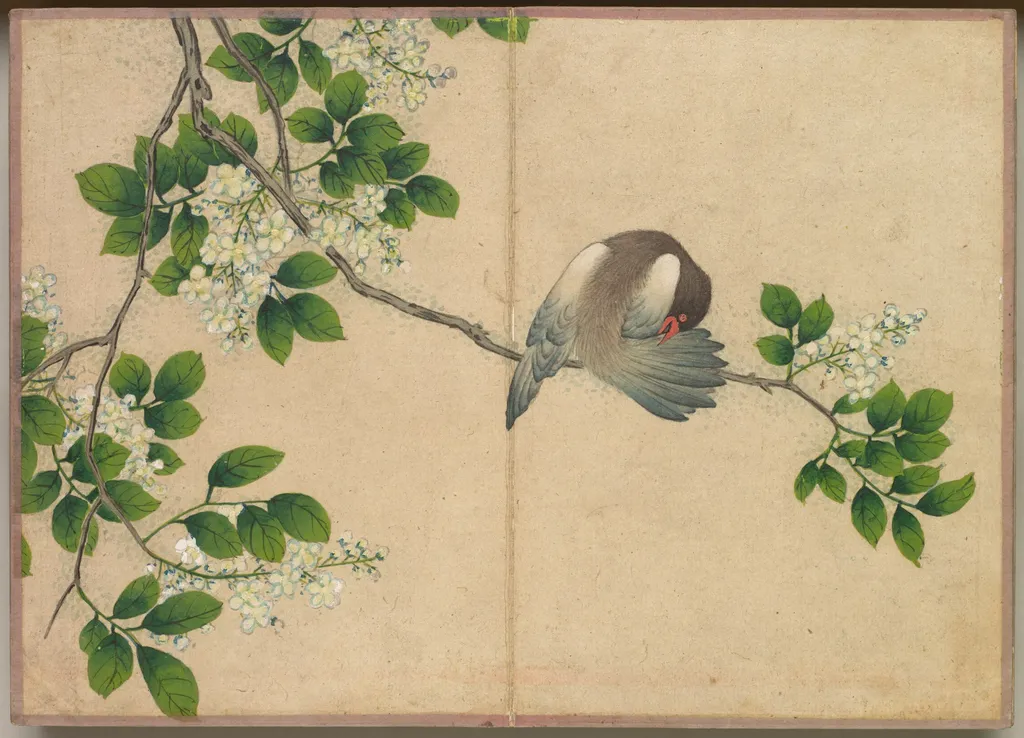
Desk Album: Flower and Bird Paintings (Preening Bird) is an unspecified painting by the Rococo painting artist Zhang Ruoai. It is held in the collection of the Cleveland Museum of Art.
About this work
The painting's attention to detail and use of color create a sense of depth and texture, drawing the viewer in and inviting them to explore the scene further.
This painting depicts a bird perched on a branch, preening its feathers. The bird has a brown head and back, with a white belly and blue tail feathers. It faces away from the viewer, with its head tucked under its wing. The branch is adorned with green leaves and white flowers.
The background of the painting is a light beige color, which provides a subtle contrast to the vibrant colors of the bird and flowers. The overall effect is one of serenity and tranquility, as if the bird is lost in thought as it tends to its feathers.
The painting's attention to detail and use of color create a sense of depth and texture, drawing the viewer in and inviting them to explore the scene further. Next, explore the works of artist Zhang Ruoai (Chinese, 1713–1746).
Overview
Created around 1750 by Zhang Ruoai, this small-format painting belongs to the Desk Album series of flower and bird subjects. It is part of the collection of the Cleveland Museum of Art. The work presents a solitary bird engaged in self‑grooming, set against a muted beige background that emphasizes the delicate botanical elements.
Subject & Meaning
The central figure is a bird with a brown head and back, a white belly and striking blue tail feathers, perched on a branch of green leaves and white blossoms. Its head is tucked beneath its wing as it preens, a gesture traditionally associated with care, renewal and the quiet rhythms of nature.
Technique & Style
Zhang Ruoai renders the scene with fine brushwork that captures the texture of feathers and the translucency of foliage. The palette balances vivid bird plumage against the soft, almost pastel ground, creating depth through subtle tonal shifts while maintaining a calm, harmonious composition.
History & Provenance
The painting was produced in the mid‑eighteenth century, a period when Chinese scholars often compiled small albums of natural subjects for personal contemplation. It entered the Cleveland Museum of Art’s holdings through acquisition in the twentieth century, where it remains on view as an example of Qing‑era bird-and-flower painting.
Artist & collection

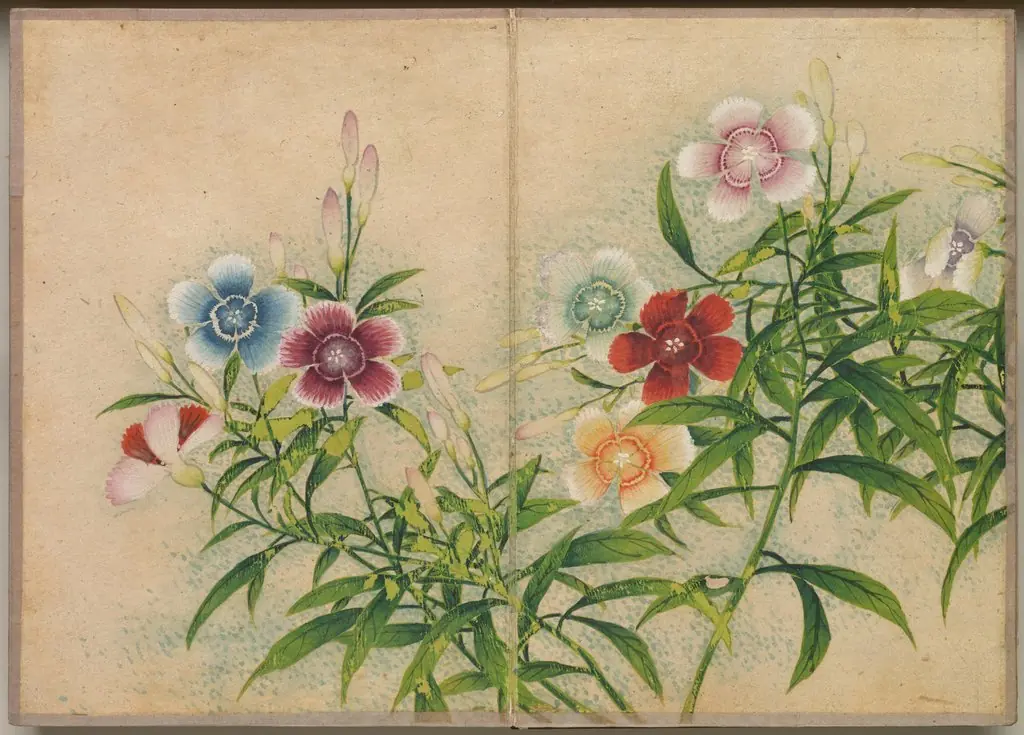 Desk Album: Flower and Bird Paintings (Pinks)
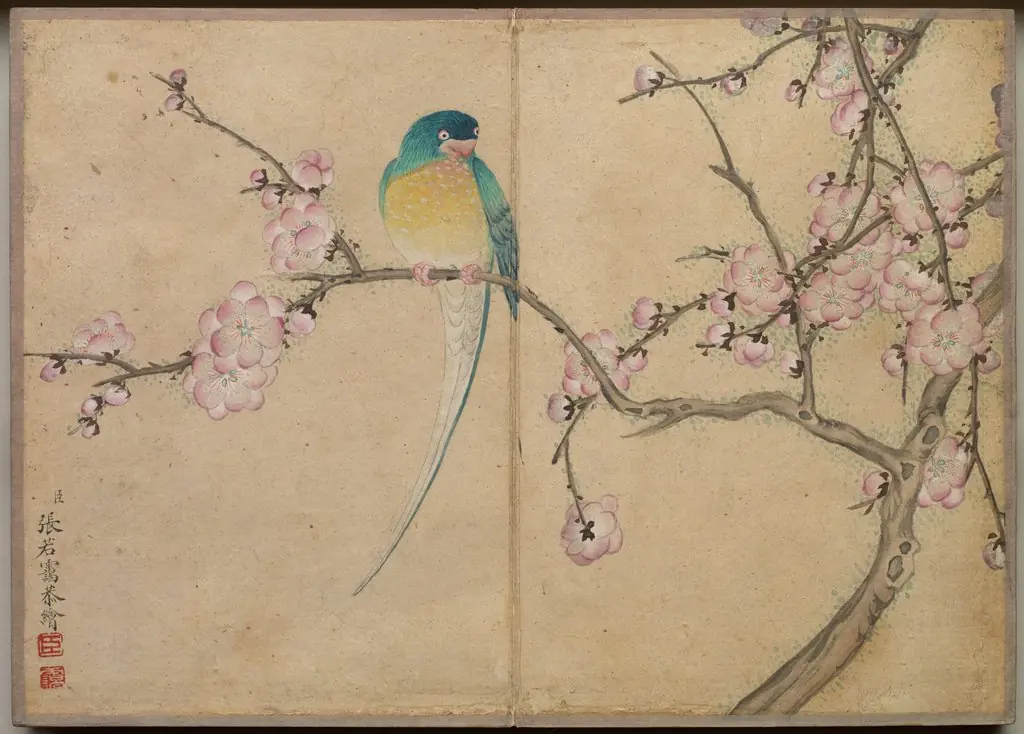 Desk Album: Flower and Bird Paintings (Bird with Plum Blossoms)
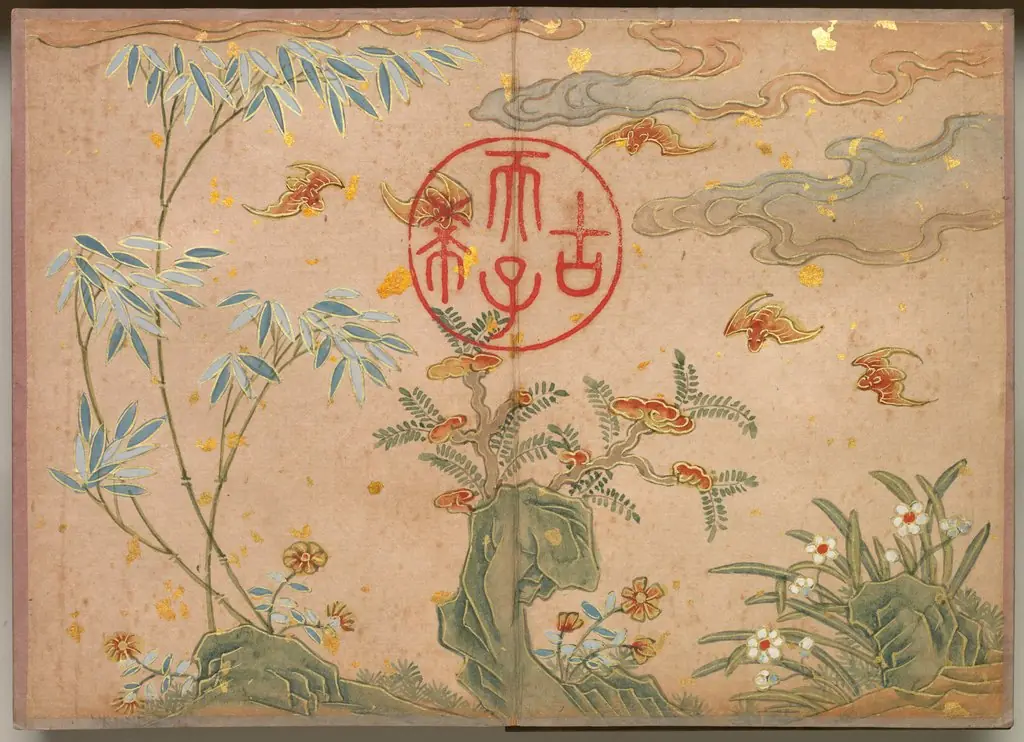 Desk Album: Flower and Bird Paintings (Bats, rocks, flowers circular calligraphy)
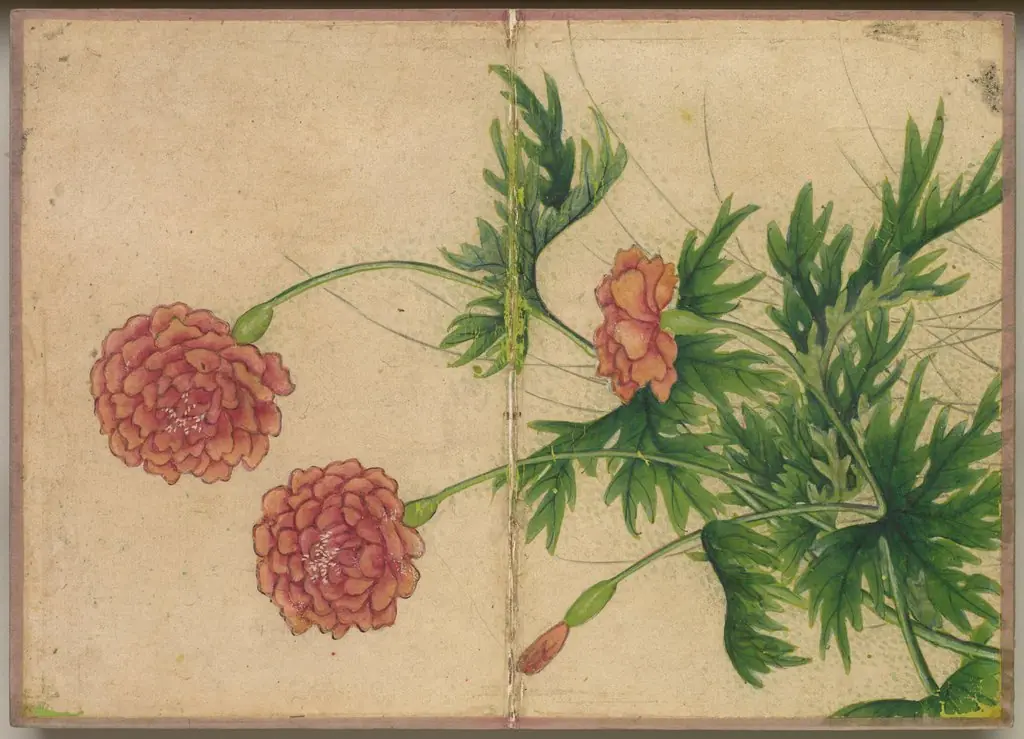 Desk Album: Flower and Bird Paintings (Peony)
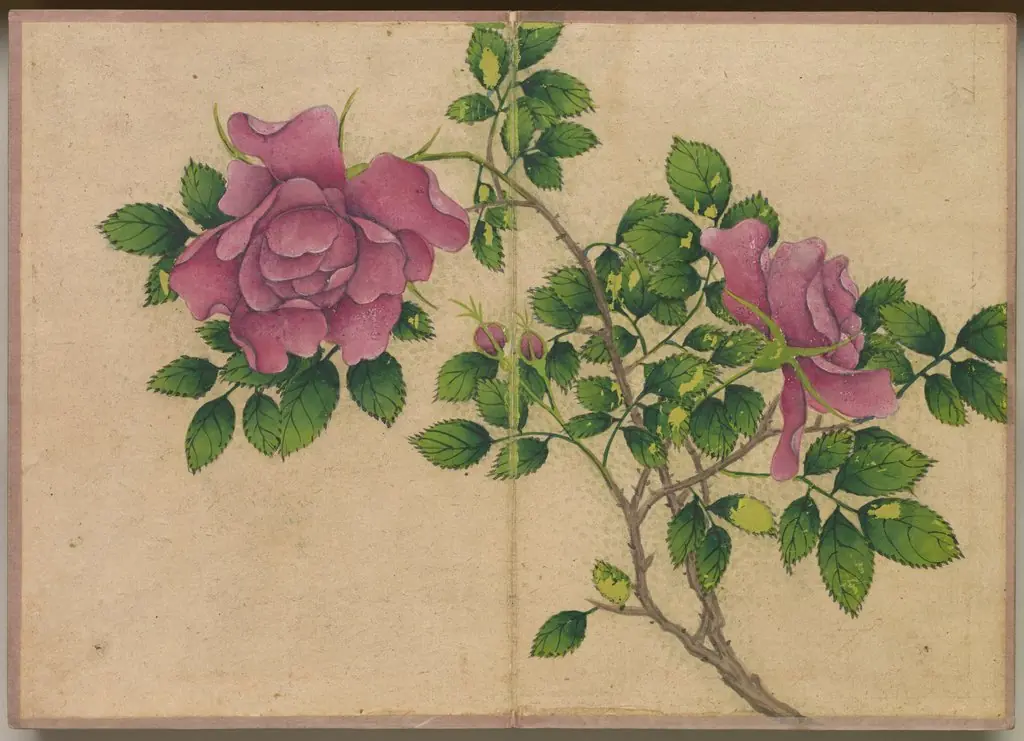 Desk Album: Flower and Bird Paintings (Rose)
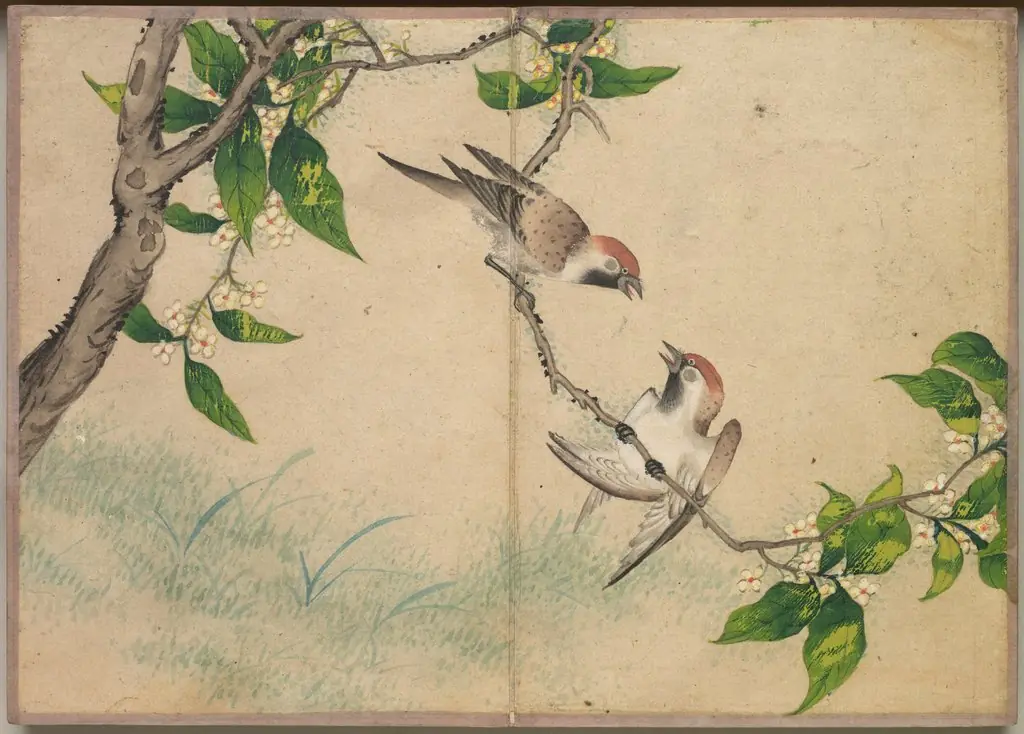 Desk Album: Flower and Bird Paintings (Gossiping Sparrows)
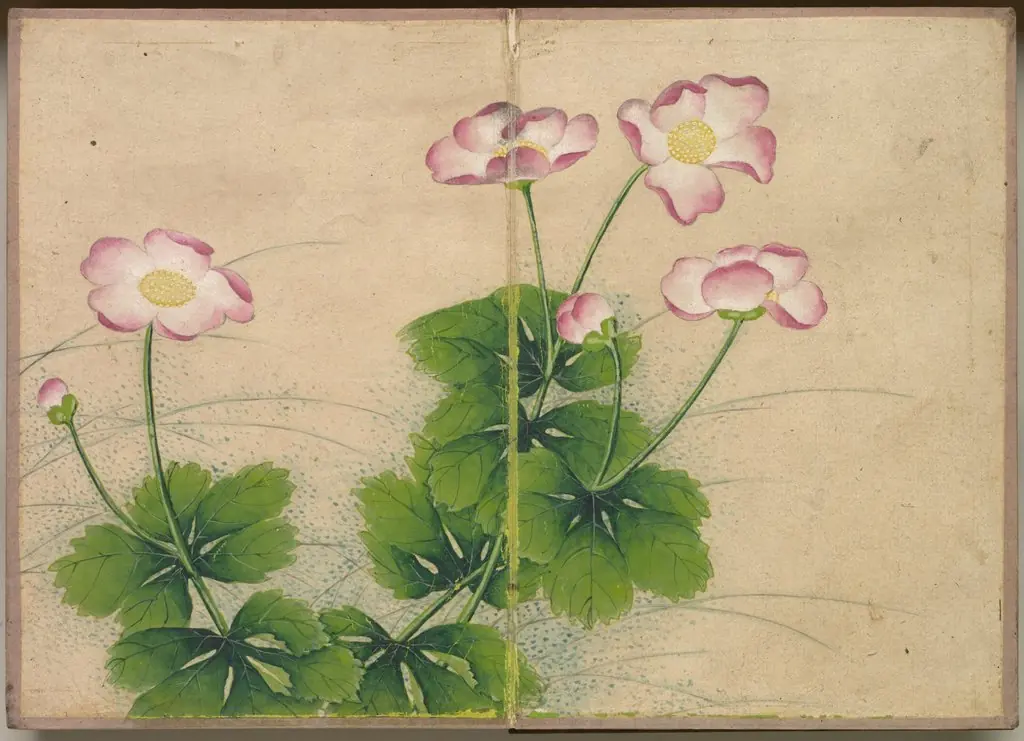 Desk Album: Flower and Bird Paintings (mallow flowers)
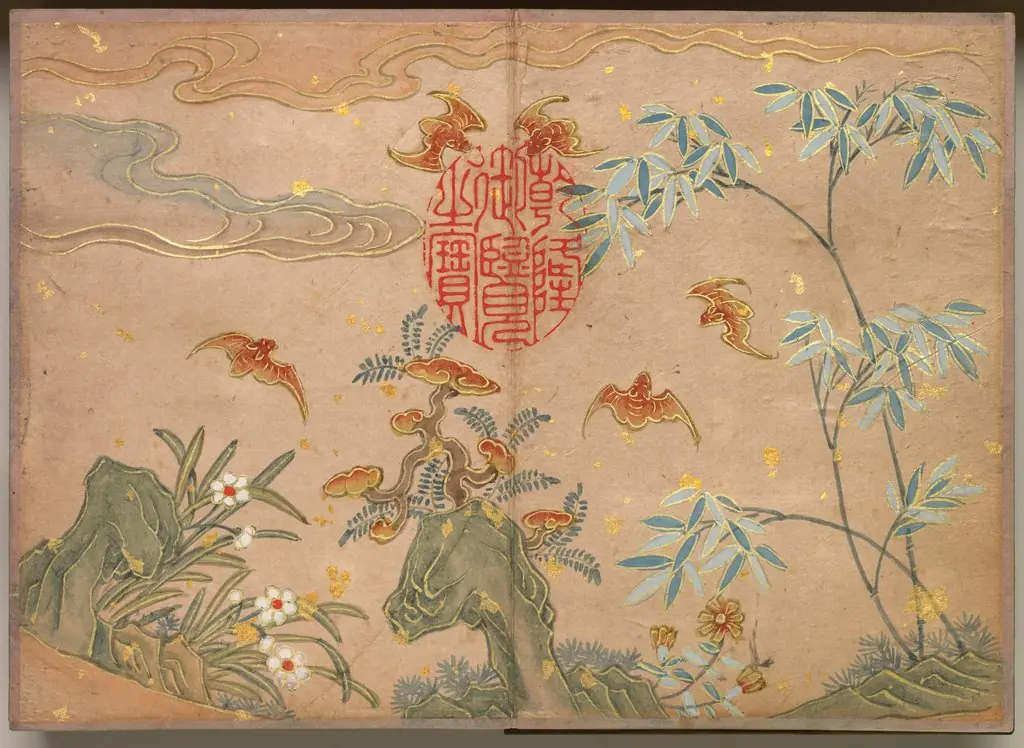 Desk Album: Flower and Bird Paintings (Bats, rocks, flowers oval calligraphy)