Artwork
Bittern at Nest
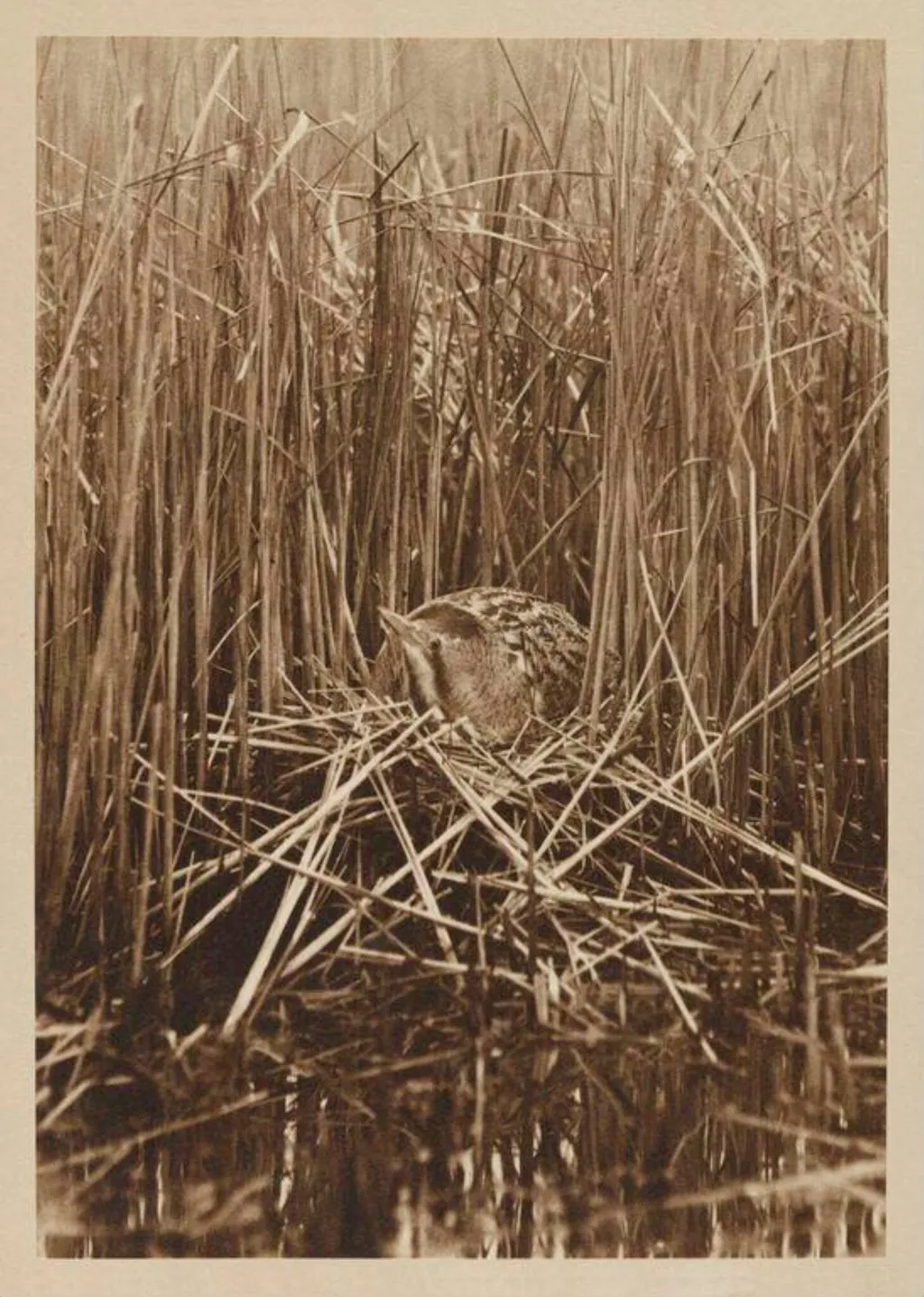
Bittern at Nest is a photographic photography by Zoological Photographic Club. It is held in the collection of the Victoria and Albert Museum.
About this work
Overview
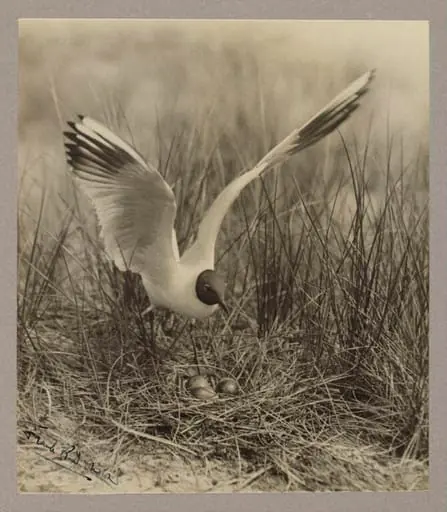
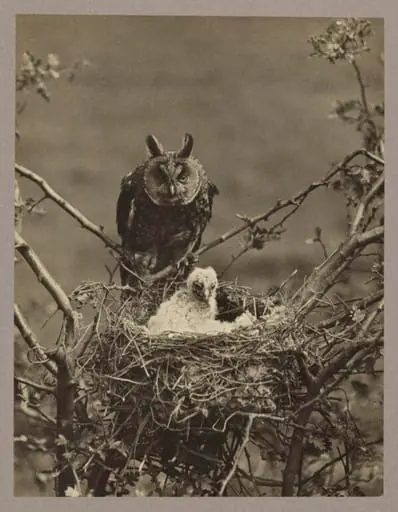
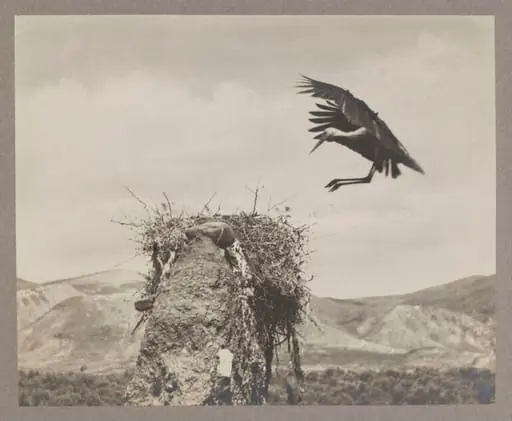
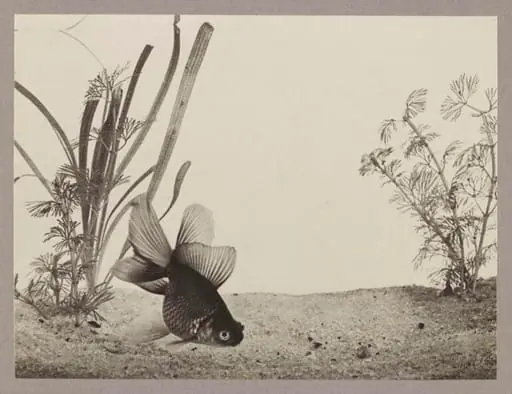
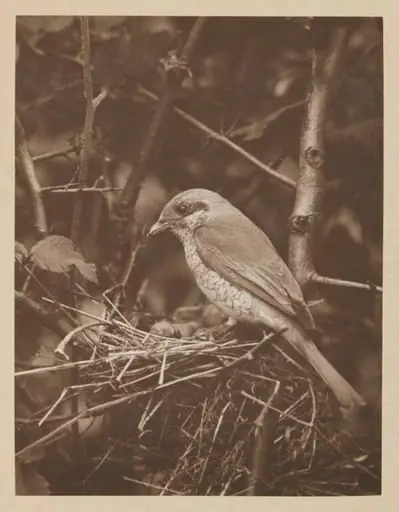
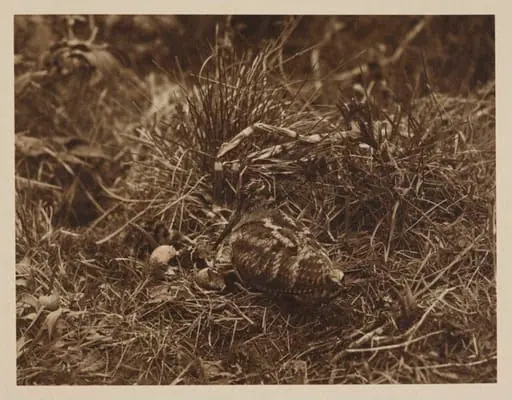
A black-and-white photograph titled *Bittern at Nest* is one of twenty mounted images compiled by the Zoological Photographic Club.
A black-and-white photograph titled *Bittern at Nest* is one of twenty mounted images compiled by the Zoological Photographic Club. The work is part of a curated album held at the Victoria and Albert Museum, each photograph assigned a unique identifier within the range 3250:1-2023 to 3250:39-2023. The image captures a bittern in its habitat, rendered with the quiet precision typical of early wildlife documentation.
Subject & Meaning
The photograph centers on a bittern, a cryptically colored wading bird, seated within a dense nest of dry reeds. Its stillness and camouflage reflect the species’ natural behavior of remaining hidden from predators. The composition emphasizes concealment rather than spectacle, suggesting an intent to observe rather than dramatize the animal’s private life.
Technique & Style
The image is rendered in monochrome, with sharp tonal contrasts defining the texture of reeds and the bird’s plumage. The reeds rise vertically, forming a structured frame that isolates the subject. Lighting is even and natural, avoiding theatrical effects, consistent with the club’s commitment to scientific accuracy over artistic embellishment.
History & Provenance
Created by the Zoological Photographic Club in the late 19th or early 20th century, the photograph was produced as part of a systematic effort to document wildlife through photography. The album was later acquired by the Victoria and Albert Museum, where it remains as part of its historical photographic collection, preserving early examples of naturalist visual research.
Context
The Zoological Photographic Club emerged during a period when photography was becoming a tool for biological study. Their work aligned with broader scientific movements seeking to record animal behavior in situ, moving away from staged specimens. This photograph reflects a shift toward ecological observation, predating modern field biology practices.
Legacy
As one of the earliest attempts to photograph birds in undisturbed habitats, the image contributes to the history of wildlife documentation. It exemplifies how early photographers contributed to natural history by prioritizing observation over manipulation, laying groundwork for future conservation-focused visual records.
Artist & collection
Artist
The Zoological Photographic Club took crisp, close-up photos of animals in the late 1800s, long before smartphones.