Museum
Argeș County Museum

Image: Wikimedia Commons.
Argeș County Museum is a museum in Argeș County, Romania.
About Argeș County Museum
Overview & Identity
The Argeș County Museum (Muzeul Județean Argeș) is a government institution and major cultural attraction located in Pitești, Romania. It serves as the primary repository for the history, art, and natural sciences of Argeș County. The museum operates multiple sections including history, fine arts, natural sciences, numismatics, and a planetarium, alongside managing several historical sites such as the Poienari Fortress and the Dinu Lipatti Memorial House. It functions as a center for research, conservation, and public education within the region.
History & Founding
The museum's institutional roots trace back to the Gheorghe Ionescu-Gion Popular Athenaeum, which operated from a Pitești primary school between 1928 and 1946, and later the Argeș Cultural Center from 1948 to 1950. Following a period where collections were in storage from 1950 to 1955, the museum was formally founded in 1955. It initially occupied the Argeș Tribunal or Cultural Palace from 1955 to 1957, then the Fostiropol House or Popular Art School from 1957 to 1970, before finally moving to its current headquarters in the former County Administrative Palace in 1970.
Building & Architecture
The museum is headquartered in a large neoclassical building constructed between 1898 and 1899, originally serving as the Argeș County Administrative Palace (Prefecture). Located at 44 Armand Călinescu Street in the city center, the structure was designed by an architect whose name is noted in historical records. The facility has undergone significant expansion, with new buildings added in 1998, 2000, and 2004 to accommodate growing activities and exhibitions, including the addition of storage spaces and restoration laboratories.
Collection Highlights & Notable Holdings
The museum's permanent exhibitions cover diverse fields, including history and archaeology featuring Roman hoards discovered at Rociu and Bălănești, and modern and contemporary fine arts with paintings and local graphics from the 19th and 20th centuries. Notable specialized sections include a numismatics cabinet, a mineral crystal collection established in 2009, and an ecological exhibition. The institution also administers significant external sites such as the Roman Castrum at Câmpulung-Jidova, the Poienari Fortress, and the memorial houses of writer Liviu Rebreanu and musician Dinu Lipatti.
Exhibitions & Specialized Sections
Permanent exhibitions within the main building include fine arts (established 1971), folk art (1971), history (1974), and ecology (1977). More recent additions include a sports exhibition and a planetarium (both 2008), as well as an astronomical observatory. The museum also houses the Rudolf Schweitzer-Cumpăna Fine Arts Gallery and a Naive Art Gallery. These sections are complemented by educational programs and temporary exhibitions, making it a multifaceted cultural hub for the county.
Significance & Legacy
As the principal cultural institution in Argeș County, the museum plays a vital role in preserving the region's heritage, from ancient Roman artifacts to modern artistic achievements. Its management of historic sites like Poienari Fortress and the Dinu Lipatti Memorial House extends its impact beyond the city of Pitești. The museum's continuous expansion and the establishment of specialized facilities like the planetarium and observatory demonstrate its commitment to both historical preservation and contemporary scientific education.
What to see at Argeș County Museum
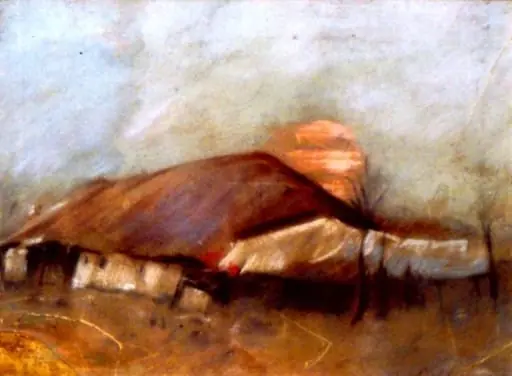
Start with Peisaj cu casă by Ștefan Luchian.





What's on
- Expoziția „Galeria de Rudolf Schweitzer-Cumpăna”From 3 Feb 2026