National Museum
ASTRA National Museum Complex

Image: Wikimedia Commons.
ASTRA National Museum Complex is a national museum in Sibiu, Romania.
About ASTRA National Museum Complex
Overview & Identity
The ASTRA National Museum Complex (Romanian: Complexul Naţional Muzeal "ASTRA") is a major cultural institution located in Sibiu, Romania. It is recognized as the most important ethno-museum institution in Romania and the largest open-air museum in Europe. The complex operates under a single authority, managing a diverse tangible and intangible heritage that includes the Open Air Museum in Dumbrava Sibiului Park and three indoor museums: the Museum of Transylvanian Civilization, the "Franz Binder" Museum of Universal Ethnography, and the "Emil Sigerus" Museum of Saxon Ethnography and Folk Art. The institution traces its roots to the Transylvanian Association for Romanian Literature and the Culture of the Romanian People (ASTRA), founded in 1861, and continues its mission to connect audiences with traditional values while adapting to modern cultural needs.
History & Founding
The origins of the museum complex date back to 1861 with the founding of the ASTRA cultural association, which aimed to promote Romanian national industry and culture. In 1897, the association decided to establish a museum of Romanian civilization, inaugurating its first institution in 1905. The outdoor exhibition, initially called the Museum of Folk Technology, was approved in 1962 and officially opened on October 17, 1967, after land was transferred in 1960. In 1990, the Museum of Traditional Folk Civilization separated from the Brukenthal Museum Complex to regain its original patrimonial continuity under the name "ASTRA." The Museum of Transylvanian Civilization was founded in 1993, and at the beginning of the 2000s, the ASTRA National Museum Complex was formally established, integrating the four distinct museums to cover the entire field of traditional folk civilization.
Building & Architecture
The complex is situated in the protected forest area of Dumbrava Sibiului, approximately 7 kilometers from Sibiu, spanning an area of approximately 100 hectares. The open-air section features over 300 authentic buildings transported from various regions of Romania, including peasant households, handicraft workshops, wooden churches, wayside shrines, sheepfolds, and water and windmills. These structures are arranged along 10 kilometers of alleys, creating a harmonious blend of nature and culture that recreates a traditional Romanian village. The indoor museums are housed in historic buildings in the city center, including the Small Square and Huet Square, with plans to expand into the ASTRA Palace, currently occupied by the Sibiu County Library, to better present Transylvanian civilization as a European region.
Collection Highlights & Notable Holdings
The ASTRA Museum Complex holds a vast collection of over 40,000 items, with nearly 10,000 classified as "A" for most valuable. The Museum of Transylvanian Civilization, located in Huet Square, houses over 39,000 items including clothing, textiles, pottery, religious objects, and artifacts made of wood, iron, or bone. The "Franz Binder" Museum of Universal Ethnography is unique in the country for its collection of non-European cultures, featuring items gathered by Franz Binder, a merchant and diplomat who spent over 20 years abroad. The "Emil Sigerus" Museum focuses on the material and spiritual heritage of the Transylvanian Saxons, preserving their traditional architecture and folk art. The open-air museum's collection of architectural monuments serves as a comprehensive record of rural life and craftsmanship.
Significance & Recognition
The ASTRA National Museum Complex is a landmark of national and international importance, recognized for its unique thematically designed exhibitions and its role in preserving Romania's cultural heritage. It has received numerous prestigious awards, including the European Museum Academy Luigi Micheletti Award for Innovative Museum of the Year in 2019, the Order of Cultural Merit in the rank of Knight from the President of Romania in 2020, and a 3-star rating in the Michelin Anniversary Guide "Romania 500 landscapes, destinations and experiences" in 2021. The complex was also awarded the iF DESIGN AWARD in 2025 for its exhibition "Crafting Transylvania. People and Crafts." These accolades highlight its success in using modern means, such as multimedia technology and VR, to communicate heritage to the public and its status as a top-tier cultural destination.
What to see at ASTRA National Museum Complex
Start with Icoana reprezintă Nașterea Mântuitorului Iisus Hristos. Icoana este împărțită patru secvențe: Nașterea Mântuitorului este în centrul icoanei. Pruncul Iisus Hristos, înfășat în scutece este ținut în legănuț de Maica Domnului și de Dreptul Iosif, logodnicul Fecioarei Maria. În registrul superior este ilustrată venirea magilor după steaua cea călăuzitoare. În colțul drept, este un înger îmbrăcat în cămașă roz, aplecându-se din Ceruri, pentru a privi și a mângâia bucuria Nașterii Pruncului. În registrul inferior este ilustrată îmbăierea Pruncului de către câteva tinere fecioare. Alături este Dreptul Iosif care se arată nedumerit de Taina minunată a Nașterii Domnului și de păstrarea Fecioriei Maicii Domnului și după Naștere. În centrul icoanei este steaua cea călăuzitoare cu un mănunchi de raze luminoase, aducătoare de vestea cea bună. Urcând spre dreapta, întâlnim un ciobănel păstor cu oile. Elementele de arhitectură sunt foarte minuțios realizate, creându-se atmosfera Nazareth-ului. Este o alternanță cromatică luminoasă și vie de roșu zmeuriu, roz, albstru turcoaz-smarald, galben chihlimbar, gri și brun. Cerurile sunt deschise. Icoana este foarte bogată în narațiune. Registrele se întrepătrund armonios. Inscripția din româno-chirilică se traduce Nașterea ICXC Iisus Hristos. by 1850.
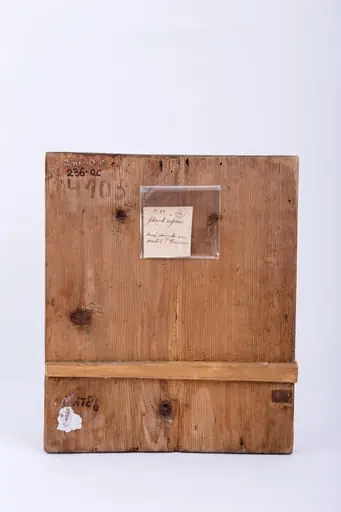 Icoana reprezintă Nașterea Mântuitorului Iisus Hristos. Icoana este împărțită patru secvențe: Nașterea Mântuitorului este în centrul icoanei. Pruncul Iisus Hristos, înfășat în scutece este ținut în legănuț de Maica Domnului și de Dreptul Iosif, logodnicul Fecioarei Maria. În registrul superior este ilustrată venirea magilor după steaua cea călăuzitoare. În colțul drept, este un înger îmbrăcat în cămașă roz, aplecându-se din Ceruri, pentru a privi și a mângâia bucuria Nașterii Pruncului. În registrul inferior este ilustrată îmbăierea Pruncului de către câteva tinere fecioare. Alături este Dreptul Iosif care se arată nedumerit de Taina minunată a Nașterii Domnului și de păstrarea Fecioriei Maicii Domnului și după Naștere. În centrul icoanei este steaua cea călăuzitoare cu un mănunchi de raze luminoase, aducătoare de vestea cea bună. Urcând spre dreapta, întâlnim un ciobănel păstor cu oile. Elementele de arhitectură sunt foarte minuțios realizate, creându-se atmosfera Nazareth-ului. Este o alternanță cromatică luminoasă și vie de roșu zmeuriu, roz, albstru turcoaz-smarald, galben chihlimbar, gri și brun. Cerurile sunt deschise. Icoana este foarte bogată în narațiune. Registrele se întrepătrund armonios. Inscripția din româno-chirilică se traduce Nașterea ICXC Iisus Hristos.
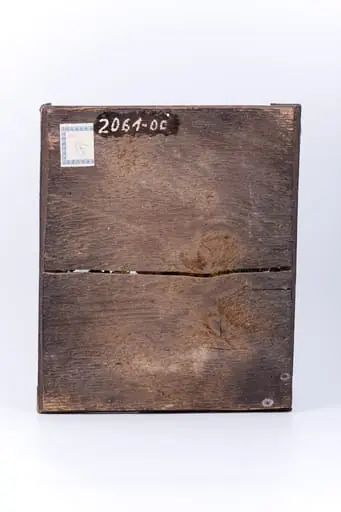 Sfinții Arhangheli Mihail și Gavriil sunt reprezentați împreună, fiind mai-marii voievozi ai oștilor cerești. În această icoană, primul este Sfântul Arhanghel Gavriil, îngerul aducător de dar și bunăvestire, iar al doilea este Sfântul Arhanghel Mihail, numit slujitorul Legii. Sfinții Arhangheli sunt înveșmântați în tunică-sacos galbenă chihlimbar, cu mânecile largi gri-antracit, cu mantiile roșii vermillon, aripile roșii-gri antracit. Sfântul Mihail are pantalonii de oștean albaștrii bleu-ciel și ține în mâna dreaptă balanța faptelor bune și a fărădelegilor și în mâna stângă are spada dreptății și a credinței. Fondul icoanei este cerul albastru bleu-ciel ceruleum în registrul superior și un câmp de nouri albi-albaștri, asemenea unor mandorle, în registrul de mijloc. Cromatica armonioasă este alcătuită din: roșu vermillon, albastru bleu-ciel și ceruleum, galben chihlimbar, gri antracit, brun, bronziu, alb, negru. Inscripția din româno-chirilică se traduce Mihail și Gavriil. Icoana este din Nordul Transilvaniei, Nicula.
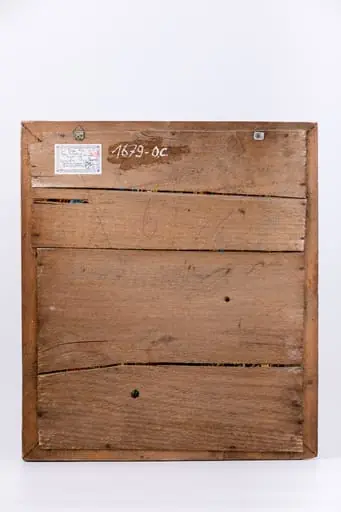 Icoana este mai rară, prin tematica iconografică abordată. Este un prăznicar cu 6 sfinți ierarhi, mucenici, arhidiaconi. Sunt împărțiți în două registre, a câte trei grupuri, înscrise între coloane, pe sub arcade de Biserică. În registrul superior sunt cei trei Ierarhi Vasile cel Mare, Grigorie de Dumnezeu-Cuvântătorul și Ioan Gură-de-Aur. Cei Trei Sfinți Ierarhi Vasile cel Mare, Grigorie de Dumnezeu Cuvântătorul și Ioan Gură-de-Aur slujesc și săvârșesc Sfânta Liturghie împreună. Sunt înveșmântați în veșminte liturgice: sacos albastru ceruleum și roz putred-stacojiu, cu linii albe, felon roșu vermillon-orange, epitrahil ocru-galben și verde-lime cu câte trei-patru cruci negre. Sfinții ierarhi Binecuvântează cu mâna dreaptă și țin în mâna stângă Sfânta Evanghelie închisă. În registrul al doilea, cel inferior, sunt Sfântul Mare Mucenic Dimitrie Izvorâtor de Mir, Sfântul Mare Ierarh Nicolae făcător de minuni și Sfântul Mare Arhidiacon Ștefan. Se remarcă sacosul de zale gri-argintii ale Sfântului Dimitrie, care ține în mâna dreaptă o cădelniță, iar Sfântul Ștefan Binecuvântează cu crucea, pe care o ține în mâna dreaptă. Fondul întregii icoane este cerul albastru cobalt-ceruleum, împodobit cu stele albe și roșii, elemente astrale. Cromatica este luminoasă și armonioasă: verde văratic, verde lime, alb, orange, roșu vermillon, roz-stacojiu, galben-ocru, galben chihlimbar, bej, crem, albastru cobalt și ceruleum, negru. Este o icoană specifică picturii de Țara Oltului, cu un desen fin cu conturul negru și cromatica pastelată. Inscripția din româno-chirilică se traduce Sf Vasile Sf Grigorie Sf Ioan Sf Dimitrie Sf Nicolae Sf Ștefan.
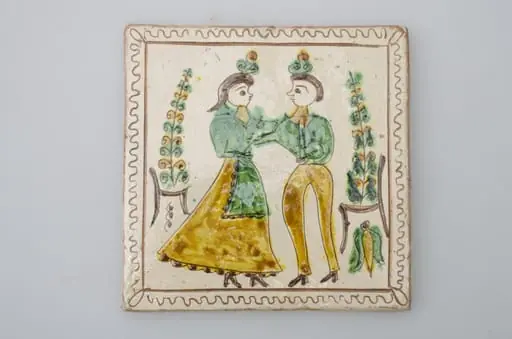 Piesă ceramică de formă pătrată, smălțuită și angobată, cu rol decorativ. Laturile pătratului sunt marcate de două chenare, primul vălurit, al doilea în linie dreaptă. Ornamentată cu motive antropomorfe și floral-vegetale: doi tineri, un băiat și o fată ținându-se pe după mijloc (băiatul cu mâna dreaptă, fata cu stânga). În spatele lor câte un scaun din care se înalță o floare. Motivele au fost la început incizate, iar apoi pictate. Pe spate, cahla este prevăzută cu un orificiu pentru prinderea aței. Tot aici, este inscripționat numele meșterului olar, "Colibaba". Cromatică: fundal alb; motive: verde, galben, cărămiziu, maro, negru.
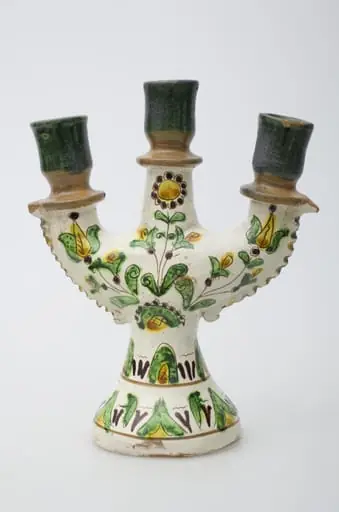 Obiect ceramic de uz casnic, format dintr-un picior tronconic, din care pornesc trei brațe, în care se introduc lumânările. Decorul pictural, realizat pe toată suprafața obiectului, este compus din motive geometrizante și vegetale. Primul registru, situat pe baza evazată, este format din elemente vegetale, dispuse circular și încadrat între două linii concentrice subțiri. Cel de-al doilea registru prezintă decor similar celui din registru inferior. Registrul superior este compus din trei flori, dintre care două (laterale) cu pistilul pronunțat, cea de-a treia, poziționată central, floarea soarelui. Gâtul și buza vasului au fost decorate cu verde și maro deschis. Iscălitură: indescifrabil. Cromatică: fond: alb; motive: crem; verde, maro închis, maro deschis, galben, negru.
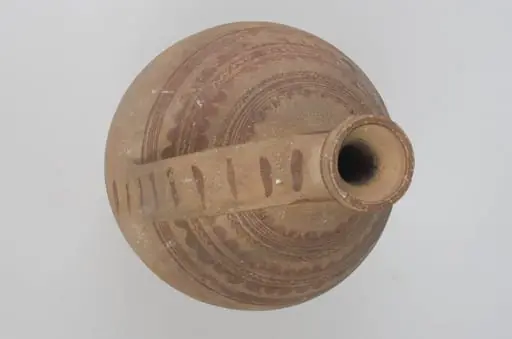 Vas de formă ovoidală, cu gât lung și buza ușor înălțată. De gât este atașată o toartă care se unește cu corpul în zona diametrului maxim. Vasul este decorat pe umeri cu motive geometrice împărțite în trei registre: primul registru este format dintr-o linie în val pictată cu degetul peste care se suprapun o bandă de linii drepte și două linii subțiri în val; al doilea registru este format tot dintr-o linie în val pictată cu degetul întretăiată de mai multe linii drepte, peste una dintre acestea, mai lată, se suprapune o linie în val. Al treilea registru este format dintr-o bandă de linii drepte. Toarta este ornamentată cu linii scurte paralele orizontale. Cromatică: fond: cărămiziu; motive: roșu
Plan your visit
ASTRA National Museum Complex
- Website
- www.muzeulastra.ro