Museum
City Museum Berlin
City Museum Berlin is a museum.
About City Museum Berlin
Overview & Identity
The Stiftung Stadtmuseum Berlin, officially designated as the Landesmuseum für Kultur und Geschichte Berlins (State Museum for the Culture and History of Berlin), serves as the central institution for preserving and presenting the history and culture of Berlin. Established as a public-law foundation on June 23, 1995, by a specific state law, it unifies various historical and cultural museums that were previously supported by private associations or other entities. The foundation operates as a universal museum, managing a network of sites across the city, including the Märkisches Museum, the Museum Ephraim-Palais, the Museum Nikolaikirche, the Museum Knoblauchhaus, the Marinehaus, the Museumsdorf Düppel, and the Berlin exhibition at the Humboldt Forum. Its mission encompasses the collection, preservation, research, and presentation of over 4.5 million objects relating to the city's culture and history.
History & Founding
The foundation was formally established on June 23, 1995, through a state law that brought together public and private museums dedicated to Berlin's city and cultural history under a single administrative roof. Prior to this unification, many of these institutions were supported by Fördervereine (support associations). The foundation's creation marked a significant consolidation of Berlin's historical resources. The Märkisches Museum, the oldest of the affiliated institutions, traces its origins to 1908 when it opened as the first building in the world conceived specifically as a city museum. The Ephraim-Palais, another key site, has a history dating back over 250 years, originally constructed in 1766, destroyed in 1936, and fully restored in 1987 for Berlin's 750th anniversary. The foundation continues to evolve, with recent expansions including the Berlin exhibition at the Humboldt Forum, which opened in 2021.
Building & Architecture
The foundation's sites feature diverse architectural styles reflecting different eras of Berlin's development. The Märkisches Museum, located in Köllnischer Park, is a landmark of early 20th-century architecture, combining regional styles from different eras and recognized as the first building in the world designed specifically as a city museum when it opened in 1908. It is currently undergoing a complete renovation scheduled to be completed around 2028, after which it will form the heart of a new museum and creative quarter together with the neighboring Marinehaus. The Museum Ephraim-Palais is a Rococo-style town palace originally erected in the 1760s for Veitel Heine Ephraim, a Jewish court financier. Although destroyed in 1936, it was faithfully reconstructed in 1987 and stands as a testament to 18th-century Prussian architecture in the historic Nikolaiviertel district.
Collection Highlights & Notable Holdings
The Stiftung Stadtmuseum Berlin preserves and maintains a vast collection of approximately 4.5 million objects relating to the culture and history of the city. The majority of these items are stored in a central depot in the Poelzig-Halle in Berlin-Hakenfelde, where electronic inventory management began in 2010. Notable holdings include the collection of the painter Eduard Gaertner, featuring photographs of Berlin around 1850, and the world-renowned collection of variety, circus, and cabaret artifacts, which includes over 200,000 objects, books, and artworks. The collection also features significant items such as the horse's head from the original Quadriga of the Brandenburg Gate, 47 French antiques from the 18th and 19th centuries transferred from the GDR Ministry of Finance, and unique artifacts like the Van-de-Velde hairdressing stations of the court barber Haby. The collection spans from the 17th century to the present, with a particular focus on the 19th and 20th centuries.
Significance & Current Exhibitions
The foundation plays a crucial role in documenting the 800-year history of Berlin and its global connections. Its exhibitions, such as 'BERLIN GLOBAL' in the Humboldt Forum, explore the city's relationship with the world on 4,000 square meters, highlighting how global dynamics impact Berlin and vice versa. The permanent exhibition 'BerlinZEIT – The City Makes History!' at the Ephraim-Palais offers a comprehensive overview of the city's history. The foundation also addresses contemporary social issues, with exhibitions dedicated to migrant environments, queer history, and colonial remembrance. The planned renovation of the Märkisches Museum and the integration of the Marinehaus aim to create a leading cultural location for Berlin by 2028, reinforcing the foundation's status as a vital center for community engagement and historical research.
What to see at City Museum Berlin
Start with Schubert, Emilie: Portrait of the Husband of Auguste Schubert (attributed) by 1841.
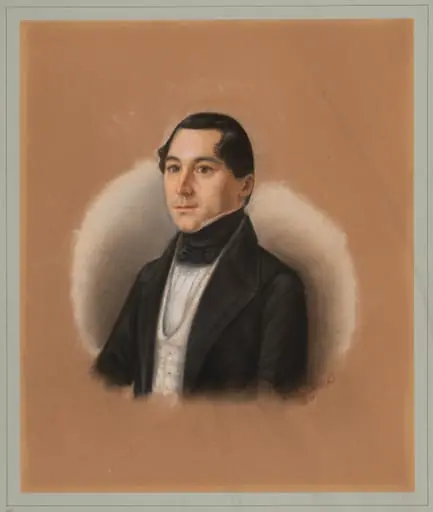 Schubert, Emilie: Portrait of the Husband of Auguste Schubert (attributed)
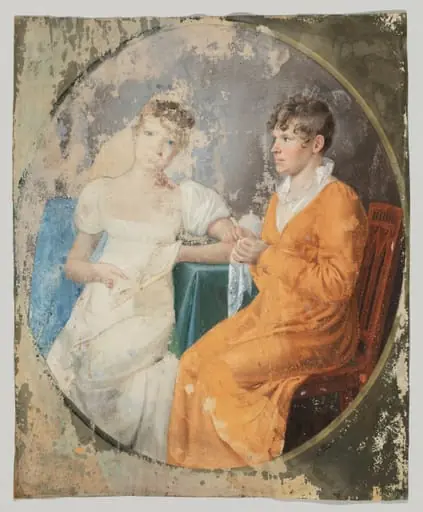 Jügel, Henriette: Zwei junge Frauen am Kaffeetisch
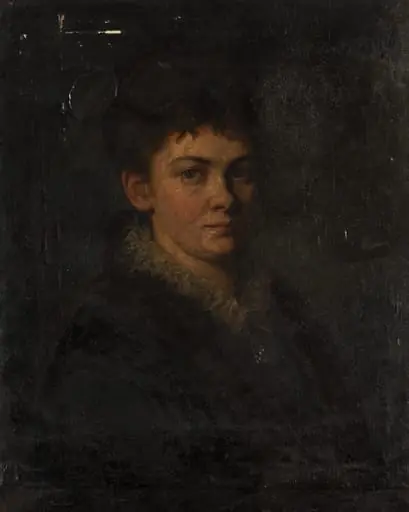 Goebeler, Elise: Portrait of an Unknown Lady
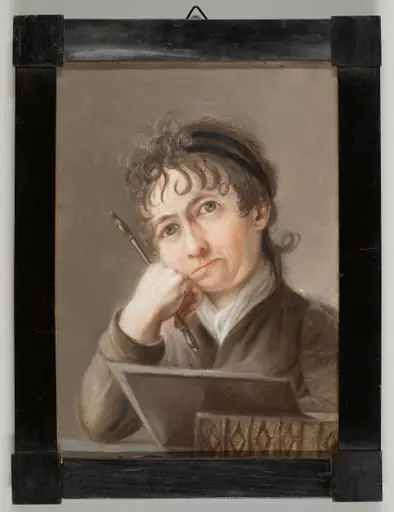 Henry, Susanne: Self-portrait
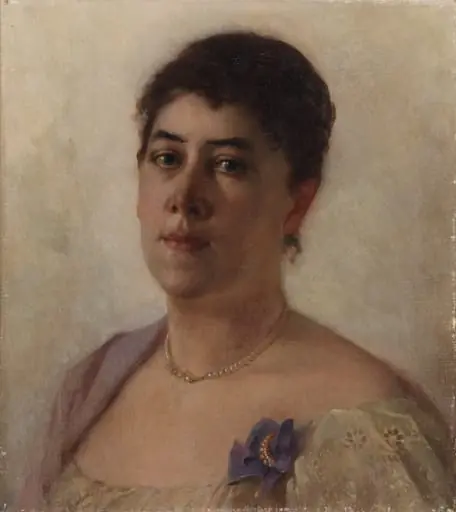 Jäger, Anna: Porträt Marie von Bunsen
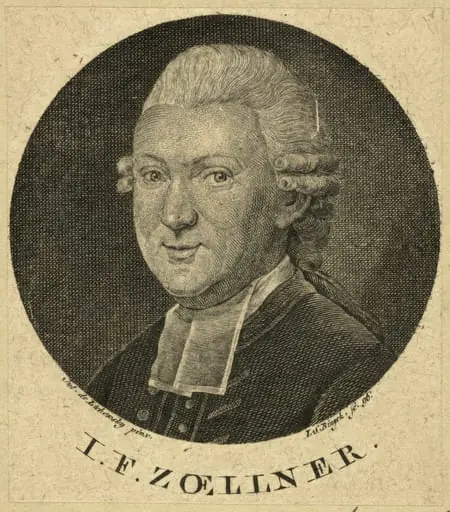 Lisiewska, Friederike Julie (Vorlage): Porträt Johann Friedrich Zöllner