Museum
Gavrilă Simion Eco-Museum Research Institute Tulcea - Art Museum
Gavrilă Simion Eco-Museum Research Institute Tulcea - Art Museum is a museum.
About Gavrilă Simion Eco-Museum Research Institute Tulcea - Art Museum
Overview & Identity
The Gavrilă Simion Eco-Museum Research Institute Tulcea - Art Museum (Muzeul de Artă din Tulcea) is a prominent cultural institution located in Tulcea, Romania. It operates as a key component of the larger Gavrilă Simion Eco-Museum Research Institute (ICEM Tulcea), specifically within the Complexul Muzeal de Patrimoniu Cultural Nord-dobrogean (Museum Complex of Northern Dobrujan Cultural Heritage). This complex comprises two distinct but complementary buildings: the Art Museum itself, situated at 2 Grigore Antipa Street, and the Avramide House (Casa Avramide), which serves as the Collections House. The institution is dedicated to preserving and exhibiting the artistic heritage of the region, with a particular focus on the cultural interplay between the Danube Delta, Northern Dobruja, and broader European art movements.
History & Founding
The museum's physical location is a historic building erected between 1863 and 1865 under the Ottoman Empire, originally serving as the administrative palace of the Tulcea Sanjak's Pasha and the headquarters of the mutasarrıfate. Following the Russo-Turkish War of 1877–1878 and Romania's absorption of Northern Dobruja, the building retained administrative functions, housing the prefecture, courthouse, and prosecutor's office until 1970. The art museum itself was officially established and opened to the public in 1982. A significant reorganization and restoration of the complex, including the adjacent Avramide House, was completed in 2012, with the official inauguration taking place on September 27, 2012, and public opening on October 2, 2012.
Building & Architecture
The Art Museum is housed in a historic monument originally constructed as an administrative center for the Ottoman Pasha of Tulcea. The building was partially funded by funds from Dobrujan Circassian raiders who settled in the region in 1864. The structure has undergone several major restorations: a full restoration between 1893 and 1895, a partial restoration in 1941 following the Vrancea earthquake, and a comprehensive rehabilitation project from 2009 to 2012. The 2009-2012 project, funded by the Tulcea County Council and European Structural Funds, aimed to consolidate the building, restore original decorative elements like mural painting and stucco, and adapt the space for modern museography while preserving its historic character.
Collection Highlights & Notable Holdings
The museum boasts a significant and growing collection of 7,015 works, which increased from 4,365 in 1991. The holdings are organized into seven distinct collections: modern and contemporary painting, modern and contemporary sculpture, 18th- to 20th-century icons, modern and contemporary sketches, engraving plates, 18th- and 19th-century oriental art, and 18th- to 20th-century decorative art. The painting collection is particularly noted for its strength in the avant-garde period, featuring works by prominent artists such as Hans Mattis-Teutsch, Max Hermann Maxy, Marcel Iancu, and Corneliu Michăilescu. The collection also includes 14 works signed by these artists, comprising 10 paintings and four graphics, representing a core strength of the museum's holdings.
Significance & Legacy
The Art Museum serves as a vital cultural hub for the Tulcea region and the wider Danube Delta area. Its significance is underscored by its status as a historic monument listed by Romania's Ministry of Culture and Religious Affairs. The museum plays a crucial role in preserving the artistic legacy of Northern Dobruja, showcasing the unique cultural synthesis of the region. Through its exhibitions, such as the permanent display 'Arts and Influences in Dobroja,' and its active participation in national and international events like the 'Constantin Găvenea' National Graphic Biennial and 'Museum Night,' the institution fosters artistic education and cultural exchange, connecting local heritage with global artistic trends.
Associated Institutions & Facilities
The Art Museum functions in tandem with the Avramide House (Casa Avramide), which serves as the 'Collections House' within the same museum complex. The Avramide House, a 19th-century residence built around 1890 by Alexander Avramide with Italian craftsmen, was restored and integrated into the museum complex in 2012. It houses additional collections and administrative offices, including the administrative headquarters of the Gavrilă Simion Eco-Museum Research Institute. The restoration of the Avramide House involved uncovering original stone and brick masonry, restoring mural paintings and stucco, and creating a new staircase to connect the levels, thereby enhancing the visitor experience and the preservation of the historic fabric.
What to see at Gavrilă Simion Eco-Museum Research Institute Tulcea - Art Museum
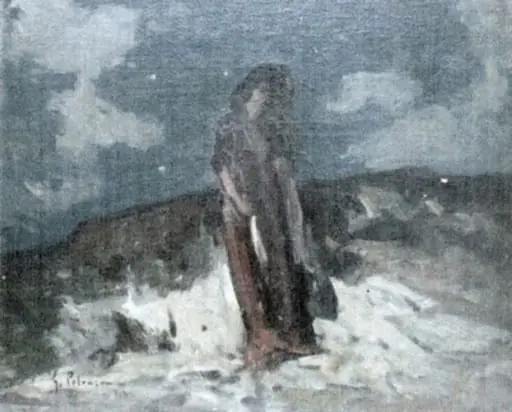
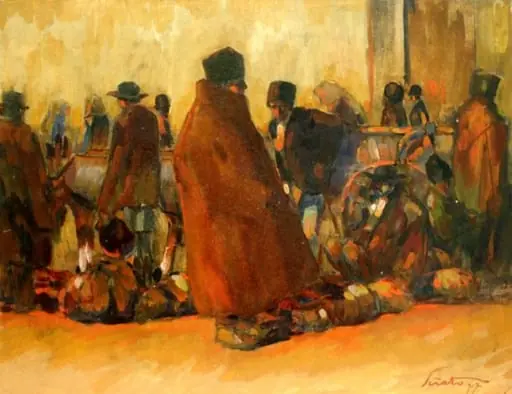
Start with Femeie în peisaj by Gheorghe Petrașcu.
What's on
- Expoziția ”Michaela NICA CRĂCIUN – In memoriam” la Muzeul de Artă19 May 2026 – 21 Jun 2026