Museum
Octavian Moșescu Râmnicu Sărat Municipal Museum
Octavian Moșescu Râmnicu Sărat Municipal Museum is a museum.
About Octavian Moșescu Râmnicu Sărat Municipal Museum
Overview
The Octavian Moșescu Municipal Museum is a cultural institution located in Râmnicu Sărat, Romania, dedicated to preserving and exhibiting the region's artistic, historical, and ethnographic heritage. Established in 1960, the museum has grown from an initial collection of approximately 100 fine art pieces to a comprehensive repository containing over 27,000 cultural goods. The institution operates five distinct sections: Fine Art, Ethnography, Natural Sciences, Memorial Collections, and History/Archaeology. Its primary mission involves the conservation of local patrimony through donations and systematic collecting, serving as a key educational and cultural hub for the Buzău county region.
History & Founding
The museum was officially established in 1960, initially launching with a Romanian fine art collection of about 100 exhibits. The institution expanded its scope over subsequent decades, adding a collection of ethnographic and folk art in 1962, natural sciences in 1968, and memorial collections related to the history of culture in the Râmnic area in 1971. A department dedicated to history and archaeology was added later in 1990. The museum's creation was significantly influenced by the local cultural figure Octavian Moșescu, who took the initiative to found the museum in his later years, aiming to preserve the artistic and historical memory of the region.
Building & Architecture
The museum operates primarily within the Brâncovenesc Complex, a historic monument located in the center of Râmnicu Sărat. This complex includes the former monastery dedicated to the 'Assumption of the Mother of God' and the Domnească (Princely) House. The monastery was originally built by the Wallachian Prince Constantine Brâncoveanu and his uncle. The site features defensive walls with corner towers and machicolations, reflecting its historical role as a fortified religious and administrative center. The museum utilizes four of its five sections within this historic architectural ensemble.
Collection Highlights
The museum's holdings are diverse, with a notable numismatic collection comprising coins from the 1st to the 19th centuries. This collection includes 27 specific items presented in scholarly studies, featuring Roman and Byzantine coins, issues from the kings of Hungary, the Polish-Lithuanian Union, Wallachia, the Ottoman Empire, the Habsburg Empire, and the Principality of Brandenburg-Ansbach. The oldest item in this series is a denarius issued by Emperor Vespasianus (69-71 AD), while the most recent date to the turn of the 18th and 19th centuries. The collection was formed through donations and purchases made between 1980 and 1995, with additional acquisitions in 2016.
The Namesake: Octavian Moșescu
Octavian Moșescu (1894–1982) was a prominent Romanian publicist, editor, art collector, and memorialist who served as the mayor of Balcic during the interwar period. Born in Tâmboești, he was a lawyer and a major cultural animator who supported young artists in Balcic by providing them with land and organizing exhibitions. After the loss of Southern Dobruja in 1940, he returned to Râmnicu Sărat, where he continued his literary and artistic activities. In his later years, he took the initiative to establish the municipal museum that now bears his name, ensuring the preservation of local heritage before his death in 1982.
What to see at Octavian Moșescu Râmnicu Sărat Municipal Museum
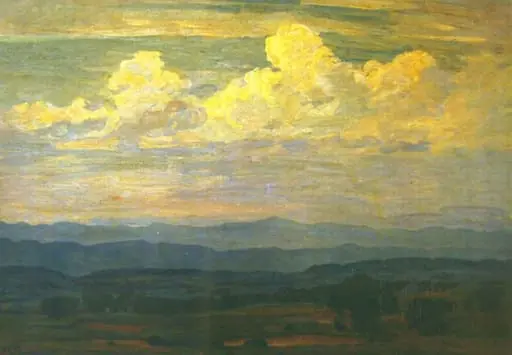
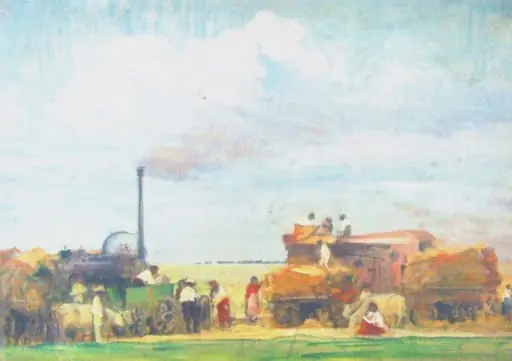
Start with Peisaj pe Valea Râmnicului by Ștefan Popescu.