Collection
Solly Collection
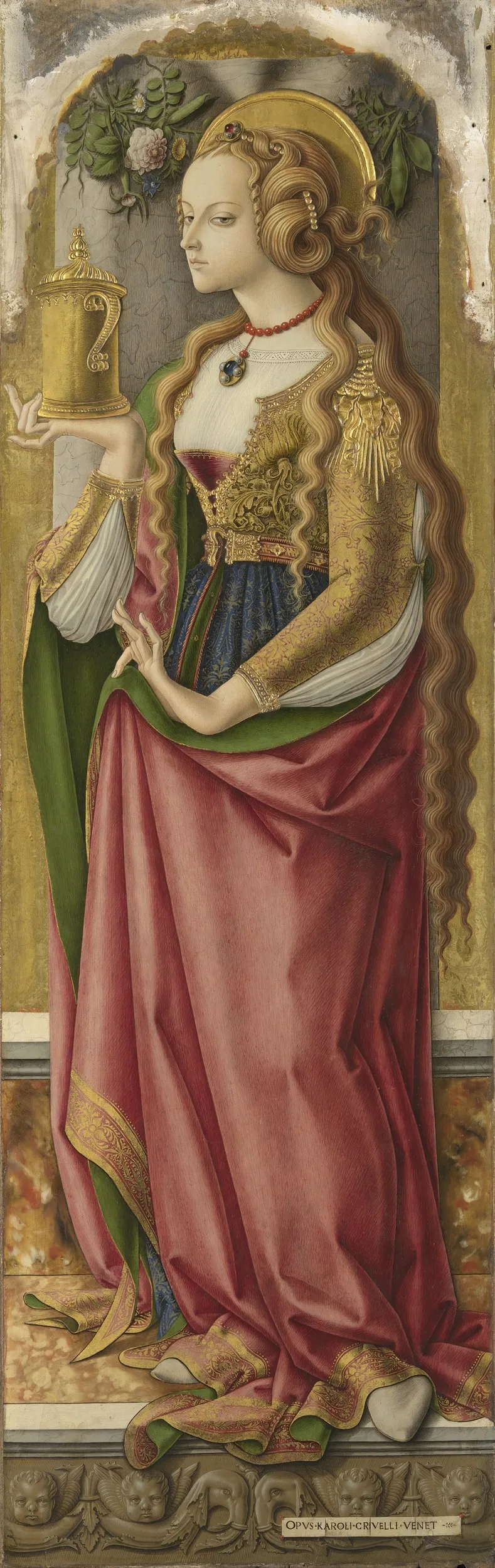
Solly Collection is a collection. 2 works from its collection are in this catalog, including Carlo Crivelli and Jan van Eyck.
About Solly Collection
Overview
The Solly Collection refers to the extensive assembly of European paintings amassed by Edward Solly, an English merchant residing in Berlin during the early 19th century. Acquired by the Kingdom of Prussia in 1821, this collection of over 3,000 works formed the foundational core of the Berlin Gemäldegalerie (Picture Gallery). The collection is particularly noted for its significant holdings of Italian Trecento and Quattrocento paintings, as well as German and Netherlandish art from the same periods, many of which were by artists who were relatively unknown at the time of acquisition but are now considered masters.
History & Founding
Edward Solly (1776–1844), a British merchant who made his fortune in grain and wood trading, began collecting art during his residence in Berlin between 1813 and 1818. The post-revolutionary disintegration of ownership conditions in Europe allowed Solly to acquire a vast number of works, primarily from Italy, Germany, and the Netherlands. In 1821, following extended negotiations, the Prussian state purchased the collection to establish a public art museum. This acquisition was a defining moment in German museum history, securing the basis for the Königliches Museum (Royal Museum), which opened its doors to the public in 1830.
Building & Architecture
The Solly Collection was originally housed in the Königliches Museum (now the Altes Museum) on the Museumsinsel, a building designed by the renowned architect Karl Friedrich Schinkel. Schinkel, a central figure in the founding of the Berlin museum system, laid the architectural foundations for this world-class public collection. The museum opened in 1830 specifically to accommodate the newly acquired Solly Collection and other state holdings. The collection later moved to its current location in the Kulturforum's Gemäldegalerie, a modern building completed in 1998, though the original 1830 venue remains significant to the collection's history.
Collection Highlights & Notable Holdings
The collection is distinguished by its breadth and the inclusion of works by artists who were highly regarded in the 19th century but had fallen into obscurity, such as Giotto, Botticelli, Jan van Eyck, and Jan Gossart. The SMB exhibition highlights that the collection contained 'masterpieces, rediscoveries, and historical curiosities' that shaped the museum's identity. While the bulk of the 3,000 works formed the initial public display, Solly retained a 'cream' of the collection for himself, which was later sold by his heirs. The core holdings remain a vital part of the Gemäldegalerie's permanent collection, representing the shift in art historical appreciation towards early Renaissance art.
Significance & Legacy
The acquisition of the Solly Collection in 1821 is considered an 'invaluable stroke of luck' for the Berlin museums, providing an immediate, world-class foundation for the public gallery. It established Berlin as a major center for the study of early Italian and Northern European art. The collection's emphasis on the Trecento and Quattrocento periods helped redefine the art historical canon of the 19th century, elevating the status of artists like Giotto and Botticelli. Today, the Solly Collection continues to form the historical and artistic backbone of the Gemäldegalerie, illustrating the cosmopolitan and passionate nature of early 19th-century collecting.