Artist
Paul César Helleu
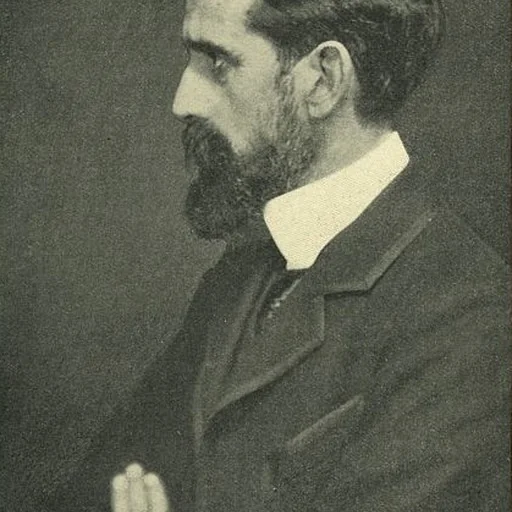
French, 1859–1927
Paul César Helleu was a French Realism artist. 9 works are cataloged here, principally at Cleveland Museum of Art. Paul César Helleu was born in Vannes.
Overview
Paul César Helleu (17 December 1859 – 23 March 1927) was a French oil painter, pastel artist, drypoint etcher, and designer, best known for his numerous portraits of beautiful society women of the Belle Époque. He also conceived the ceiling mural of night sky constellations for Grand Central Terminal in New York City. He was also the father of Jean Helleu and the grandfather of Jacques Helleu, both artistic directors for Parfums Chanel.
Biography
Paul César Helleu was born in Vannes, Brittany, France. His father, who was a customs receiver, died when Helleu was in his teens. Despite opposition from his mother, he then went to Paris and studied at Lycée Chaptal. In 1876, at age 16, he was admitted to the École des Beaux-Arts, beginning academic training in art with Jean-Léon Gérôme. Helleu attended the Second Impressionist Exhibition in the same year, and made his first acquaintances with John Singer Sargent, James McNeill Whistler, and Claude Monet. He was struck by their modern, bold alla prima technique and outdoor scenes, so far removed from the studio. Following graduation, Helleu took a job with the firm Théodore Deck Ceramique Française hand-painting fine decorative plates. At this same time, he met Giovanni Boldini, a portrait painter with a facile, bravura style, who became a mentor and comrade, and strongly influenced his future artistic style.
When he was 18 years old, Helleu established a close friendship with John Singer Sargent, four years his senior, that was to last his lifetime. Already becoming established, Sargent was receiving commissions for his work. Helleu had not sold anything, and was deeply discouraged almost to the point of abandoning his studies. When Sargent heard this, he went to Helleu and picked one of his paintings, praising his technique. Flattered that Sargent would praise his work, he offered to give it to him. Sargent replied, "I shall gladly accept this, Helleu, but not as a gift. I sell my own pictures, and I know what they cost me by the time they are out of my hand. I should never enjoy this pastel if I hadn't paid you a fair and honest price for it." With this he paid him a thousand-franc note.
Helleu was commissioned in 1884 to paint a portrait of a young woman named Alice Guérin (1870–1933). They fell in love, and married on 28 July 1886. Throughout their lives together, she was his favourite model. Charming, refined and graceful, she helped introduce them to the aristocratic circles of Paris, where they became popular fixtures.
On a trip to London with Jacques-Émile Blanche in 1885, Helleu met Whistler again and visited other prominent artists. His introduction to James Jacques Tissot, an accomplished society painter from France who made his career in England, proved a revelation. In Tissot, Helleu saw, for the first time, the possibilities of drypoint etching with a diamond point stylus directly on a copper plate. Helleu quickly became a virtuoso of the technique, drawing with the same dynamic and sophisticated freedom with his stylus as with his pastels. His prints were very well received, and they had the added advantage that a sitter could have several proofs printed to give to relations or friends. Over the course of his career, Helleu produced more than 2,000 drypoint prints. Soon, Helleu was displaying works to much acclaim at several galleries. Degas encouraged him to submit paintings to the Eighth Impressionist Exhibition in May and June 1886. The show was installed in a Paris apartment at 1 rue Laffitte, which ran concurrently with the official Salon that year to make a statement. Although 17 artists joined the famous exhibit that included the first Neo-Impressionistic works, Helleu, like Monet, refused to participate.
In 1886, Helleu befriended Robert de Montesquiou, the poet and aesthete, who bought six of his drypoints to add to his large print collection. Montesquiou later wrote a book about Helleu that was published
Collections represented

Museum

Museum

Museum

Museum
Artists in a similar vein