Artist
Roberto Matta
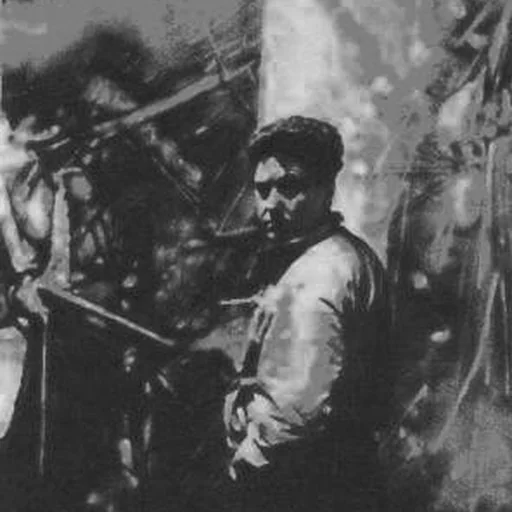
Chilean, 1911–2002
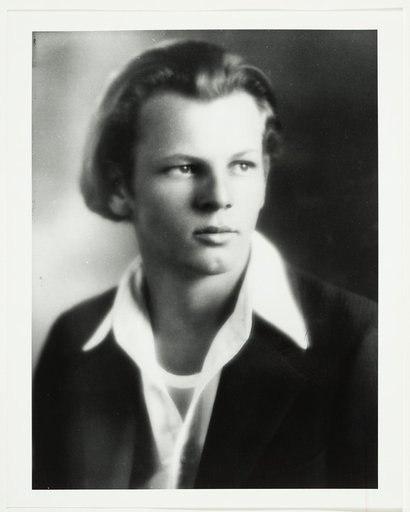
Roberto Matta was a Chilean Abstract Expressionism artist. 11 works are cataloged here, principally at Museum of Modern Art. Roberto Matta was born in Santiago.
Roberto Antonio Sebástian Matta-Echaurren (Spanish: ; November 11, 1911 – November 23, 2002), usually known simply as Matta, also as Sebastián Matta or Roberto Matta, was one of Chile's best-known painters and figures in 20th century surrealist art across the Americas and Europe.
Overview
Roberto Antonio Sebástian Matta-Echaurren (Spanish: [roˈβeɾto ˈmata]; November 11, 1911 – November 23, 2002), usually known simply as Matta, also as Sebastián Matta or Roberto Matta, was one of Chile's best-known painters and figures in 20th century surrealist art across the Americas and Europe.
Biography
Matta was of Spanish, Basque and French descent. Born in Santiago, he studied architecture and interior design at the Pontificia Universidad Católica de Chile in Santiago, and graduated in 1935. That spring, he journeyed from Peru to Panama and completed surreal drawings of many of the geographical features he witnessed. He first encountered Europe while serving in the Merchant Marine after graduating. His travels in Europe and the USA led him to meet artists such as Arshile Gorky, René Magritte, Salvador Dalí, André Breton, and Le Corbusier.
It was Breton who provided the major spur to the Chilean's direction in art, encouraging his work and introducing him to the leading members of the Paris Surrealist movement. Matta produced illustrations and articles for Surrealist journals such as Minotaure. During this period he was introduced to the work of many prominent contemporary European artists, such as Pablo Picasso and Marcel Duchamp. The first true flowering of Matta's own art came in 1938, when he moved from drawing to the oil painting for which he is best known. This period coincided with his emigration to the United States, where he lived until 1948. His early paintings, such as Invasion of the Night, give an indication of the work he would continue, with diffuse light patterns and bold lines on a featureless background. This is also the period of the "inscape" series, and the closely related "psychological morphologies". Prof. Claude Cernuschi (see Boston College Matta exhibition external link below) writes, "Matta's key ambition to represent and evoke the human psyche in visual form was filtered through the writings of Freud and the psychoanalytic view of the mind as a three-dimensional space: the 'inscape'." According to the essay on Matta in Crosscurrents of Modernism (see references below), the inscapes' evocative forms "are visual analogies for the artist's psyche" (p. 241). During the 1940s and 1950s, the disturbing state of world politics found reflection in Matta's work, with the canvases becoming busy with images of electrical machinery and distressed figures. The addition of clay to Matta's paintings in the early 1960s lent an added dimension to the distortions. In his art Matta creates new dimensions in a blend of organic and cosmic lifeforms (see biomorphism). He was one of the first artists to take this abstract leap.
Matta's connections with Breton's surrealist movement were severed following a profound disagreement concerning Arshile Gorky and his family. Matta was accused of indirectly causing Gorky's suicide (in response to Matta's relationship with the Armenian-American painter's wife). This led to his expulsion from the group, but by this time Matta's own name was becoming widely known. He divided his life between Europe and South America during the 1950s and 1960s, successfully combining the political and the semi-abstract in epic surreal canvases. Matta believed that art and poetry can change lives, and was very involved in the social movements of the 1960s and 1970s. He was a strong supporter of the socialist government of president Salvador Allende in Chile. A 4x24 meter mural of his entitled The First Goal of the Chilean People, was painted over with 16 coats of paint by the military regime of Augusto Pinochet following their violent overthrow of Salvador Allende in 1973. In 2005 the mural was discovered by local officials. In 2008 the mural was completely restored at a cost of $43,000, and it is display
Group shows
In 2019, his work was included in the group show The Gift of Art, at Pérez Art Museum Miami. The exhibition highlighted important artworks within PAMM's permanent collection on Latino and Latin American artists. Among the artists featured in the exhibition were José Bedia (Cuba), Teresa Margolles (Mexico), Carmen Herrera (Cuba), Oscar Murillo (Colombia), Amelia Peláez (Cuba), Zilia Sánchez (Cuba), Tunga (Brazil) and Wifredo Lam (Cuba).
Collections represented

Museum
Artists in a similar vein