Art Museum
Museum of Modern Art

Image: Wikimedia Commons.
Museum of Modern Art is an art museum in Manhattan, United States.
About Museum of Modern Art
Overview & Identity
The Museum of Modern Art (MoMA), located in Midtown Manhattan, New York City, is a premier institution dedicated to modern and contemporary art. Established in 1929, it was conceived as a progressive alternative to traditional museums, focusing exclusively on the visual arts of the time. The museum's mission, as articulated by its founding director Alfred H. Barr, Jr., was to help people understand and enjoy the art of their time, aiming to provide New York with the world's greatest museum of modern art. Today, it serves as a global leader in the presentation and preservation of modern and contemporary art, spanning from the late 19th century to the present.
Founding & Early History
MoMA was founded in 1929 by three influential patrons: Lillie P. Bliss, Mary Quinn Sullivan, and Abby Aldrich Rockefeller. They were joined by original trustees including A. Conger Goodyear, Paul Sachs, Frank Crowninshield, and Josephine Boardman Crane. The institution was created to challenge the conservative policies of existing museums. Initially housed in six rooms on the 12th floor of the Heckscher Building, the museum moved three times in its first decade to accommodate its growing collection and public enthusiasm before settling in its permanent midtown location in 1939.
Architecture & Building Evolution
The museum's physical home has undergone significant transformations. The 1939 building, designed by Philip Goodwin and Edward Durell Stone, was expanded in the 1950s and 1960s by Philip Johnson, who also designed the Abby Aldrich Rockefeller Sculpture Garden. A major 1984 renovation by Cesar Pelli doubled the gallery space. The most ambitious project occurred in 2004, designed by Yoshio Taniguchi, which nearly doubled the exhibition space and added the Lewis B. and Dorothy Cullman Education and Research Building. Further expansion and a complete rehang of the collection were completed in 2019 by Diller Scofidio + Renfro, increasing public space by 25%.
Collection Highlights & Notable Holdings
MoMA's collection comprises approximately 200,000 works, including paintings, sculptures, drawings, prints, photographs, films, and design objects. The holdings are particularly renowned for their extensive representation of Cubist, Surrealist, and Abstract Expressionist movements. A centerpiece of the collection is Pablo Picasso's pivotal 1907 painting, Les Demoiselles d'Avignon. The museum also holds one of the world's most important photography collections, with over 25,000 works, and a vast film archive containing roughly 22,000 films and 4 million film stills.
Curatorial Structure & Departments
The museum is organized into six curatorial departments: Architecture and Design, Drawings and Prints, Film, Media and Performance, Painting and Sculpture, and Photography. The Department of Architecture and Design, founded in 1932, was one of the first in the United States to include industrial design and architecture in a museum collection. The Department of Photography was also established early in the museum's history, recognizing photography as a major art form. The Film Department, founded in 1935, was the first museum film archive in the world, reflecting Barr's vision of introducing the 'only great art form peculiar to the 20th century' to the public.
Significance & Legacy
MoMA has played a pivotal role in defining and promoting modern art globally. It hosted landmark exhibitions such as 'Cubism and Abstract Art' in 1936, which significantly influenced the understanding of modernism. The museum's innovative approach to collecting, which included photography, film, and design alongside traditional fine arts, set a precedent for other institutions. Its educational programs and active publishing history, with over 2,500 editions in 35 languages, have further cemented its status as a leading educational institution. The museum's affiliation with MoMA PS1 in Long Island City since 2000 has expanded its reach into contemporary art practices.
What to see at Museum of Modern Art
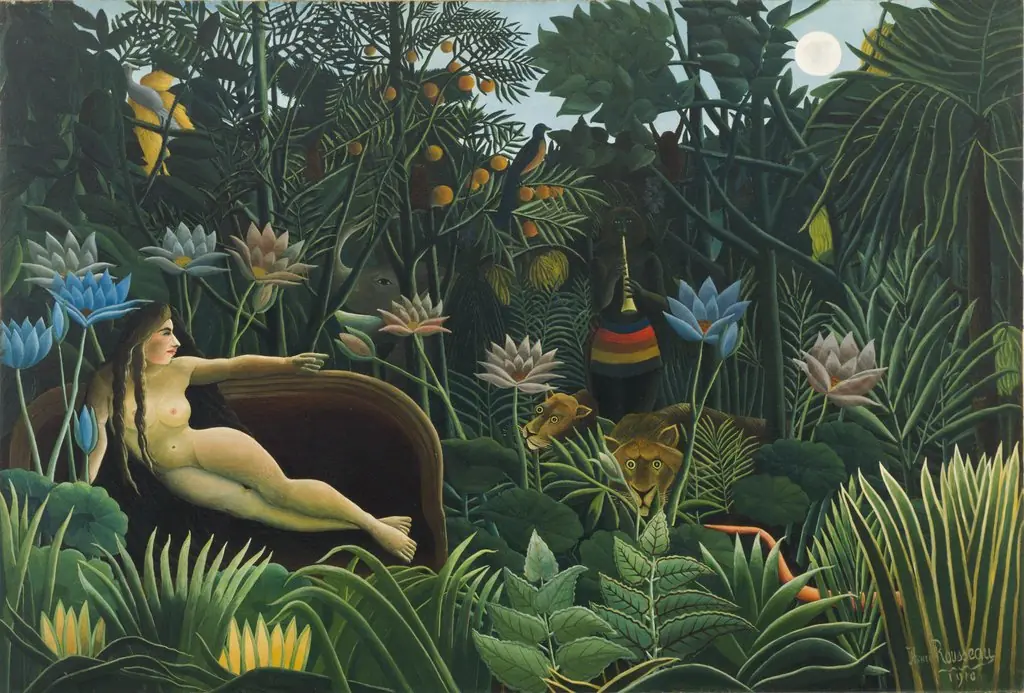
Start with The Dream by Henri Rousseau.
Plan your visit
Museum of Modern Art
- Website
- www.moma.org