Artist
William Lee
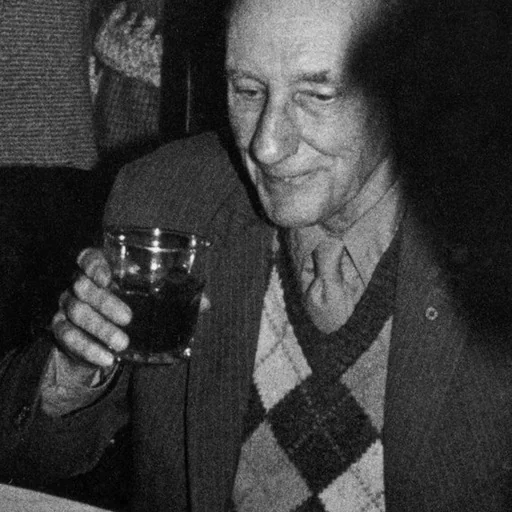
American, 1914–1997
William Lee was an American Realism artist. 2 works are cataloged here, principally at Ashmolean Museum. William Lee was born in St. Louis.
Overview
William Seward Burroughs II (; February 5, 1914 – August 2, 1997) was an American writer and visual artist. He is widely considered a primary figure of the Beat Generation and a major postmodern author who influenced both underground and popular culture and literature. Much of Burroughs's work is highly experimental and features unreliable narrators. Also noted as semi-autobiographical, his work often drew from his experiences with drug addiction, and featured his various places of residence as settings in much of his work. With Brion Gysin, Burroughs popularized the cut-up, an aleatory literary technique. His writing also engaged frequent mystical, occult, or otherwise magical themes, constant preoccupations in both his fiction and real life. Born into a wealthy family in St. Louis, Missouri, Burroughs attended Harvard University, where he studied English, then anthropology as a postgraduate, and went on to medical school in Vienna. In 1942, he enlisted in the U.S. Army to serve during World War II. After being turned down by both the Office of Strategic Services and the Navy, he veered into substance abuse, beginning with morphine and developing a heroin addiction that would affect him for the rest of his life. In 1943, he befriended Allen Ginsberg and Jack Kerouac while living in New York City. This liaison would become the foundation of the Beat Generation, later a defining influence on the 1960s counterculture. Burroughs found success with his confessional first novel, Junkie (1953), published under the pen name William Lee. He had largely completed the novel before he accidentally shot and killed his second wife, Joan Vollmer, in 1951 in Mexico City; he was convicted of manslaughter in absentia and received a two-year suspended sentence. His third novel, Naked Lunch (1959), became the subject of one of the last major literary censorship cases in the United States after its US publisher, Grove Press, was sued for violating a Massachusetts obscenity statute. He also wrote The Nova Trilogy (1961–1964) which extensively featured the cut-up technique, and The Red Night Trilogy: Cities of the Red Night (1981), The Place of Dead Roads (1983) and The Western Lands (1987). In 1983, Burroughs was elected to the American Academy and Institute of Arts and Letters. In 1984, he was awarded the Ordre des Arts et des Lettres by France. Jack Kerouac called Burroughs the "greatest satirical writer since Jonathan Swift"; he owed this reputation to his "lifelong subversion" of the moral, political, and economic systems of modern American society, articulated in often darkly humorous sardonicism. J. G. Ballard considered Burroughs to be "the most important writer to emerge since the Second World War," while Norman Mailer declared him "the only American writer who may be conceivably possessed by genius." He also collaborated on projects and recordings with numerous performers and musicians, made many appearances in films, and created and exhibited thousands of visual artworks, including his celebrated "shotgun art".
Early life and education
Burroughs was born in 1914, the younger of two sons born to Mortimer Perry Burroughs (June 16, 1885 – January 5, 1965) and Laura Hammon Lee (August 5, 1888 – October 20, 1970). Of prominent English ancestry, his family lived in St. Louis, Missouri. His grandfather, William Seward Burroughs I, had founded the Burroughs Adding Machine company, which evolved into the Burroughs Corporation. His mother was Laura Hammond Lee Burroughs, whose brother, Ivy Lee, was an advertising pioneer later employed as a publicist for the Rockefellers. His father ran an antiques and gift shop, Cobblestone Gardens, in St. Louis and later in Palm Beach, Florida, when they relocated. Burroughs would later write of growing up in a "family where displays of affection were considered embarrassing". During his childhood, Burroughs developed a lifelong interest in magic and the occult, which would eventually find their way repeatedly into his writings. Significantly, he later described how, as a child, he'd seen an apparition of a green reindeer in the woods, which he identified as a totem animal, as well as a vision of ghostly gray figures at play in his bedroom. As a boy, Burroughs lived on Pershing Avenue (now Pershing Place) in St. Louis's Central West End. He attended John Burroughs School in St. Louis, where his first published essay — "Personal Magnetism", which revolved around telepathic mind-control — was printed in the John Burroughs Review in 1929. He then attended the Los Alamos Ranch School in New Mexico, which was stressful for him. The school was a boarding school for the wealthy, "where the spindly sons of the rich could be transformed into manly specimens". Burroughs kept journals documenting an erotic attachment to another boy. According to his own account, he destroyed these later, ashamed of their content. He kept his sexual orientation concealed from his family well into adulthood. A common story says that he was expelled from Los Alamos after taking chloral hydrate in Santa Fe with a fellow student. Yet, according to his own account, he left voluntarily: "During the Easter vacation of my second year I persuaded my family to let me stay in St. Louis."
Harvard University
Burroughs finished high school at Taylor School in Clayton, Missouri, and in 1932 left home to pursue an arts degree at Harvard University, where he was affiliated with Adams House. During the summers, he worked as a cub reporter for the St. Louis Post-Dispatch, covering the police docket. He disliked the work, and refused to cover some events, like the death of a drowned child. He lost his virginity in an East St. Louis, Illinois, brothel that summer with a female prostitute whom he regularly patronized. While at Harvard, Burroughs made trips to New York City and was introduced to the gay subculture there. He visited lesbian dives, piano bars, and the Harlem and Greenwich Village homosexual underground with Richard Stern, a wealthy friend from Kansas City. They would drive from Boston to New York in a reckless fashion. Once, Stern scared Burroughs so badly that he asked to be let out of the vehicle. Burroughs graduated from Harvard in 1936. According to Ted Morgan's Literary Outlaw,
His parents, upon his graduation, had decided to give him a monthly allowance of $200 out of their earnings from Cobblestone Gardens, a substantial sum in those days. It was enough to keep him going, and indeed it guaranteed his survival for the next twenty-five years, arriving with welcome regularity. The allowance was a ticket to freedom; it allowed him to live where he wanted to and to forgo employment. Burroughs's parents sold the rights to his grandfather's invention and had no share in the Burroughs Corporation. Shortly before the 1929 stock market crash, they sold their stock for $200,000 (equivalent to approximately $3,800,000 in today's funds).
Europe and first marriage
After Burroughs graduated from Harvard, his formal education ended, except for brief flirtations with graduate study of anthropology at Columbia and medicine in Vienna, Austria. He traveled to Europe and became involved in Austrian and Hungarian Weimar-era gay culture; he picked up young men in steam baths in Vienna and moved in a circle of exiles, homosexuals, and runaways. There, he met Ilse Klapper, born Herzfeld (1900–1982), a German Jewish woman fleeing her country's Nazi government. The two were never romantically involved, but Burroughs married her, in Croatia, against the wishes of his parents, to allow her to gain a visa to the United States. She made her way to New York City, and eventually divorced Burroughs, although they remained friends for many years. After returning to the United States, he held a string of uninteresting jobs. In 1939, his mental health became a concern for his parents, especially after he deliberately severed the last joint of his left little finger at the knuckle to impress a man with whom he was infatuated. This event made its way into his early fiction as the novella The Finger.
Beginning of the Beats
Burroughs enlisted in the U.S. Army early in 1942, shortly after the bombing of Pearl Harbor brought the United States into World War II. But when he was classified as a 1-A infantry, not an officer, he became dejected. His mother recognized her son's depression and got Burroughs a civilian disability discharge – a release from duty based on the premise that he should have not been allowed to enlist due to previous mental instability. After being evaluated by a family friend, who was also a neurologist at a psychiatric treatment center, Burroughs waited five months in limbo at Jefferson Barracks outside St. Louis before being discharged. During that time he met a Chicago soldier also awaiting release, and once Burroughs was free, he moved to Chicago and held a variety of jobs, including one as an exterminator. When two of his friends from St. Louis – University of Chicago student Lucien Carr and his sexual assaulter, David Kammerer – left for New York City, Burroughs followed.
Addiction and Joan Vollmer
In 1945, Burroughs began living with Joan Vollmer Adams in an apartment they shared with Jack Kerouac and Edie Parker, Kerouac's first wife. Vollmer Adams was married to a G.I. with whom she had a young daughter, Julie Adams. Burroughs and Kerouac got into trouble with the law for failing to report a murder involving Lucien Carr, who had killed David Kammerer in a confrontation allegedly over Kammerer's unwanted advances. This incident inspired Burroughs and Kerouac to collaborate on a novel titled And the Hippos Were Boiled in Their Tanks, completed in 1945. The two fledgling authors were unable to get it published during their lifetimes, but the manuscript was eventually published in November 2008 by Grove Press and Penguin Books. During this time, Burroughs began using morphine and became addicted. He eventually sold heroin in Greenwich Village to support his habit. Vollmer also became an addict, but to Benzedrine, an amphetamine sold over the counter at that time. Because of her addiction and social circle, her husband immediately divorced her after returning from the war. With urging from Allen Ginsberg, and also perhaps Kerouac, Burroughs became intellectually and emotionally linked with Vollmer and by summer 1945, had moved in with Vollmer and her daughter. In spring 1946, Burroughs was arrested for forging a narcotics prescription. Vollmer asked her psychiatrist, Lewis Wolberg, to sign a surety bond for Burroughs's release. As part of his release, Burroughs returned to St. Louis under his parents' care, after which he left for Mexico to get a divorce from Ilse Klapper. Meanwhile, Vollmer's addiction led to a temporary psychosis that resulted in her admission to Bellevue Hospital, which endangered the custody of her child. Upon hearing this, Burroughs immediately returned to New York City to gain her release, asking her to marry him. Their marriage was never formalized, but she lived as his common-law wife. In 2025, it emerged that Burroughs married a Mexican woman named María Lucrecia Barquera on November 23, 1949, probably for immigration reasons. He kept this a secret for the rest of his life. They returned to St. Louis to visit Burroughs's parents and then moved with her daughter to Texas. Vollmer soon became pregnant with Burroughs's child. Their son, William S. Burroughs Jr., was born in 1947. The family moved briefly to New Orleans in 1948.
Mexico and South America (1950–1952)
In New Orleans, police stopped Burroughs's car one evening. They found an unregistered handgun belonging to him as well as a letter from Ginsberg that contained details about the sale of marijuana. The police then searched Burroughs's home, where they discovered his stash of drugs and half a dozen or more firearms. Burroughs fled to Mexico to escape possible detention in Louisiana's Angola State Prison. Vollmer and their children followed him. Burroughs planned to stay in Mexico for at least five years, the length of his charge's statute of limitations. Burroughs also attended classes at the Mexico City College in 1950, studying Spanish, as well as Mesoamerican manuscripts (codices) and the Mayan language with R. H. Barlow.
Killing of Vollmer
Their life in Mexico was by all accounts an unhappy one. Without heroin and suffering from Benzedrine abuse, Burroughs began to pursue other men as his libido returned, while Vollmer, feeling abandoned, started to drink heavily and mock Burroughs openly. One night, while drinking with friends at a party above the Bounty Bar in Mexico City, a drunk Burroughs allegedly took his handgun from his travel bag and told his wife, "It's time for our William Tell act." There is no indication that they had performed such an action previously. Vollmer, who was also drinking heavily and undergoing amphetamine withdrawal, allegedly obliged him by putting a highball glass on her head. Burroughs shot Vollmer in the head, killing her almost immediately. Soon after the incident, Burroughs changed his account, claiming that he had dropped his gun and it had accidentally fired. Burroughs spent 13 days in jail before his brother came to Mexico City and bribed Mexican lawyers and officials to release Burroughs on bail while he awaited trial for the killing, which was ruled culpable homicide. Vollmer's daughter, Julie Adams, went to live with her grandmother, and William S. Burroughs Jr. went to St. Louis to live with his grandparents. Burroughs reported every Monday morning to the jail in Mexico City while his prominent Mexican attorney worked to resolve the case. According to James Grauerholz, two witnesses had agreed to testify that the gun had fired accidentally while he was checking to see if it was loaded, with ballistics experts bribed to support this story. Nevertheless, the trial was continuously delayed and Burroughs began to write what would eventually become the short novel Queer while awaiting his trial. Upon Burroughs's attorney fleeing Mexico in light of his own legal problems, Burroughs decided, according to Ted Morgan, to "skip" and return to the United States. He was convicted in absentia of homicide and was given a two-year suspended sentence. Although Burroughs was writing before his murder of Joan Vollmer, this event marked him and, biographers argue, his work for the rest of his life. Vollmer's death also resonated with Allen Ginsberg, who wrote of her in Dream Record: June 8, 1955, "Joan, what kind of knowledge have the dead? Can you still love your mortal acquaintances? What do you remember of us?" In Burroughs: The Movie, Ginsberg claimed that Vollmer had seemed possibly suicidal in the weeks leading up to her death, and he suggested that this may have been a factor in her willingness to take part in the risky William Tell stunt.
The Yage Letters
After leaving Mexico, Burroughs drifted through South America for several months, seeking out a drug called yagé, which promised to give the user telepathic abilities. A book composed of letters between Burroughs and Ginsberg, The Yage Letters, was published in 1963 by City Lights Books. In 2006, a re-edited version, The Yage Letters Redux, showed that the letters were largely fictionalised from Burroughs's notes.
Beginning of literary career
Burroughs described Vollmer's death as a pivotal event in his life, and one that provoked his writing by exposing him to the risk of possession by a malevolent entity he called "the Ugly Spirit":
I am forced to the appalling conclusion that I would never have become a writer but for Joan's death, and to a realization of the extent to which this event has motivated and formulated my writing. I live with the constant threat of possession, and a constant need to escape from possession, from Control. So the death of Joan brought me in contact with the invader, the Ugly Spirit, and maneuvered me into a life long struggle, in which I have had no choice except to write my way out. As Burroughs makes clear, he meant this reference to "possession" to be taken absolutely literally, stating: "My concept of possession is closer to the medieval model than to modern psychological explanations ... I mean a definite possessing entity." Burroughs' writing was intended as a form of "sorcery", in his own words – to disrupt language via methods such as the cut-up technique, and thus protect himself from possession. Later in life, Burroughs described the Ugly Spirit as "Monopolistic, acquisitive evil. Ugly evil. The ugly American", and took part in a shamanic ceremony with the explicit aim of exorcising the Ugly Spirit. Oliver Harris has questioned Burroughs's claim that Vollmer's death catalysed his writing, highlighting the importance for Queer of Burroughs's traumatic relationship with the boyfriend fictionalized in the story as Eugene Allerton, rather than Burroughs's shooting of Vollmer. In any case, he had begun to write in 1945. Burroughs and Kerouac collaborated on And the Hippos Were Boiled in Their Tanks, a mystery novel loosely based on the Carr–Kammerer situation and that at the time remained unpublished. Years later, in the documentary What Happened to Kerouac?, Burroughs described it as "not a very distinguished work". An excerpt of this work, in which Burroughs and Kerouac wrote alternating chapters, was finally published in Word Virus, a compendium of William Burroughs's writing that was published by his biographer after his death in 1997. The complete novel was finally published by Grove Press in 2008. Before killing Vollmer, Burroughs had largely completed his first novel, Junkie, which he wrote at the urging of Allen Ginsberg, who was instrumental in getting the work published as a cheap mass-market paperback. Ace Books published the novel in 1953 as part of an Ace Double under the pen name William Lee, retitling it Junkie: Confessions of an Unredeemed Drug Addict (it was later republished as Junkie, then in 1977 as Junky, and finally in 2003 as Junky: the definitive text of 'Junk', edited by Oliver Harris).
Tangier
During 1953, Burroughs was at loose ends. Due to legal problems, he was unable to live in the cities toward which he was most inclined. He spent time with his parents in Palm Beach, Florida, and in New York City with Allen Ginsberg. When Ginsberg refused his romantic advances, Burroughs went to Rome to meet Alan Ansen on a vacation financed from his parents' continuing support. He found Rome and Ansen's company dreary and, inspired by Paul Bowles' fiction, he decided to head for the Tangier International Zone, where he rented a room and began to write a large body of text that he personally referred to as Interzone. To Burroughs, all signs directed a return to Tangier, a city where drugs were freely available and where financial support from his family would continue. He realized that in the Moroccan culture he had found an environment that synchronized with his temperament and afforded no hindrances to pursuing his interests and indulging in his chosen activities. He left for Tangier in November 1954 and spent the next four years there working on the fiction that would later become Naked Lunch, as well as attempting to write commercial articles about Tangier. He sent these writings to Ginsberg, his literary agent for Junkie, but none were published until 1959 when Interzone, a collection of short stories, was published. Under the strong influence of a marijuana confection known as majoun and a German-made opioid called Eukodol, Burroughs settled in to write. Eventually, Ginsberg and Kerouac, who had traveled to Tangier in 1957, helped Burroughs type, edit, and arrange these episodes into Naked Lunch. During this time Burroughs began a sexual relationship with a teenage boy named Kiki, which lasted until Kiki's murder in September 1957.
Naked Lunch
Whereas Junkie and Queer were conventional in style, Naked Lunch was his first venture into a nonlinear style. After the publication of Naked Lunch, a book whose creation was to a certain extent the result of a series of contingencies, Burroughs was exposed to Brion Gysin's cut-up technique at the Beat Hotel in Paris in October 1959. He began slicing up phrases and words to create new sentences. At the Beat Hotel, Burroughs discovered "a port of entry" into Gysin's canvases: "I don't think I had ever seen painting until I saw the painting of Brion Gysin." The two would cultivate a long-term friendship that revolved around a mutual interest in artworks and cut-up techniques. Scenes were slid together with little care for narrative. Excerpts from Naked Lunch were first published in the United States in 1958. The novel was initially rejected by City Lights Books, the publisher of Ginsberg's Howl, and Olympia Press publisher Maurice Girodias, who had published English-language novels in France that were controversial for their subjective views of sex and antisocial characters. Nevertheless, Ginsberg managed to get excerpts published in Black Mountain Review and Chicago Review in 1958. Irving Rosenthal, student editor of Chicago Review, a quarterly journal partially subsidized by the university, promised to publish more excerpts from Naked Lunch, but he was fired from his position in 1958 after Chicago Daily News columnist Jack Mabley called the first excerpt obscene. Rosenthal went on to publish more in his newly created literary journal Big Table No. 1; however, the United States Postmaster General ruled that copies could not be mailed to subscribers on the basis of obscenity laws. John Ciardi did get a copy and wrote a positive review of the work, prompting a telegram from Allen Ginsberg praising the review. This controversy made Naked Lunch interesting to Girodias again, and he published the novel in 1959. After the novel was published, it became notorious across Europe and the United States, garnering interest from not just members of the counterculture of the 1960s, but also literary critics such as Mary McCarthy. Once published in the United States, Naked Lunch was prosecuted as obscene by the Commonwealth of Massachusetts, followed by other states. In 1966, the Massachusetts Supreme Judicial Court declared the work "not obscene" on the basis of criteria developed largely to defend the book. The case against Burroughs's novel still stands as the last obscenity trial against a work of literature – that is, a work consisting of words only, and not including illustrations or photographs – prosecuted in the United States. The Word Hoard, the collection of manuscripts that produced Naked Lunch, also produced parts of the later works The Soft Machine (1961), The Ticket That Exploded (1962), and Nova Express (1964). These novels feature extensive use of the cut-up technique that influenced all of Burroughs's subsequent fiction to a degree. During Burroughs's friendship and artistic collaborations with Gysin and Ian Sommerville, the technique was combined with images, Gysin's paintings, and sound, via Sommerville's tape recorders. Burroughs was so dedicated to the cut-up method that he often defended his use of the technique before editors and publishers, most notably Dick Seaver at Grove Press in the 1960s and Holt, Rinehart & Winston in the 1980s. The cut-up method, because of its random or mechanical basis for text generation, combined wit
Paris and the "Beat Hotel"
Burroughs moved into a rundown hotel in the Latin Quarter of Paris in 1959 when Naked Lunch was still looking for a publisher. Tangier, with its political unrest, and criminals with whom he had become involved, became dangerous to Burroughs. He went to Paris to meet Ginsberg and talk with Olympia Press. He left behind a criminal charge which eventually caught up with him in Paris. Paul Lund, a British former career criminal and cigarette smuggler whom Burroughs met in Tangier, was arrested on suspicion of importing narcotics into France. Lund gave up Burroughs, and evidence implicated Burroughs in the importation of narcotics into France. When the Moroccan authorities forwarded their investigation to French officials, Burroughs faced criminal charges in Paris for conspiracy to import opiates. It was during this impending case that Maurice Girodias published Naked Lunch; its appearance helped to get Burroughs a suspended sentence, since a literary career, according to Ted Morgan, is a respected profession in France. The "Beat Hotel" was a typical European-style boarding house hotel, with common toilets on every floor, and a small place for personal cooking in the room. Life there was documented by the photographer Harold Chapman, who lived in the attic room. This shabby, inexpensive hotel was populated by Gregory Corso, Ginsberg and Peter Orlovsky for several months after Naked Lunch first appeared. Burroughs's time at the Beat Hotel was dominated by occult experiments – "mirror-gazing, scrying, trance and telepathy, all fuelled by a wide variety of mind-altering drugs". Later, Burroughs would describe "visions" obtained by staring into the mirror for hours at a time – his hands transformed into tentacles, or his whole image transforming into some strange entity, or visions of far-off places, or of other people rapidly undergoing metamorphosis. It was from this febrile atmosphere that the famous cut-up technique emerged. The actual process by which Naked Lunch was published was partly a function of its "cut-up" presentation to the printer. Girodias had given Burroughs only ten days to prepare the manuscript for print galleys, and Burroughs sent over the manuscript in pieces, preparing the parts in no particular order. When it was published in this authentically random manner, Burroughs liked it better than the initial plan. International rights to the work were sold soon after, and Burroughs used the $3,000 advance from Grove Press to buy drugs (equivalent to approximately $33,000 in today's funds). Naked Lunch was featured in a 1959 Life magazine cover story, partly as an article that highlighted the growing Beat literary movement. During this time Burroughs found an outlet for material otherwise rendered unpublishable in Jeff Nuttall's My Own Mag. Also, poetry by Burroughs appeared in the avant garde little magazine Nomad at the beginning of the 1960s.
The London years
Burroughs left Paris for London in 1960 to visit Dr. Dent, a well-known English medical doctor who spearheaded a reputedly painless heroin withdrawal treatment using the drug apomorphine. Dent's apomorphine cure was also used to treat alcoholism, although it was held by several people who undertook it to be no more than straightforward aversion therapy. Burroughs, however, was convinced. Following his first cure, he wrote a detailed appreciation of apomorphine and other cures, which he submitted to The British Journal of Addiction (Vol. 53, 1956) under the title "Letter From A Master Addict To Dangerous Drugs"; this letter is appended to many editions of Naked Lunch. Though he ultimately relapsed, Burroughs ended up working out of London for six years, traveling back to the United States on several occasions, including one time escorting his son to the Lexington Narcotics Farm and Prison after the younger Burroughs had been convicted of prescription fraud in Florida. In the "Afterword" to the compilation of his son's two previously published novels Speed and Kentucky Ham, Burroughs writes that he thought he had a "small habit" and left London quickly without any narcotics because he suspected the US customs would search him very thoroughly on arrival. He claims he went through the most excruciating two months of opiate withdrawal while seeing his son through his trial and sentencing, traveling with Billy to Lexington, Kentucky from Miami to ensure that his son entered the hospital that he had once spent time in as a volunteer admission. Earlier, Burroughs revisited St. Louis, Missouri, taking a large advance from Playboy to write an article about his trip back to St. Louis, one that was eventually published in The Paris Review, after Burroughs refused to alter the style for Playboy’s publishers. In 1968 Burroughs joined Jean Genet, John Sack, and Terry Southern in covering the 1968 Democratic National Convention for Esquire magazine. Southern and Burroughs, who had first become acquainted in London, would remain lifelong friends and collaborators. In 1972, Burroughs and Southern unsuccessfully attempted to adapt Naked Lunch for the screen in conjunction with American game-show producer Chuck Barris. Burroughs supported himself and his addiction by publishing pieces in small literary presses. His avant-garde reputation grew internationally as hippies and college students discovered his earlier works. He developed a close friendship with Antony Balch and lived with a young hustler named John Brady who continuously brought home young women despite Burroughs's protestations. In the midst of this personal turmoil, Burroughs managed to complete two works: a novel written in screenplay format, The Last Words of Dutch Schultz (1969); and the traditional prose-format novel The Wild Boys (1971). It was during his time in London that Burroughs began using his "playback" technique in an attempt to place curses on various people and places who had drawn his ire, including the Moka coffee bar and the London HQ of Scientology. Burroughs himself related the Moka coffee bar incident:
Here is a sample operation carried out against the Moka Bar at 29 Frith Street, London, W1, beginning on August 3, 1972. Reverse Thursday. Reason for operation was outrageous and unprovoked discourtesy and poisonous cheesecake. Now to close in on the Moka Bar. Record. Take pictures. Stand around outside. Let them see me. They are seething around in there ... Playback would
Collections represented

Museum

Museum
Artists in a similar vein
Artist