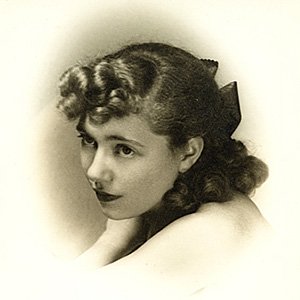
Artist
John Opper
American, 1908–1994
John Opper was an American artist. 1 work is cataloged here, principally at Museum of Modern Art. John Opper was born in Chicago.
Overview
John Opper (1908–1994) was an American painter who transitioned from semi-abstract paintings in the late 1930s to fully abstract ones in the 1950s. He became known for his handling of color and in particular his ability to create dramatic intensity on the picture plane by means of juxtaposed, more-or-less rectangular areas of color. He was associated with the abstract expressionist movement and frequently showed in galleries that specialized in abstract expressionist art. Late in life, he described his style by what it was not. He said, "The whole is the sum of its parts. That's what my school of abstract art is about, a school that evolved from nature, not conceptual, not geometric, not hard-edged. It's only art."
Early life and training
Opper was born in Chicago, Illinois, and raised in Cleveland, Ohio. He became interested in drawing at a young age. While in high school he took art classes and enrolled in a correspondence art course. In his senior year he attended classes at the Cleveland Museum of Art. Graduating about 1926 he briefly studied at the Cleveland School of Art and there encountered the artists Henry Keller, as an instructor, and Clarence Carter, as a fellow student. He spent the following year in Chicago taking classes at the Art Institute and subsequently returned to Cleveland where he enrolled at Western Reserve University, graduating in 1932. Two years later he spent a summer in Gloucester, Massachusetts. There, he met Hans Hofmann, who was teaching at the Thurn School of Art. Hofmann influenced his approach to art, although not as an instructor. In 1934 Opper moved to Manhattan and a year later began to work in the studio that Hofmann had set up as the School of Fine Arts on East 57th Street. There he met modernist painters who sought Hofmann's guidance and began to develop his own modernist style.
Career in art
In 1936 Opper became a founding member of American Abstract Artists, a group formed by New York artists to promote and exhibit a style of art that was then derided by critics and shunned by collectors. In 1937 the influential critic, Edward Alden Jewell, called this effort a "revolt against literary subject-paintings" and said that the great majority of paintings in a current exhibition were simply "objects." The same year, after a brief attempt to support himself as an art instructor, Opper joined the Federal Art Project in Manhattan as an easel artist and remained for three years. He later said that the project was a lifesaver for impoverished artists, particularly abstract artists such as himself. At the same time, he joined the Artists Union and became business manager of its journal, Art Front. Within the year, Opper left the Artists Union and joined the American Artists' Congress. He grew disenchanted with this organization, in turn, and left it after submitting work to two of its group exhibitions. By his account, during these two years his work was both semi-abstract and anti-war. Opper was given his first solo exhibition at the Artists Gallery in 1937. The water colors and temperas he showed drew favorable comment from Howard Devree, critic for the New York Times, who said his realist and semi-abstract landscapes were vigorous, germane, and expressive and from Jerome Klein of the New York Post, who commended Opper's "sparkling brilliance and unfailing vivacity." Before leaving the Artists' Congress he helped organize its fourth annual exhibition in 1940. Entitled "Art in a Democracy," the show featured artists across the country who worked in the Federal Art Project. Writing in the New York Times, Edward Alden Jewell said it was "cluttered with shrillness and posturing and ineptitude," but A. Z. Kruse of the Brooklyn Eagle wrote that he was overwhelmed by its overall high quality, saying "there are too many noteworthy contributions to permit of enumeration and evaluation." The Congress was then torn by dissension and on its last legs. Opper had come to the conclusion that he could not create art as a means of correcting society's ills. He later said, "I was torn between the needs of the society and the needs of the war on one hand, and on the other hand what I felt were aesthetic needs of painting. So finally the only solution that I was able to make for myself was to begin to separate the two. I was quite active socially, as much as I could be. And as far as my paintings were concerned I began to abstract from nature and work very abstractly." He took on war-related work between 1942 and 1945 and produced less art than he had in the 1930s. Nonetheless, he contributed to group exhibitions during this time and in 1942 was given another well-received solo exhibition at the Artists Gallery. Although he spent most of the post-war period in teaching positions outside New York, he was able both to continue painting and to show the works he made. In 1947, the curator of modern painting at the Art Institute of Chicago, Katharine Kuh, took one of his paintings for a show called "Abstract and Surrealist American Art." Presenting a cross-section of modernist American painting and sculpture, the exhibition uncovered an abstractionist movement that was then beginning to gain momentum, particularly in New York. In 1953 Opper participated in a group show held at a New York commercial gallery and in 1955 he was the last of a series of abstrac
Artistic style and critical reception
During the 1930s and 1940s Opper painted mainly on paper in water-colors and gouache. He also used oil on canvas and made some lithographic prints. During the 1950s oils predominate and thereafter acrylics on canvas or paper. His works are mostly easel-size or, if larger, small enough to be painted from a stationary position. As one critic said, "Like de Kooning, Opper preferred to work within his arm's reach." His early training gave him excellent technical facility. An able draftsman, he could create realistic depictions of natural subjects, particularly still lifes. However, he did not enjoy the work and, after seeing semi-abstract and abstract works by European artists and after meeting with American artists who were experimenting along these lines, he expanded his range and began to make semi-abstractions. In a 1968 oral history interview he said paintings by Paul Cézanne and Milton Avery impressed him, but he found greatest influence in work by Henri Matisse and John Marin. Following Marin, he began to make works on paper, particularly seascapes and landscapes. His response to Matisse was more complicated. In a 1990 interview he said, "Here were these marvelous paintings, so simple a child could do them. What an amazing thing that is! Simplicity is the hardest thing in the world to do. All you leave is the guts. You take everything else out." During the time he worked in the Federal Art Project, he tried his hand at social realism, taking a lead from artists such as José Clemente Orozco, but, as noted above, after a year or so came to believe that making art and acting to correct societal injustice were two separate matters.
Among the artists he met in the Artists Union there were several who shared Opper's doubts concerning social realism. Balcomb Greene, who, in 1936 became the first chairman of American Abstract Artists, provided one such influence in the direction of abstractionism. As Opper put it, "he was one of the first to argue that there is probably something in art besides the image that you show." Another motivation for his transition to abstractionism came from his feeling for color. During the time that his work was still representational, the reviews he received in New York newspapers noted his facility in handling color. He later explained that some of his motivation for abandoning representation came partly from his feeling for color. In 1968 he said, "the more I became aware of color and design the more I came in conflict with the object that I was painting. So it soon became a problem either I let the color go — and keep the composition as it should be, naturalistically or representationally — or I should take freedom with color and design." As he began to work in an abstractionist style Opper began to see a division between artists who took a more rational, carefully planned approach to their work and ones whose work was more intuitive. As he saw it, on the one side were the geometric abstractionists who tended to show the influence of Picasso and who made neat and clean, clearly defined art, and on the other side were those who tended to show the influence of Matisse and who made art in a freer, looser style, showing greater warmth. At the end of the 1930s Opper was making a transition from representational to semi-abstract paintings. His transition from semi- to pure abstraction was slowed during three years that he spent making technical drawings for a marine architectural firm during the Second World War.
Career in teaching
At age 24, when his studies at Western Reserve were coming to an end, Opper got a job as a part-time art instructor at Karamu House, a Cleveland settlement house school. Having moved to Manhattan he obtained a similar job at a school for delinquents. At the close of World War II he spent a year teaching at the University of North Carolina Woman's College in Greensboro (now the University of North Carolina at Greensboro). Between 1945 and 1947 he taught at the University of Wyoming; and between 1947 and 1949 at the University of Alabama. From 1949 to 1952 he taught at Teachers College, Columbia University, while he studied for a doctor of education degree at the university. Concurrently, he taught evening classes at Pratt Institute. In the summer of 1952 he returned to North Carolina as an artist-in-residence at the Burnsville School of Fine Arts, a college campus of the Woman's College UNC, located in the mountains. That fall he moved back to Woman's College UNC in Greensboro as an associate professor. From 1957 until he retired in 1974, he was a professor of art at New York University. Notable students of Opper included painter Lee Hall.
Personal life and family
Opper's birth name was John Samuel Opper. He was born on October 29, 1908, in Chicago, Illinois, to Joseph (or Joe) Opper (1885-1947) and his wife Mary Milstein Opper (1887-1968). Both parents were born in Kiev, Ukraine. Opper had one brother, Leon Jay Opper (1918-1992) and three sisters, Ann Opper Waldman (1906-1997), Carrie Opper Cohen (1910-1967), and Sylvia Opper Brandt (1916-1999). In 1934 Opper married Estelle Rita Hausman in Manhattan. They remained married until their deaths 60 years later. She had been born in Cleveland, Ohio, in 1910, and like him, died in 1994. They had one daughter, Jane Opper, and one son, Joseph Opper. Between 1941 and 1945 Opper worked for a marine architectural company making pipe system drawings of PT boats. After retiring from NYU in 1974 Opper spent summers in Amagansett, Long Island, and the colder months in Greenwich Village. Beginning in 1989 he spent most of the year in Sarasota, Florida, while continuing to spend summers on Long Island. Opper died in New York City on October 4, 1994, and is buried in East Hampton's Green River Cemetery.
Public museum collections
Blanton Museum of Art, The University of Texas at Austin, Texas The Cleveland Museum of Art, Cleveland, Ohio Grey Art Gallery, New York University, New York, New York The Metropolitan Museum of Art, New York, New York Milwaukee Art Museum, Milwaukee, Wisconsin Museum of Modern Art, New York, New York Parrish Art Museum, Watermill, New York Smithsonian American Art Museum, Washington DC Weatherspoon Art Museum, University of North Carolina, Greensboro, North Carolina Whitney Museum of American Art, New York, New York
Collections represented

Museum
Artists in a similar vein