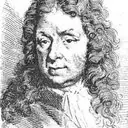
Artist
Karl Wilhelm de Hamilton
1668–1754
Karl Wilhelm de Hamilton was an artist. 3 works are cataloged here, principally at Fitzwilliam Museum. Karl Wilhelm de Hamilton was born in Brussels.
Overview
Karl Wilhelm de Hamilton, also Carl Wilhelm de Hamilton, Charles William de Hamilton, or Karel-William Von Hamilton (1668 in Brussels – 23 February 1754 in Augsburg) was a painter born at the end of the Dutch Golden Age. He is best known for his ‘forest-floor’ still life landscapes, game piece still life paintings, and bird paintings.
Biography
Karl Wilhelm de Hamilton was one of a large family of artists active in the late 17th and early 18th centuries. He was the son and pupil of Scottish still life painter James de Hamilton (c.1640-1720), who settled and worked in Brussels. His brothers Philipp Ferdinand (c.1664-1750) and Johann Georg (1672-1737) were both active in Vienna, while Karl Wilhelm worked mainly in Germany, first in Baden-Baden and later in Augsburg, where he served as valet and court painter to Bishop Alexander Sigismund von der Pfalz-Neuburg. He was a teacher of painters Josef Franz Adolph, Johann Elias Ridinger and Johann Jakob Schalch.
Works
Among his most famous works are several variations on a landscape known as The Parliament of Birds, based on a poem by Geoffrey Chaucer written around 1380.
Collections
The following collections contain work(s) by Karl Wilhelm de Hamilton:
Fitzwilliam Museum (Cambridge, England) Wallraf-Richartz Museum (Cologne, Germany) Musée des Beaux-Arts (Dijon, France) Staatliche Kunsthalle (Karlsruhe, Germany) Musée des Beaux-Arts (Lyon, France) Staatsgalerie (Stuttgart, Germany) Finnish National Gallery (Helsinki, Finland)
Collections represented

Museum

Museum
Artists in a similar vein
Artist