Artist
VALIE EXPORT
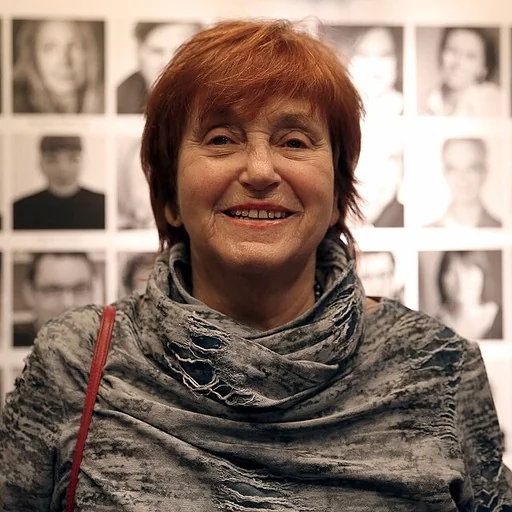
Austrian, 1940–2026
VALIE EXPORT was an Austrian artist. 3 works are cataloged here, principally at Museum of Modern Art. VALIE EXPORT was born in Linz.
Waltraud Lehner (17 May 1940 – 14 May 2026), known professionally as Valie Export (stylized in all caps; German: ), was an Austrian avant-garde artist. She was best known for expanded cinema and provocative public performances. Her work also included video installations, computer animations, photography, sculpture, and publications on contemporary art.
Overview
Waltraud Lehner (17 May 1940 – 14 May 2026), known professionally as Valie Export (stylized in all caps; German: [ˈvaːli ˈɛkspɔrt]), was an Austrian avant-garde artist. She was best known for expanded cinema and provocative public performances. Her work also included video installations, computer animations, photography, sculpture, and publications on contemporary art.
Early life
Valie Export was born Waltraud Lehner in Linz, Reichsgau Oberdonau, on 17 May 1940. She was raised there by a single mother of three. Export studied painting, drawing, and design at the National School for Textile Industry in Vienna.
1960s and 1970s
In the late 1960s and early 1970s, Austrian feminism was forced to address the fact that by the 1970s there was still a generation of Austrians whose attitudes towards women were based on Nazi ideology. They also had to confront the guilt of their parents' (mothers') complacency within the Nazi regime. In 1967, she changed her name from Waltraud Hollinger to VALIE EXPORT, the name of a cigarette brand. In conversation with Gary Indiana for BOMB magazine, Export described her name-change:
I did not want to have the name of my father [Lehner] any longer, nor that of my former husband Hollinger. My idea was to export from my "outside" (heraus) and also export, from that port. The cigarette package was from a design and style that I could use, but it was not the inspiration. With this gesture of self-determination, Export emphatically asserted her identity within the Viennese art scene, which was then dominated by the taboo-breaking performance art of the Vienna Actionists such as Hermann Nitsch, Günter Brus, Otto Mühl, and Rudolf Schwarzkogler. Of the Actionist movement, Export said, "I was very influenced, not so much by Actionism itself, but by the whole movement in the city. It was a really great movement. We had big scandals, sometimes against the politique; it helped me to bring out my ideas." Like her male contemporaries, she subjected her body to pain and danger in actions designed to confront the growing complacency and conformism of postwar Austrian culture. But her examination of the ways in which the power relations inherent in media representations inscribe women's bodies and consciousness distinguishes Export's project as unequivocally feminist. "In these performances and in my photo work of the 60s and 70s", Export said in a 1995 interview with Scott MacDonald, "I used a female body, generally my own, as a bearer of signs and symbols – individual, sexual, cultural – that could function within an artistic environment." Export's early guerrilla performances have attained an iconic status in feminist art history. In her 1968 performance Aktionshose:Genitalpanik (Action Pants: Genital Panic), Export entered an art cinema in Munich, wearing crotchless pants, and walked around the audience with her exposed genitalia at face level. The associated photographs were taken in 1969 in Vienna, by photographer Peter Hassmann. The performance at the art cinema and the photographs in 1969 were both aimed toward provoking thought about the passive role of women in cinema and confrontation of the private nature of sexuality with the public venues of her performances. Apocryphal stories state that the Aktionshose:Genitalpanik performance occurred in a porn theater and included Export brandishing a machine gun and shooting at the audience, as depicted in the 1969 posters, however she claimed that this never occurred. In an interview in Ocula Magazine, the artist stated that: "The fear of the vulva is present in mythology, where it is depicted devouring man. I don't know if this fear has changed." Her well-known performance piece Tapp-und-Tast-Kino (Tap and Touch Cinema) was performed in ten European cities, including Vienna and Munich, between 1968 and 1971. For this bodily public performance, Export wandered the streets of cities with a "small mock-up of a [movie] theater", first made of styrofoam and remade later in aluminum, strapped to her bare chest. Peter Weibel, her collaborator, invited passersby to "'visit the cinema' for five minutes"
1980s to 2020s
In her 1983 experimental film, Syntagma, Export attempted to reframe the female body by using a multitude of "different cinematic montage techniques—doubling the body through overlays, for example". The film follows Export's belief that the female body has, throughout history, been manipulated by men through the means of art and literature. In an interview with Interview magazine, Export discussed her movie, Syntagma, and said, "The female body has always been a construction." Her 1985 film The Practice of Love was entered into the 35th Berlin International Film Festival. From 1995 to 2005, Export held a professorship for multimedia performance at the Academy of Media Arts Cologne.
In 2016, the city of Linz acquired her archive and opened a research center devoted to her work. Bard College hosted an exhibition centered around Export's 1977 film Unsichtbare Gegner in 2016. The show featured work by Export as well as artists for whom Export's art "blew open doors: Lorna Simpson, K8 Hardy, Hito Steyerl, Trisha Donnelly and Emily Jacir, among others". In 2019, Export won the Roswitha Haftmann Prize of £120,000, which is "Europe's largest single-award art prize".
Russia's war against Ukraine
In February 2023, Export was among the 69 Erstunterzeichner*innen of the Manifest für Frieden, an online petition initiated by Sahra Wagenknecht and Alice Schwarzer calling on German Chancellor Olaf Scholz to halt further arms deliveries to Ukraine and seek a negotiated peace settlement. As early as March 2023, she stated that she would no longer sign the manifesto, because it had been and continues to be misused.
Selected filmography
Splitscreen – Solipsismus (1968) INTERRUPTED LINE (1971) ...Remote…Remote... (1973) Mann & Frau & Animal (1973) Adjungierte Dislokationen (1973) Invisible Adversaries (Unsichtbare Gegner, 1976) Menschenfrauen (1977) Syntagma (1983) The Practice of Love (Die Praxis der Liebe, 1984) Die Macht der Sprache (Power of Speech), 2002 I turn over the pictures of my voice in my head (2008)
Awards
1990: City of Vienna Prize for Visual Arts 1995: Sculpture Award at the Generali Foundation 1997: Gabriele Münter Prize 2000: Oskar Kokoschka Prize 2000: Alfred Kubin Prize Big Price culture of Upper Austria 2003: Gold Medal for services to the City of Vienna 2005: Austrian Decoration for Science and Art 2009: Honorary Doctorate of the University of Arts and Industrial Design Linz 2010: Grand Gold Decoration for Services to the Republic of Austria 2014: Courage Award for the Arts 2019: 19th Roswitha Haftmann Prize 2020: Golden Nica Visionary Pioneer of Feminist Media Art Prix Ars Electronica 2021: Honorary Fellowship of the Royal Photographic Society
Collections represented

Museum
Artists in a similar vein