Artist
Richard Paul Lohse
Swiss, 1902–1988
Richard Paul Lohse was a Swiss Contemporary Abstract artist. 2 works are cataloged here, principally at Museum of Modern Art. Richard Paul Lohse was born in Zurich.
Overview
Richard Paul Lohse (September 13, 1902 – September 16, 1988) was a Swiss painter and graphic artist and one of the main representatives of the concrete and constructive art movements.
Life
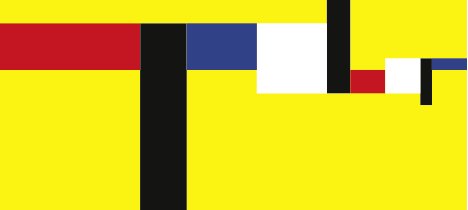
Lohse was born in Zürich in 1902. His wish to study in Paris was thwarted due to his difficult economic circumstances. In 1918, he joined the advertising agency Max Dalang, where he trained to become an advertising designer. Lohse, then an autodidact, painted expressive, late-cubist still lifes. In the 1930s, his work as a graphic artist and book designer placed him among the pioneers of modern Swiss graphic design; in paintings of this period, he worked on curved and diagonal constructions. Success eventually allowed him to establish his own graphic design studio in Zürich. He combined art with a political and moral awareness, which led him to be an activist for immigrants. In the 1930s, he was actively involved in protests, which were illegal under the government of the time. He continued to protest until the beginning of World War II. In 1937, Lohse co-founded Allianz, an association of Swiss modern artists, with Leo Leuppi. Through this organization, he became a colleague of Anna Indermaur. In 1938, he helped Irmgard Burchard, to whom he was married for a brief time, to organise the London exhibition "Twentieth Century German Art". His political convictions then led him into the resistance movement, where he met his future wife Ida Alis Dürner. The year 1943 marked a breakthrough in Lohse's painting: he standardised the pictorial means and started to develop modular and serial systems. In 1953, he published the book New Design in Exhibitions, and from 1958, he became co-editor of the magazine Neue Grafik. Lohse's typical classic paintings are nonrepresentational, systematic, two-dimensional laminar planes of interacting colour elements in various logical/mathematical relations visible to the eye, using the structure of colour that we perceive, and in a way that every element plays an equal qualitative role. He died in Zürich in 1988.
Timeline
1902 Born 13 September in Zürich 1917 First realistic paintings 1918 Apprentice in graphic design at Max Dalang AG (until 1922); studies at the Kunstgewerbeschule Zürich under Ernst Keller 1922 Employed in the advertising studio of Max Dalang AG, where he meets Hans Neuburg and Anton Stankowski 1925 Still lifes, landscapes, cubist experimental paintings 1930 Establishes his own graphic design studio in Zürich (1931-1934 with former Dalang co-worker Hans Trommer) 1933 Political support for émigrés; illegal political activities until end of World War II;co-founder of the Association of Independent Graphic Designers; begins graphic design work for landscape architect Walter Mertens (until 1944) 1934 Studio and apartment in the Zett-Haus, Zürich, together with artist and gallerist Irmgard Burchard; member of the association Friends of New Architecture 1935 Curvations 1936 Marriage to Irmgard Burchard (born 1908 in Zürich, died 1964 in Cairo); participates in the exhibition "Zeitprobleme in der Schweizer Malerei", Kunsthaus Zürich 1937 Co-founder and vice-chairman of Allianz, Association of Modern Swiss Artists; constructions 1938 Collaboration for the exhibition "Twentieth Century German Art", New Burlington Galleries, London, initiated by Irmgard Burchard; installs a print exhibition of German and Russian constructivists in Zürich; begins book design work for Büchergilde Gutenberg (until 1954) 1939 Divorce from Irmgard Burchard; collaboration for the Swiss national exhibition "Landi", Zürich; begins graphic design work for turbine builder Escher Wyss (until 1969) 1940 May: Destroys political documents and graphic design works; sketches ideas of diagonal, vertical and horizontal structures; co-editor and book designer of Almanac of New Art in Switzerland 1942 Marriage to Ida Alis Dürner (born 1907 in Uttwil, died 1989 in Zürich); summer: Ida Alis travels to the camp in Gurs (France) to support persecuted people; member of the Swiss Werkbund; standardisation of the pictorial means: additive vertical series, objective rhythmic, serial structure systems, quantitative colour equality; participates in the exhibition "Allianz", Kunsthaus Zürich 1943 First modular and serial systems 1944 Birth of daughter Johanna; works on the publications abstrakt/konkret and Plan; participates in the exhibition "Concrete Art", Kunsthalle, Basel 1946 Group thematics; book design for Carola Giedion-Welcker, Poètes à l'Ecart – Anthologie der Abseitigen 1947 Organises with Leo Leuppi the exhibition "Concrete, Abstract, Surrealist Art in Switzerland", Kunstmuseum St. Gallen; participates in the exhibition "Abstract and Concrete Art", Palazzo Exreale, Milano; designer and editor of the architectural review Bauen+Wohnen / Building+Home (until 1956); begins graphic design work for Wohnbedarf (until 1968) 1948 Organiser of the Swiss section in the Salon des Réalités Nouvelles, Paris (also 1950); participates in the exhibition "Tendencies in Abstract Art", Galerie Denise René, Paris; "Interrelations between Art and Architecture", a didactic concept for the Architecture Department of the Swiss Federal Institute of Technology, Zürich 1949 Swiss Prize for Painting; attends the CIAM conference, Bergamo 1951 Organises with Sigfried Giedion the Swiss section at the "International Water Color Exhibition" Brooklyn, New York; participates in the 1st Biennale, São Paulo; book design for Sigfried Giedion, CIAM – A Decade of New Architecture; at the 9th Triennale, Milano the review B
Collections represented

Museum
Artists in a similar vein