Artist
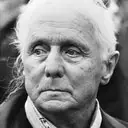
André Masson
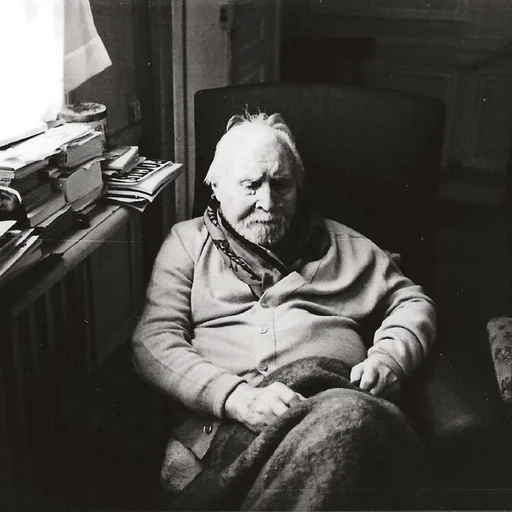
French, 1896–1987
André Masson was a French Surrealism artist. 30 works are cataloged here, principally at Museum of Modern Art. André Masson was born in Balagny-sur-Thérain.
André-Aimé-René Masson (French: ; 4 January 1896 – 28 October 1987) was a French artist. He was a leading figure in the Surrealist movement and an influence on Abstract Expressionism. He served in the French Army from 1914 to 1915, when he was discharged due to injuries sustained in battle. During his exile in the United States during World War II, his work influenced the development of the New York School, where he influenced young American artists, most notably Jackson Pollock and Arshile Gorky.
Overview
André-Aimé-René Masson (French: [ɑ̃dʁe ɛme ʁəne masɔ̃]; 4 January 1896 – 28 October 1987) was a French artist. He was a leading figure in the Surrealist movement and an influence on Abstract Expressionism. He served in the French Army from 1914 to 1915, when he was discharged due to injuries sustained in battle. During his exile in the United States during World War II, his work influenced the development of the New York School, where he influenced young American artists, most notably Jackson Pollock and Arshile Gorky.
Biography
Masson was born in Balagny-sur-Thérain, Oise, a town north of Paris. when he was eight his father's work took the family first briefly to Lille and then to Brussels. He began his study of art at the age of eleven at the Académie Royale des Beaux-Arts in Brussels, under the guidance of Constant Montald, and later he studied in Paris. He fought for France during World War I and was seriously injured. Masson shared a Paris studio with Joan Miró.
Artistic works
He began painting during his recuperation in Céret, France after World War I. His early works display an interest in cubism, producing landscapes of forests with formations suggestive of crypts and graves. In 1920 he married Odette Cabalé and they moved to Paris where they had a daughter, Lily (née Gladys) Masson. In the early 1920s, Masson experimented with altered states of consciousness with artists such as Antonin Artaud, Michel Leiris, Joan Miró, Georges Bataille, Jean Dubuffet and Georges Malkine, who gathered regularly at his studio, which he shared with Joan Miró. Leiris, Artaud and Masson joined the Surrealists led byAndré Breton in 1924 and he was one of the most enthusiastic practitioners of automatic drawing, making a number of automatic works in pen and ink. From around 1926, he attempted to develop automatism in painting. He experimented by pouring glue onto canvas, then adhering sand to the wet surfaces, adding painted areas inspired by the sandy shapes that were formed at random. By the end of the 1920s, however, he found Andre Breton's insistence on the Surrealists' allegiance to the Parti communiste français stifling, and he left the surrealist movement, turning to a more structured figurative style, often producing works with violent or erotic themes. He joined other "dissident Surrealists" who had left the group, loosely formed around his close friends Michel Leiris and Georges Bataille. From 1930 to 1933 Masson was in a relationship with Paule Vézelay, a British abstract artist living in Paris, whose work also inspired him. In 1934 he met and married Rose Maklés, the sister of Sylvia Bataille who was married to Georges Bataille (she would later marry Jacques Lacan). The Massons moved to Spain to escape the violence that culminated in the February 6, 1934 riots in Paris. In Catalonia, a hike that left them stranded on the mountain of Montserrat overnight prompted a flashback to his wartime experience of being shelled and wounded. He went on to produce a number of paintings inspired by the mountain experience. Masson settled in Tossa de Mar, a small fishing village on the Costa Brava, where they had two sons (Diego and Luis. The family returned to France just prior to the outbreak of the Spanish Civil War, which is reflected in a number of his paintings and anti-fascist drawings. He briefly reconciled with André Breton and the Surrealists at the end of the 1930s, producing paintings of violent hybrids featuring figures and furnishings, inspired by the concept of metamorphosis. Under the German occupation of France during World War II, his work was condemned by the Nazis as degenerate. With the assistance of Varian Fry in Marseille, Masson escaped the Nazi regime on a ship to the French island of Martinique from where he went on to the United States. Upon arrival in New York City customs officials inspecting Masson's luggage found a cache of his erotic drawings. Living in New Preston, Connecticut, his work became an important influence on American abstract expressionists, such as Jackson Pollock. Following the war, he returned to France and settled in Aix-en-Provence where he painted a number of landscapes. Masson drew the cover of the first issue of Georges Bataille's review, Acéphale, in 1936, and produced the images for all its issues until 1939. His brother-in-law, the psychoanalyst Jacques Lacan, was the last private owner of Gustave Courbet's provocative painting L'Origine du monde (The Origin of the
Family
His son, Diego Masson (born 1935), is a conductor, composer, and percussionist, while another son, Luis Masson, is an actor. His daughter, Lily Masson (1920–2019), was a painter.
Collections represented

Museum
Artists in a similar vein