Artist
Enrico Coleman
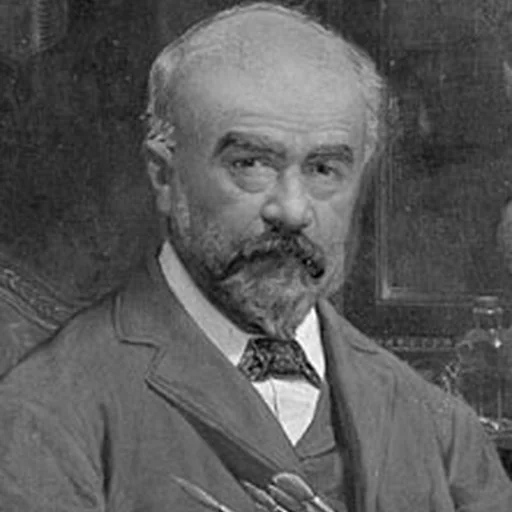
Italian, 1846–1911
Enrico Coleman was an Italian Naturalism artist. 1 work is cataloged here, principally at National Museum of Fine Arts, Argentina. Enrico Coleman was born in Rome.
Overview
Enrico Coleman (21 or 25 June 1846 – 14 February 1911) was an Italian painter of British nationality. He was the son of the English painter Charles Coleman and brother of the less well-known Italian painter Francesco Coleman. He painted, in oils and in watercolours, the landscapes of the Campagna Romana and the Agro Pontino; he was a collector, grower and painter of orchids. Because of his supposedly Oriental air, he was known to his friends as "Il Birmano", the Burmese.
Life
Enrico Coleman was born in Rome in June 1846. He was the fourth child of the English painter Charles Coleman, who had come to Rome in 1831 and settled there permanently in 1835, and of a famous artist's model from Subiaco, Fortunata Segadori (or Segatori), whom he had married in 1836. Coleman was initially taught by his father, and either did or did not study at the Accademia di San Luca in Rome. Following the mocking reception of Una mandria di bufali nelle paludi pontine, a naturalistic painting of a herd of buffaloes in the Pontine marshes, at the International Artist's Club in 1872, he reportedly began to paint genre subjects in the manner of the then-fashionable Mariano Fortuny, although no works showing the influence of the Spanish painter are known. At the instigation of Nino Costa, he soon returned to the depiction of the people, animals and landscapes of the Campagna Romana and the Agro Pontino. An album of watercolours from this youthful period (1871–1875) was recently rediscovered and was shown in Rome in 2004. Coleman was lover of orchids, which he painted, collected and cultivated. A famous album of 88 orchid paintings, either in watercolour or in gouache, painted in the 1890s and entitled Orchidea Birmana was sold to an Englishman; it was "rediscovered" in the 1980s and published in facsimile. An 1894 watercolour of orchids is in the Galleria Comunale d'Arte Moderna e Contemporanea in Rome. Coleman had a remarkable collection of indigenous orchids, which he cultivated himself in special boxes at his house at 6 via Valenziana. He successfully hybridised Orchis provincialis var. pauciflora and Orchis mascula var. rosea; the botanist Fabrizio Cortesi named the hybrid Orchis x colemanii Cortesi in his honour. In 1875, Coleman was among the founding members of the Società degli Acquarellisti, the Roman society of watercolourists; he participated in the society's first exhibition in 1876, and continued to exhibit with them until 1907. In 1878 he was elected an honorary member of the Société Royale Belge des Aquarellistes, the Belgian royal society of watercolourists, with which he participated in the Salon de Paris in 1879. From then on he began to exhibit regularly. He sent paintings to the 4th Esposizione Nazionale di Belle Arti, or national fine art show, of Turin in 1880, and to that of Milan in the following year; he showed works in London in 1882 and in Rome in 1883. In 1885, Coleman was among the founding members of the group In Arte Libertas, of which Nino Costa was the leading force and the other founding members were Vincenzo Cabianca, Onorato Carlandi, Giuseppe Cellini, Alessandro Castelli, Cesare Formilli, Giuseppe Raggio, Alessandro Morani, Alfredo Ricci, Mario de Maria and Gaetano Vannicola. Coleman had six paintings in the first exhibition of the group, which took place from 10–28 February 1886, in the studio of an amateur painter named Giorgi, at 72 via S. Nicola da Tolentino. He participated in some measure in all of the subsequent annual exhibitions. From 1895 to 1899 the group exhibited collectively at the Esposizione Internazionale d'Arte della Città di Venezia, which would later become the Biennale di Venezia; Coleman continued to exhibit in every edition until the ninth in 1910. Shortly after the death of Costa in 1903, In Arte Libertas was transformed into a new society, the "XXV della Campagna Romana". The XXV was born in the trattoria "Il Pozzo di San Patrizio" on the via Nomentana, on the evening of 24
Published works
'Panorama invernale del Gran Sasso d'Italia' (chromolithograph); in Bollettino del Club Alpino Italiano, Torino: Fratelli Doyen, 1884. XVII: 50, tavola VII Gabriele d'Annunzio, Isaotta Guttadàuro ed altre poesie: con disegni di Vincenzo Cabianca, Onorato Carlandi, Giuseppe Cellini, Enrico Coleman, Mario de Maria, Cesare Formilli, Alessandro Morani, Alfredo Ricci, G.A. Sartorio. Roma: La Tribuna, 1886 Edoardo de Fonseca, I castelli romani, Firenze: Fratelli Alinari, 1904
Collections represented

Artists in a similar vein