Artist
Gabriel von Max
1840–1915
Gabriel von Max was a Realism painter. 5 works are cataloged here, principally at Kunsthistorisches Museum, most of them oil paintings. Gabriel von Max was born in Prague.
Overview
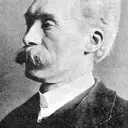
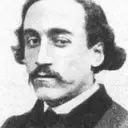
Gabriel Cornelius Ritter von Max (23 August 1840 in Prague, Kingdom of Austria – 24 November 1915 in Munich) was a Prague-born Austrian-German painter, and professor of history painting at the Royal Academy of Fine Arts. He was also a collector of anthropological artifacts. His collection included between 60.000 and 80.000 objects from Zoology, Anthropology, Ethology, and Prehistory. The collection is displayed in the Reiss Engelhorn Museum in Mannheim.
Biography
He was born Gabriel Cornelius Max, the son of the sculptor Josef Max and Anna Schumann. He received his first artistic training in history painting from his father. He studied between 1855 and 1858 at the Prague Academy of Arts with Eduard von Engerth. His studies included parapsychology (somnambulism, hypnotism, spiritism), Darwinism, Asiatic philosophy, the ideas of Schopenhauer, and various mystical traditions. The spiritual-mystical movement was emphasized by the writings of Carl du Prel, and the Munich painter Albert Keller was also an influence. Through Engerth's recommendation, Max was accepted at the Vienna Academy in 1858, where he studied with Karl von Blaas, Karl Mayer (painter), Christian Ruben and Carl Wurzinger. From 1863 to 1867 he studied at the Munich Academy with Karl Theodor von Piloty. Through fellow students Hans Makart and Franz Defregger he met Franz von Lenbach.
Gabriel von Max was a significant artist to emerge from the Piloty School, because he abandoned the themes of the Grunderzeitliche (genre and history), in order to develop an allegorical-mystical pictorial language, which became typical of Secessionist Art. His first critical success was in 1867 with the painting "Martyr at the Cross": that painting transformed the "Unglücksmalerei" (dark palette) of Piloty into a religious-mystical symbolism using a psychological rendering of its subject. He continued to use the dark palette of the Piloty school well into the 1870s, later moving toward a more muted palette, using fewer, clearer colors. Characteristic of the ethereal style of Gabriel Max is "The Last Token" (in the Metropolitan Museum), and "Light" (in the Odessa Museum of Western and Eastern Art, Ukraine). On May 24, 1873, Max married Emma Kitzing (1840-1929), a Munich native whom he had met in 1864, in Traunstein. She gave birth to a daughter, Ludmilla (1874-1961), and two sons; the later painters Cornelius Georg (1875-1924) and Columbus Josef (1877-1970). In the same year he acquired a plot of land at what is now Paul-Heyse-Strasse 33 in Munich and had his brother-in-law in law, the architect Bela Benzcur, build a spacious city villa with a studio building behind it. Here he lived in seclusion with his wife and children. Summers he spent in Ammerland a part of Münsing on Lake Starnberg.
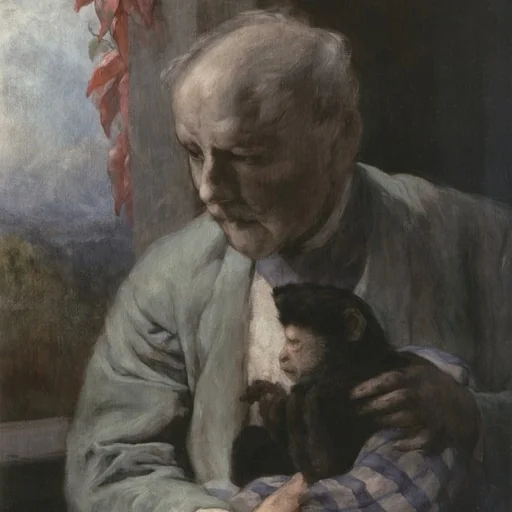
From 1869 to about 1873, Max kept a herd of monkeys in a garden house in Schwanthalerstraße in Munich, which he photographed and sketched. The animals were cared for by his mother and his sister Caroline, who lived with him in Munich. They did not tolerate the Munich climate well and died rather quickly. Later he used the material for large paintings in which he sometimes depicted the animals as people. Max, along with his colleagues, often used photographs to guide painting. The great number of monkey photographs in his archive testify to their use as direct translation into his paintings. In 1878 Max was appointed professor of history painting at the Munich Academy, but he gave this post back in 1883 because it took up too much of his time. He preferred to devote himself to his scientific research. In 1884 he joined the Lodge Germania of the Theosophical Society. He belonged to the preferred selection of contemporary artists whom the "Committee for the Procurement and Evaluation of Stollwerck Pictures" proposed to the Cologne chocolate producer Ludwig Stollwerck to commission for designs. Max enjoyed considerable success during his lifetime and could command al
Villas
In Münsing on Lake Starnberg there are two artist villas of Gabriel von Max. He bought Villa Max (Ammerland) in 1875 in the district of Ammerland and lived there with his family in the summer months until his divorce in 1890 (although he had a mistress in Ambach since the mid-1880s). He acquired the second Villa Max (Ambach) in Ambach in 1893 after marrying Ernestine Harlander, his second wife. He had the house remodeled into an artist's villa. He spent the summer months there until about 1900, after which he lived there most of the time until his death in 1915. Both buildings are listed as historic monuments.
Collections
The largest collection of the work of Gabriel von Max in the United States is held by the Jack Daulton Collection in Los Altos Hills, California. Also, Gabriel von Max's work can be found in the collection of Milan Jovanović Stojimirović who bequeathed his vast collection of paintings and artifacts to the Art Department of the Museum in Smederevo.
Works by Gabriel von Max
Collections represented

Museum

Museum

Museum

Museum
Artists in a similar vein