Artist
Gheorghe Petrașcu
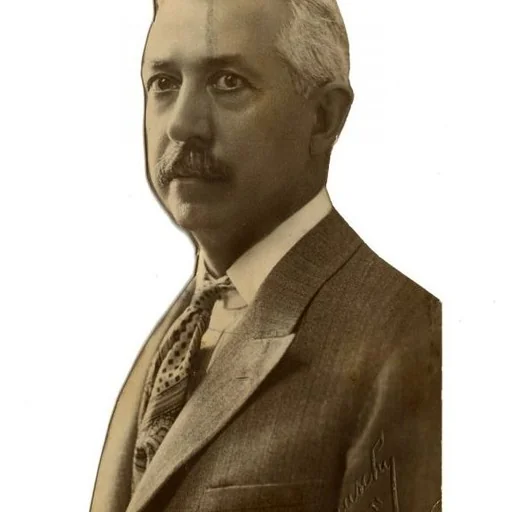
Romanian, 1872–1949
Gheorghe Petrașcu was a Romanian Romanesque artist. 93 works are cataloged here, principally at National Museum of Art of Romania. Gheorghe Petrașcu was born in Tecuci.
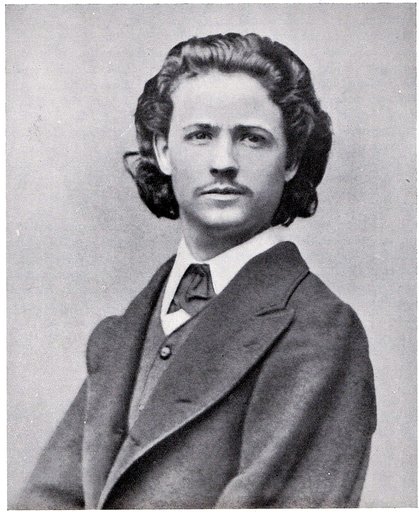
Gheorghe Petrașcu (Romanian pronunciation: ; 20 November 1872, Tecuci – 1 May 1949, Bucharest) was a Romanian painter. He won numerous prizes throughout his lifetime and had his paintings exhibited posthumously at the Paris International Exhibition and the Venice Biennale. He was the brother of N. Petrașcu, a literary critic and novelist. In 1936, Petrașcu was elected a titular member of the Romanian Academy. He was born in Tecuci, Romania, in a family with cultural traditions. His parents were small owners from Fălciu County, Costache Petrovici-Rusciucliu and his wife Elena, maiden name Bițu-Dumitriu. Brother of the diplomat, writer and literary and art critic Nicolae Petrașcu, Gheorghe Petrașcu shows artistic inclinations as a young man, doing his first studies at the National University of Arts in Bucharest. At the recommendation of Nicolae Grigorescu, he receives a scholarship to improve abroad. After a short time in Munich, he left for Paris, where he enrolled at the Académie Julian and worked in Bouguereau's studio (1899–1902). From his first personal exhibition at the Romanian Athenaeum (1900), he was noticed by the writers Barbu Ștefănescu Delavrancea and Alexandru Vlahuță, who bought him a work. With unbridled passion, he paints landscapes, both in the country (Sinaia, Târgu Ocna, Câmpulung-Muscel), and in France (Vitré, Saint-Malo), Spain (San Martin Bridge in Toledo) and especially in Italy (Venice, Chioggia, Naples). In his landscapes, light does not erase the contours as in the Impressionists, on the contrary, the rectilinear architectures are imposed by an impression of solidity. From this point of view, the Venetian landscapes best demonstrate Petrașcu's anticonformism. The artist resists traditional interpretations, in which the landscape of the city on the lagoon was only a pretext to analyze the interference of light vibrations, in eternal change on water, on colored walls and in the pure air. For Petrașcu, Venice possesses a dramatic nobility, a tragic and magnificent grandeur, "with the brilliance of ancient relics, evoking the history of ancient palaces, with their serious and fascinating poetry." In an outburst of harsh tones, Petrașcu creates a mass of tumultuous colors, through an unusual juxtaposition of faded red, with shades of blue, gray and brown. This successive overlap gives Petrașcu's paste an almost sculptural structure, the roughness of the color influences the regime of shadows and light as the accents of a relief. The portraits – especially those painted between 1923 and 1927 – produce an impression of majestic austerity. The self-portrait in the "Zambaccian Museum" seems to descend from the Italian Renaissance, of a solemn gravity but also with a note of sensuality. In personal exhibitions, between 1903 and 1923 at the Romanian Athenaeum, then at the "Home of Art" (1926–1930), culminating with the two retrospectives at the "Sala Dalles" in 1936 and 1940. He participated in the Venice Biennale (1924, 1938 and 1940); he received the "Grand Prize" of the "International Exhibition" in Barcelona (1929) and the one in Paris (1937).
Overview
Gheorghe Petrașcu (Romanian pronunciation: [ˈɡe̯orɡe peˈtraʃku]; 20 November 1872, Tecuci – 1 May 1949, Bucharest) was a Romanian painter. He won numerous prizes throughout his lifetime and had his paintings exhibited posthumously at the Paris International Exhibition and the Venice Biennale. He was the brother of N. Petrașcu, a literary critic and novelist. In 1936, Petrașcu was elected a titular member of the Romanian Academy. He was born in Tecuci, Romania, in a family with cultural traditions. His parents were small owners from Fălciu County, Costache Petrovici-Rusciucliu and his wife Elena, maiden name Bițu-Dumitriu. Brother of the diplomat, writer and literary and art critic Nicolae Petrașcu, Gheorghe Petrașcu shows artistic inclinations as a young man, doing his first studies at the National University of Arts in Bucharest. At the recommendation of Nicolae Grigorescu, he receives a scholarship to improve abroad. After a short time in Munich, he left for Paris, where he enrolled at the Académie Julian and worked in Bouguereau's studio (1899–1902). From his first personal exhibition at the Romanian Athenaeum (1900), he was noticed by the writers Barbu Ștefănescu Delavrancea and Alexandru Vlahuță, who bought him a work. With unbridled passion, he paints landscapes, both in the country (Sinaia, Târgu Ocna, Câmpulung-Muscel), and in France (Vitré, Saint-Malo), Spain (San Martin Bridge in Toledo) and especially in Italy (Venice, Chioggia, Naples). In his landscapes, light does not erase the contours as in the Impressionists, on the contrary, the rectilinear architectures are imposed by an impression of solidity. From this point of view, the Venetian landscapes best demonstrate Petrașcu's anticonformism. The artist resists traditional interpretations, in which the landscape of the city on the lagoon was only a pretext to analyze the interference of light vibrations, in eternal change on water, on colored walls and in the pure air. For Petrașcu, Venice possesses a dramatic nobility, a tragic and magnificent grandeur, "with the brilliance of ancient relics, evoking the history of ancient palaces, with their serious and fascinating poetry." In an outburst of harsh tones, Petrașcu creates a mass of tumultuous colors, through an unusual juxtaposition of faded red, with shades of blue, gray and brown. This successive overlap gives Petrașcu's paste an almost sculptural structure, the roughness of the color influences the regime of shadows and light as the accents of a relief. The portraits – especially those painted between 1923 and 1927 – produce an impression of majestic austerity. The self-portrait in the "Zambaccian Museum" seems to descend from the Italian Renaissance, of a solemn gravity but also with a note of sensuality. In personal exhibitions, between 1903 and 1923 at the Romanian Athenaeum, then at the "Home of Art" (1926–1930), culminating with the two retrospectives at the "Sala Dalles" in 1936 and 1940. He participated in the Venice Biennale (1924, 1938 and 1940); he received the "Grand Prize" of the "International Exhibition" in Barcelona (1929) and the one in Paris (1937).
Memorialistic, general considerations
Once the time have passed, the work that Gheorghe Petrașcu left to posterity, about three thousand paintings and many graphic works, became a dowry of fine art on which all sorts of observations were made, being different all of them. Those who studied his work and valued his creation found that there is a lot of confusion and erroneous appreciation in his biography. There were minimizations, invectives and unjust criticisms, many persiflages but also truisms, benevolent platitudes, exaggerations and praise of circumstance. Critical analyzes have made essential and judicious references, often definitive. It is noteworthy that the early assessments that were validated by the late contemporaneity, remained equally valid today. The pertinent, sometimes subtle, remarks made by Ștefan Petică are telling in the conditions in which he did not have an overview of the Petrascian work. In the period before the First World War, there were penetrating comments by Apcar Baltazar, B. Brănișteanu (the literary pseudonym of Bercu Braunstein), N.D. Cocea, Marin Simionescu-Râmniceanu, Tudor Arghezi, Theodor Cornel (the literary pseudonym of Toma Dumitriu), Iosif Iser, Adrian Maniu, etc. During the interwar period, Francisc Șirato, Nicolae Tonitza, Nichifor Crainic made significant contributions, followed by George Oprescu, Oscar Walter Cisek, Alexandru Busuioceanu, Petru Comarnescu, Ionel Jianu, Lionello Venturi and Jacques Lassaigne. All of them made the effort to explain and understand the creation of the Romanian artist. It is noteworthy that in the press chronicle during the painter's lifetime, the same observations were made, repeated to satiety by dozens of commentators. The art historian Vasile Florea opined that even today the same appreciations are made by those who study Petrașcu's work, without knowing that they do it by rediscovering certain aspects that others have stated decades before. Florea was also has an opinion that the process of revealing the meanings of the artist's creation will be completed with great difficulty due to the vastness of the work and its rich meanings. In support of this opinion are the synthesis studies and monographs published after 1944 by Ionel Jianu, George Oprescu, Krikor Zambaccian, Tudor Vianu, Aurel Vladimir Diaconu, Eleonora Costescu, Eugen Crăciun and Theodor Enescu. According to Vasile Florea, the analysis of the artist's creation must be made on two levels: one of a Petrașcu in a continuous evolution through a slowness of movement and a steady one, characterized by immobility, which summarizes the first "... as ontogeny summarizes phylogeny".
Socio-cultural affiliation
Gheorghe Petrașcu was born in Tecuci, Moldova. Tecuci was first mentioned in Iancu Rotisiavovici's deed in 1134. In Descriptio Moldavie, Dimitrie Cantemir mentioned the locality as "... the poor seat of two parishioners who are given the responsibility of this land". The geographical area in the middle of which it was established as a settlement gave it a distinct shape and a social and economic life that was defined over time as a separate entity.
"...Nothing has changed; nothing was ruined, nothing was added to the old town that sleeps shrouded in fog on the banks of the peaceful Bârlad. The same wide streets covered with gray pebbles stretch silently, in the dust that rises thin as a shadow of incense smoke spread in a ruined church. The same large and spacious courtyards, courtyards made for abundance and living life to the fullest, are pampered in their patriarchal appearance and the same small and simple houses resembling the comforting smile of old women show their modest faces under rustic roofs."----- Ștefan Petică: Tecuciul removed. Autumn Notes, in Works, 1938, pp. 243–251 In a brief analysis of Petrașcu's work, it seems that he did not feel the rooting of the environment where he was born because the paintings, which he painted during trips through Romania, Europe or Egypt (Africa), do not lead to the birthplaces, although a few remained there. Without subscribing to the theory of geographical determinism supported by Hyppolyte Taine and Garabet Ibrăileanu, who stated the thesis according to which an artist owes to the space where the main features of his creation were born, one can discern in Gheorghe Petrașcu's works. Regarding the composition of the personalities of Tecuci and the neighboring areas gave to the Romanian spirituality, Gheorghe Petrașcu was part of a socio-cultural enclave formed by many writers like Alexandru Vlahuță, Theodor Șerbănescu, Dimitrie C. Ollănescu-Ascanio, Alexandru Lascarov– Moldovanu, Nicolae Petrașcu (the artist's brother), Ion Petrovici, Ștefan Petică, Duiliu Zamfirescu and Dimitrie Anghel. All these writers differ from the exponents of the great Boerism who created junimism. They were closer to the ideals of the bourgeoisie and some like Stefan Petica or Dimitrie Anghel were ready to adopt radicalist doctrines. With Petică and Dimitrie Anghel, Petrașcu had a lot in common, all three being good friends. There is not much information about the places where he was born and where he lived until adolescence. At the exhibition events that took place until 1916, the artist presented only a few landscapes that he painted in Nicorești and Coasta Lupii. Even in the evocations he made in the press of the time, he mentioned only essential biographical data. This syncope from the painter's biography can be supplemented by reading the writings by which Ștefan Petică, Calistrat Hogaș, Nicolae Petrașcu, Ioan Petrovici or Alexandru Lascarov-Moldovanu evoked the so-called "city of long sleep" invoked by Petică.
Family
Gheorghe Petrașcu, Iorgu as his relatives called him, was born into a wealthy family on 1 December 1872. As Nicolae Petrașcu stated, their parents were "... people without any education, not knowing how to speak Romanian, but, in their midst, important people, recognized by an exemplary morality." The father, Costache Petrovici, was nicknamed the Prophet by friends because he foresaw the weather. He was originally from Focșani and had settled in Tecuci as a result of his marriage to Elena, born Bițu-Dimitriu. "... He was a brown man, fit for stature, wise and balanced in all his deeds and words, caring for his clothes, with a burning desire to teach his children the book." His occupation was agriculture, in addition to the vineyard from Nicorești he also had an estate of 200 falce in Boghești, on the Zeletin valley, which was about five hours away with the Tecuci carriage. To find out the artist's more distant origin, research must be done in the south Danube regions, George Călinescu stated that the painter's father's name was Costache Petrovici-Rusciucliu. A cousin of his Romanianized his name by calling him Petrașin, so that the last modification would be made by Nicolae, Gheorghe's brother, in Petrașcu. The linguist Iorgu Iordan, also born in Tecuci, seems to have known, in Vasile Florea's opinion, that the primary doctor of the city was Petrovici and has changed his name to Petraș. Gheorghe Petrașcu did not know his father because the latter died shortly after the artist was born. Thus, his mother became a widow at the age of 36. Nicolae describes her as "... sensitive to music [her own property and that of her father, n.a. Vasile Florea], singing the lance whenever he passed from our room through the hall, to the living room, and with a kind of philosophy of it, spoken in short Romanian words, whose beauty sometimes amazes you." In old age, she was evoked by her cousin Ion Petrovici (probably the primary care physician, not Vasile Florea) who said that she was "... a weak and prematurely bleached old woman, funny almost unwittingly and who liked to hum, taking forced breaks only when he was with the world, so that when he was left alone for a moment, he would instantly resume a fashionable area." The inclination towards music was transmitted from his parents to Gheorghe Petrașcu, as he had a baritone voice, as his daughter remembered Mariana Petrașcu. The Petrașcu brothers, Nicolae, Gheorghe and Vasile, being left without a father, were cared for a while by their older cousin Constantin Petrașcu (1842 – 1916 (?)). This was Carol Davila's favorite student. Constantin pursued a career as a politician, he was elected deputy and was appointed prefect. Due to his progressive beliefs, he was dismissed by the Conservative party of which he was a member. Gheorghe Petrașcu married in 1913 Lucreția C. Marinescu. He had two children, Mariana, the future graphic designer, and Gheorghe (Pichi) Petrașcu, who became an architect.
Parents' house
Nicolae Petrașcu also wrote about his parents' house. It was "... in the middle of a large courtyard and had eight wall pillars in front, along a porch that I called a plateau [...]. Behind the house was the garden with apples and apricots, to its right the barn, the summer kitchen, the cellar, the stable, and the barn; to her left, at a short distance, flowed the water of Bârlad from which a cool breeze always blew ..." The interior of the house was evoked by the same memorialist who remembered his return to Tecuci in 1887, so "... the wall cushions on the two beds, placed side by side in our room in the middle, the white tulle curtains, the heavy iron box on which the beautiful Turkish rug was laid [..], and in the living room, the same six chairs walnut, lathe, the same two sofas, two mirrors two tables. . ." The house still existed in 1989, undergoing alterations after some damage that occurred during World War I.
Painter's houses
Gheorghe Petrașcu and his family lived for the first time in Bucharest on Căderea Bastiliei Street, former Cometa, no. 1, on the corner with Piața Romană. The building of his house was designed and built in 1912 by the architect Spiridon Cegăneanu in neo-Romanian style. The building is part of a set of three apartments that have a unitary facade and has been declared a historical monument. It was renovated between 1997 and 2000. In 2011, the building was leased by the Librarium bookstore group. The building has two floors, plus a basement, and the part of the house where Petrașcu lived, facing the ASE, has three levels and the artist's studio is on the top floor. Petrașcu lived here until 1927.
In 1920, Petrașcu moved to the former Căpitan Aviator Demetriade Gheorghe street no. 3, near Aviatorilor Boulevard. The house here was more spacious and the architectural style was a compromise between the rich ornamentation of the old architecture and the modernist style.
Also in 1920, Petrașcu visited the city of Târgoviște for the first time and as a result, between 1921 and 1922, he built a holiday residence where he came to paint. The house in Târgoviște had two rooms on the ground floor, the largest being reserved for the studio, and two rooms upstairs. From 1922 to 1940, the artist had a prodigious artistic creation activity in the studio of this house. The house in Târgoviște was inaugurated on 12 April 1970 as House-Studio of Gheorghe Petrașcu and entered the museum circuit of Romania. The museum thus created, exhibits photographs, memorial objects, paintbrushes, letters, easel, personal items, etc. In 1970, the museum had a collection of 51 works in oil and graphics approaching all the topics raised by the artist: portraits, landscapes, static natures and even an early painting from the cycle of Interiors.
Specification of the vocation
In 1872, when Gheorghe was born, Vasile (b. 1863) had not finished primary school and Nicolae (b. 1856) was at the colleague of Alexandru Vlahuță at Wriad High School. The latter two were good friends and sometimes spent their holidays in Tecuci. The historian Vasile Florea opined that Gheorghe Petrașcu would have learned to read and write until he entered primary school at the age of eight. Then followed the gymnasium from Tecuci. The drawing teacher Gheorghe Ulinescu noticed the artistic inclinations of his student. Nicolae Petrașcu returned to Tecuci in 1887 from a trip to Constantinople where he worked as secretary of the legation. At that moment "...Looking out the window, I saw my brother lying on a bark under the acacia tree in the middle of the yard, singing a song. Then, passing into the room on the left, he saw a Christ's Head with a crown of thorns, made of pencil, next to a closet on the wall. This attempt seemed very beautiful to me, revealing in the black of the pencil of the future colorist. I called my brother from the yard and asked him if that head belonged to him. Answering me in the affirmative, you then advised him to learn painting for the first time. Iorgu, who was still a child, looked at me with eyes full of love and obedience, happy with what I recommended. He loved drawing so much that my words and praises watered his eyes."
Lyceum courses
After finishing the high school, Petrașcu had to choose between attending high school in Bârlad or the real high school in Brăila, in Iași or Bucharest. As the Real High School in Brăila was the first such high school in Romania that had been established a year before, in 1888, Petrașcu decided to dedicate himself to science without thinking. So, he entered high school in 1889 and graduated in 1892, in his second promotion. In Brăila, as in Tecuci, he was advised to follow the path of painting. He was not guided by the drawing teacher, a some Gheorghe Thomaide, nor by the painter Henryk Dembiński, who was a calligraphy teacher, but by Theodor Nicolau, a natural science teacher who was amazed by Petrașcu's drawings for zoology and botany. He spent his holidays in Tecuci where he read foreign and Romanian literature and various magazines he had inherited from his father, such as Cezar Bolliac's Trumpet of the Carpathians and Valintineanu's Reformation. In his cousin's library, Dr. Constantin Petrașcu, he found La Grande Encyclopédie, Revue Bleue (Revue politique et littéraire), Revue des deux Mondes, La Revue scientifique and many Romanian magazines such as Convorbiri literare. Access to culture was, in fact, facilitated by his brother Nicolae. He had been attending Junimea evenings since 1888. He was an intimate of the artistic circles of the time, which included George Demetrescu Mirea, Ioan Georgescu and Ion Mincu. The three had just arrived from Paris and together with Duiliu Zamfirescu, Barbu Delavrancea and Alexandru Vlahuță founded the Intimal Club Literary Artistic Circle.
Bucharest School of Fine Arts
As provided by the school regulations, after finishing high school, Gheorghe Petrașcu passed the baccalaureate exam in Bucharest. After graduation, he did not take into account the advice he received regarding his academic career. As a result, he was enrolled in the Faculty of Natural Sciences. In 1893, when he was a second-year student, he was enrolled at the School of Fine Arts in Bucharest and for a time attended the courses of both higher education institutions. Eventually he gave up the natural sciences to devote himself to the fine arts.
As it is known, in 1893, when he entered Belle-Arte as a student, the school was going through a period of great convulsions. Theodor Aman had died in 1891, Gheorghe Tattarescu had retired in 1892 and Constantin Stăncescu had come to lead the institution, even though he had Nicolae Grigorescu as his opponent. At that time, the school principal directed the entire artistic life of Bucharest. He was the one who organized the Exhibitions of living artists and in 1894 he irritated all the artists, who complained to Minister Take Ionescu. However, he was the one listened to by the authorities, which is why in 1896 the Romanian secession in the visual arts took place after the model of similar events in Western Europe. The secessionists had in front of them Ștefan Luchian who had the endorsement of Nicolae Grigorescu. They launched a fulminating manifesto revealing the idea of emancipating artists under the tutelage of official art.
The students of the School of Fine Arts were also part of the rebels, as evidenced by the report that Stăncescu made to the ministry. Gheorghe Petrașcu was also mentioned together with A.C. Satmari, Pan Ioanid, Theodor Vidalis and many others. The director's retaliation did not take long to appear, and he decided to suppress "... the rewards — medals or mentions — which they obtained at the last competition held in December 1895". Petrașcu's 3rd class bronze medal was withdrawn from the Perspective competition. In this way, the students became radicalized, following the example of independent artists and a month before the Exhibition of Independent Artists in 1896, several students entered the hall where the works for the jury were gathered and destroyed them. Petrașcu was not part of this group. The artist had as teacher George Demetrescu Mirea whom he appreciated and brought praiseworthy words "... admirable teacher, leaving all the freedom to his students, but always talking to them about the essential qualities of a good painting". Of the other teachers "... I listened because that was my nature: to listen to everyone and to do as I felt." The teaching results that Petrașcu obtained were not meritorious. As, in those times, the students were not given grades, but only medals and mentions following the works they did, Petrașcu did not obtain any gold or silver medal in all the five years of school. He was always satisfied with the bronze medal and the honorable mentions. Camil Ressu, who entered the School of Fine Arts in 1897, remembered that Petrașcu was considered Mirea's weakest student.. After mentioning Alexandru Henția, Pan Ioanid, Ion Theodorescu-Sion's colleagues and Jean Alexandru Steriadi, Ressu mentioned that Petrașcu worked with double glasses and that he had a vision damaged by some optical disorders. That is why he used a lot of black in his creations. This feature can be seen in most of the painter's achievements regardless of the period in which the
Disciple of Nicolae Grigorescu
Gheorghe Petrașcu told while studying in Paris that he attended in parallel with the School of Fine Arts in Bucharest, a training program on his own with Nicolae Grigorescu. In an interview that Petrașcu gave to Rampa magazine, he stated that the Bucharest school had two teachers, Mirea and Grigorescu. Today it is known that Nicolae Grigorescu was never a professor at Belle-Arte. Vasile Florea considered that the artist made this statement because he truly considered himself a disciple of the master from Câmpina. The reality is that Petrașcu visited Grigorescu very often, starting from 1894 to 1895, at his home, above the Altân pharmacy in Polonă Street, corner with Batiștei. At the first visit, the painter was accompanied by Ipolit Strâmbulescu and often, after that, they helped the master to varnish the paintings for the preparation of some exhibitions. Grigorescu showed the Romanian painter a lot of friendship, helped him receive a scholarship and was a good friend of Nicolae Petrașcu who wrote him a biography. Grigorescu and Gheorghe had a lasting friendship also due to the meetings in Câmpina, Agapia or Paris. Consequently, the artist published several biographical details about Grigorescu under the pseudonym Sanzio. From the data that art criticism analyzed up to the level of 1989, it is not clear if Petrașcu would have seen how Nicolae Grigorescu was painting. Even Gheorghe Petrașcu contradicted himself in all his stories that remained to posterity. Thus, in 1929, he stated that "... we also looked respectfully at the canvases scattered through the rooms or watched the master in his work in front of the easel." In his 1931 interview, he stated the opposite. "...I've never seen him painting. I have been to him so many times, but whenever I get there he left pallet apart." In the interview taken by Ionel Jianu, Petrașcu stated that he showed Grigorescu the works he was doing and he made a critique full of sincerity. The historian Vasile Florea expressed the opinion that it was not necessary for the disciple to witness the way Grigorescu painted to consider the latter as a mentor. The reality was that Gheorghe Petrașcu kept Grigorescu with a living admiration for the rest of his life. Admiration was also doubled by imitation, because the disciple was interested in the fresh creation of the mentor that contrasted blatantly with everything that was taught at that time at Belle-Arte in Bucharest. Petrașcu learned much more from Grigorescu than from any of the other Romanian artists. It is known that Petrașcu had several copies after Grigorescu, such as the Woman's Head and the Shepherd with the Sheep dated 1897. It was verbally said that he together with Ipolit Strâmbulescu made copies, which they sold at good prices.
Nicolae Grigorescu and obtaining a scholarship in Paris
In 1898, Gheorghe Petrașcu graduated from the School of Fine Arts in Bucharest. As the school results did not allow him to obtain a scholarship abroad, granted through the school, Nicolae Petrașcu asked Nicolae Grigorescu to contribute to such an endeavor. As a result, Grigorescu spoke with Spiru Haret, who was the Minister of Public Instruction that year, who responded positively to the request. The scholarship that the ministry granted to Petrașcu, of 1200 lei (1898), was part of the Iosif Niculescu fund. Consequently, on 19 November 1898, Gheorghe Petrașcu sent Grigorescu a letter of thanks from Paris, 29 Rue Gay Lussac. Grigorescu's interventions with Spiru Haret were repeated in 1901, as evidenced by another letter of thanks that Petrașcu sent him. During this period, the artist met at least twice, probably in the summer of 1900, with Grigorescu at Agapia where the master was with Barbu Delavrancea and Alexandru Vlahuță. From Petrașcu's confessions, he presented to the master some works he had done, Grigorescu appreciating the one entitled After the rain at Agapia. As a result, Delavrancea, relying on Grigorescu's expertise, bought him the painting for the Bucharest City Hall from the first personal exhibition that Petrașcu organized. The second meeting between Petrașcu and Grigorescu took place in Paris on the occasion of the International Exhibition. Grigorescu visited him at the workshop and studied his works, after which they walked through exhibitions, through the Grand Palais. A third meeting took place in 1903 when the painter visited Grigorescu in Câmpina. The memories of Grigorescu followed him all his life and he evoked them repeatedly. The highest homage he paid to Nicolae Grigorescu was on the occasion of his reception in the Romanian Academy in 1937.
Moment 1900 in Paris
In 1900 in the French capital presupposes an in-depth analysis of the last decade of the nineteenth century and the first decade of the twentieth century. The triumph of the innovations presented at the Universal Exhibition in Paris in 1889 had as its first landmark the construction of the Eiffel Tower, when iron was first introduced in architecture. The second indisputable landmark was the outbreak of World War I. Artistically, another landmark was the great exhibition of Paul Cézanne's work opened by art dealer Ambroise Vollard in 1895. Through temporal symmetry, in 1907, after Cézanne's death in 1906 and starting from his work, Cubism was inaugurated, a current that had extensive artistic consequences in the history of the arts (Misses of Avignon by Pablo Picasso). Similar to the secessionist events in Paris, the 1896 Exhibition of Independent Artists in Bucharest was a start-up event for a new stage in the Romanian arts. On this occasion, the idyllic dreams of Grigorescu's descendants began to fade. The volume of memoirs entitled The Two-Century Riding of the memorialist Sextil Pușcariu is telling, an analysis that was also limited to a symmetrical period, 1895–1905. Gheorghe Petrașcu arrived in Paris after a short stop in Munich. He is the one who stopped the least in the Bavarian capital of all Romanian artists. There is no information or trace left to posterity that the painter left in Munich. The power of attraction of Paris has been steadily rising over the years, so that the notoriety which Munich had enjoyed had declined. Munich's vogue had historically been due to the extinction of Forty-Eighters echoes and the growing assertion of the Junimea ideology. Exponents of ideological prosperity were Ioan Slavici, Mihai Eminescu, Ion Luca Caragiale, Alexandru Dimitrie Xenopol and many others. The first to change his orientation was Alexandru Macedonski who lived and wrote in Paris and then Dimitrie Anghel from 1893 lived enthusiastically "the new religion of symbolism". Petrașcu was preceded in Paris by Theodor Cornel, Alexandru Bogdan-Pitești, but also by Ștefan Luchian five years earlier, and even Theodor Aman, Ion Andreescu and George Demetrescu Mirea in ancient times. Others found Petrascu in Paris. Such were Ștefan Popescu, Ipolit Strâmbulescu, Kimon Loghi, Constantin Artachino, Eustațiu Stoenescu, Ludovic Bassarab, the engraver Gabriel Popescu and Dimitrie Serafim. With Serafim, Stoenescu and Artachino, Petrașcu was a colleague at the Académie Julian.
Student at the Académie Julian
Gheorghe Petrașcu attended the Académie Julian, but without much determination. As is well known, he worked at Stefan Luchian in William-Adolphe Bouguereau's studio. He also had teachers Benjamin-Constant, Jean-Paul Laurens and Gabriel Ferrier. The artist did not have much to learn from these representatives of official Parisian art, especially from Bouguereau who was a champion of academism. In all the evocations that Petrașcu made, he passed very quickly over the years of plastic training. He stated that he went more to drawing classes and through the exhibitions and museums on Rue Laffite where he could see the works exhibited by the Impressionists. Of his obligations to the Académie Julian, only Orpheus in Hell and The Fall of Troy are known. During Nicolae Grigorescu's visit to Paris in 1900, he saw the two compositions and was disappointed. Instead, he saw some works by nature made by Petrașcu in the Fontainbleau forest and encouraged him to go in that direction of art.
Parisian Bohemia
If his relationship with the Académie Julian suffered from a reserved attitude, on the other hand Gheorghe Petrașcu lived in Paris in an atmosphere full of effervescence in the community of Romanians who were there. He has established connections with most of the writers and artists mentioned above. From their accounts in which his name also appears, there is a moderate manifestation. A participant in the bohemian movement through the cafes in Montmartre, Petrașcu did not have any theoretical subtleties like Ștefan Popescu and he was not a passionate interlocutor like Dimitrie Anghel, but he always had a categorical reply. In Paris, Romanians passed by the Cluny cafes, La café Vachette, the Chatelet brasserie, La Bullier, similar to the Moulin Rouge in the Latin Quarter or the Closerie de Lilas. Petrașcu's presence at such meetings was picturesquely evoked by Sextil Pușcariu together with Ștefan Octavian Iosif, Dimitrie Anghel, Ștefan Popescu, Ipolit Strâmbulescu and Kimon Loghi: "...With his tie tied in an artistic bow, you swore that Petrașcu was coming down from Montmartre, if his word, which was answered by the Moldavian, had not betrayed another homeland". The meetings at Closerie de Lilas were not idyllic, even if Pușcariu found a special charm. He acknowledged that due to the fact that the group of Romanians had become too large, with all kinds of people who were not to the liking of others, it was often not possible to achieve a cohesion and an atmosphere characterized by intimacy. Restricting himself to a group of six people: Dimitrie Anghel, Șt. O. Iosif, Virgil Cioflec, Sextil Pușcariu, Kimon Loghi and Gheorghe Petrașcu, the new group moved its headquarters from Closerie de Lilas to a cafe in front of Montparnasse station. From here, the group then took refuge in Kimon Loghi's studio, where Turcu (nicknamed Loghi) made tea or coffee.
At the Turk's studio, social or political events were debated, especially since Ștefan Popescu, who corresponded with Constantin Dobrogeanu-Gherea and Dimitrie Anghel had socialist affinities. Also at Turcu, the discussions around arts and literature became exciting. Here he came into contact with symbolist ideas, considered by some to be decadent. Paul Verlaine and Albert Samain as well as the painters of the Les Nabis group were on everyone's lips. Petrașcu listened and at the end "he saved a controversy with a loud and pressing word, like the thick lines and pasty colors he used in his canvases." Here, the poems of Ștefan Octavian Iosif and Dimitrie Anghel were recited before they were sent by Petrașcu to Romania for publication in the magazine Literatură şi artă română, whose leader was Nicolae Petrașcu. These meetings were evoked by Iosif and Anghel later under the pseudonym A. Mirea: "… We lived in Paris, at that time, a group of young people whom the story had gathered and each brought his own special note once a week, in one cafe or another, and we sat on jokes and stories until late. I recall the past and see around the marble table the nice faces… Petrașcu with his healthy Moldovan humor, rich in anecdotes and cheerful approaches…"
Collections represented


Museum
Artists in a similar vein