Artist
Pieter Jozef Verhaghen
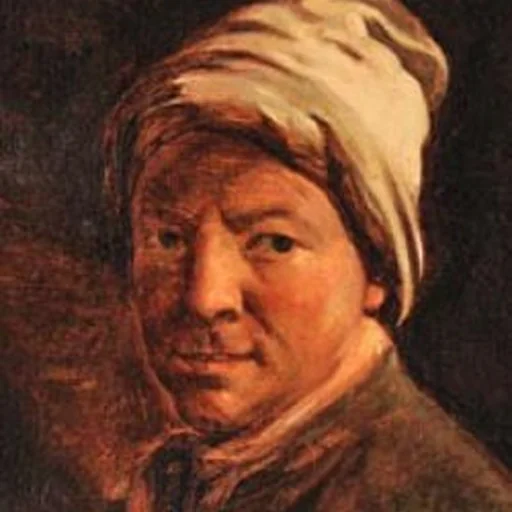
1728–1811
Pieter Jozef Verhaghen was a Rococo painting artist. 6 works are cataloged here, principally at Groeningemuseum. Pieter Jozef Verhaghen was born in Aarschot.
Overview
Pieter-Jozef Verhaghen (19 March 1728 in Aarschot – 3 April 1811 in Leuven) was a Flemish painter of large-scale religious and mythological scenes. He is regarded as the last representative of the so-called Flemish School of painting. In particular, he is seen as continuing the artistic tradition of Flemish Baroque painting as exemplified by Rubens in the late 18th century and into the 19th century. He was highly regarded during his lifetime and enjoyed the patronage of eminent patrons and religious institutions. He was appointed first court painter to Empress Maria Theresa of Austria who also provided him a stipend to travel abroad to further his artistic studies.
Life
Pieter-Jozef Verhaghen was born in Aarschot on 19 March 1728. Grandfather and father Verhaghen belonged to the notables of the city and practised as surgeons. The two sons of the family broke with the family tradition and opted to become painters. Jan-Jozef Verhaghen (1726-1795), older brother of Pieter-Jozef, is known in the history of 18th century painting as Potteke (little pot) Verhaghen, because in his works he often depicted kitchen utensils, pots and bowls of earthenware, copper and tin. Pieter-Jozef Verhaghen thanked his artist career to a chance meeting. As a young boy, he very much enjoyed drawing. When in 1741 he learned that the traveling painter and art restorer Jan-Baptist van den Kerckhoven (c. 1709-1772) was working to restore a painting in the Church of Our Lady in Aarschot he showed van den Kerckhoven some of his drawings. Van den Kerckhoven immediately recognized the boy's artistic talent and convinced father Willem Verhaghen to let his son study the principles of painting. The young Verhaghen stayed with Van den Kerckhoven and travelled with him to other cities nearby working on decorations and restorations. When van den Kerckhoven was called to some job further away, Verhaghen was not allowed by his father to travel with him due to his young age. He spent the next two years studying art by making copies after prints. In 1744 he moved to Antwerp where he continued his training with Balthasar Beschey. Beschey was an upcoming painter who worked in the style of Rubens and even made direct copies after the famous Antwerp master. As part of his training in Beschey's workshop Verhaghen made studies after 17th-century works. He was simultaneously enrolled at the Royal Academy of Fine Arts in Antwerp where he learned to draw after models. His brother Jan-Jozef later also moved to Antwerp where he worked while taking art classes. In 1747 Pieter-Jozef left Antwerp to return to Aarschot to live with his parents.
In 1749, he was summoned to Leuven where brewer Guilliam Vrancx asked him to decorate the salons of his house on the Mechelsestraat with decorative paintings in Louis XV style. Vrancx was an influential business man and later mayor of Leuven who provided the young artist with an excellent introduction to the bourgeois milieu in Leuven. Not long after his move to Leuven, Verhaghen met and fell in love with Johanna Hensmans, the daughter of a brandy distiller. Rather than return to Antwerp to take up his studies again, the artist decided to stay in Leuven where the couple were married in 1753. Seven children (four sons and three daughters) were the issue of this marriage. The couple settled in Leuven where Verhaghen opened a small workshop while his wife ran a yarn and linen shop. In 1754 the artist became formally a citizen of Leuven. In these early years of his career Verhaghen was mainly active as a decorative painter. He counted among his patrons members of the bourgeoisie as well as from the circle of the University of Leuven. For the University's graduates who were not from the aristocracy he painted coats of arms, which they could hang above their house door. He also started to receive commissions for larger works with religious themes, in which he was able to give free rein to his creativity. These works include 11 paintings for the chapel of Leuven University, two canvases for the chapter hall of the Park Abbey and a series of paintings for the Dominican church in Leuven. These works show that his ar
Work
Verhaghen was a very prolific painter who created religious and mythological compositions as well as some portraits. He painted over 300 works during his lifetime and was thus one of the most productive painters of the Austrian Netherlands. The master excelled mainly in his large history paintings for which he was in demand throughout Flanders. He was less successful as a portrait painter since his creations were deemed not to produce good likenesses to the sitters. The portraits of abbot Simon Wouters van der Park Abbey and Adriaan Trudo Salé of Averbode Abbey are rare examples of Verhaghen's portrait work. Both portraits date from 1779 and show the abbots in their study room or library. The abbots are depicted with the symbols of their religious status. He was appreciated in his time as a great colorist and one of the most important painters working in the Southern Netherlands. Stylistically he is regarded as one of the last members of the Flemish Baroque and his style is indebted to the works of the great Flemish masters of the 17th century such as Rubens, van Dyck, Jordaens and Caspar de Crayer. He thus sided with other artists of his time such as Willem Jacob Herreyns who continued the Flemish tradition of the Antwerp school against artists such as Cornelis Cels who sought inspiration in new artistic currents such as the Academic style popularized in France. Many of his works are still on display at many churches and religious institutions throughout Belgium including the Saint Quentin's Church in Leuven, Averbode Abbey and Park Abbey in Heverlee.
Collections represented

Museum

Museum


Artists in a similar vein