Artist
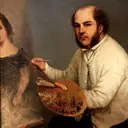
Juan León Pallière
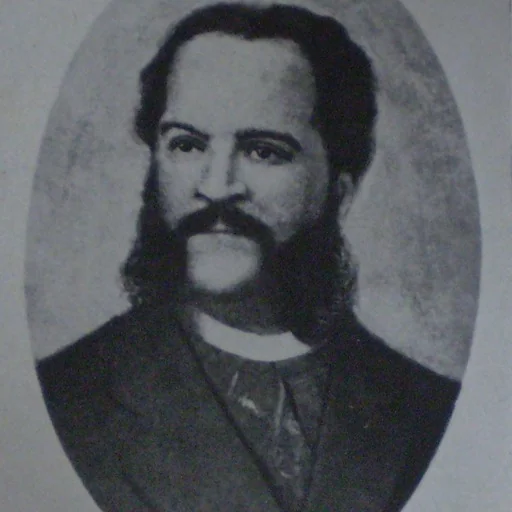
Brazilian, 1823–1887
Juan León Pallière was a Brazilian Realism artist. 6 works are cataloged here, principally at National Museum of Fine Arts, Argentina. Juan León Pallière was born in Rio de Janeiro.
Overview
Jean Léon Pallière Grandjean Ferreira (1 January 1823 – 12 February 1887), also known as Juan León Pallière, Juan Pedro León Pallière and João Leão Pallière, was a Brazilian-born French painter, draughtsman, engraver, lithographer and teacher. Born in Rio de Janeiro, Pallière trained in France, Brazil and Italy before settling in Buenos Aires in the mid-1850s. His best-known works show rural life, city views, landscapes and everyday scenes in Argentina and other parts of South America. He is closely associated with images of the gaucho, rural Argentine life and the lithographic album Álbum Pallière. Escenas americanas, published in Buenos Aires in the 1860s.
Early life and family
Pallière was born in Rio de Janeiro on 1 January 1823. He was the son of the French-Brazilian painter Arnaud Pallière and Agustina Elisa Julia Grandjean Ferreira. His maternal grandfather was the French architect Grandjean de Montigny, a leading figure in the French Artistic Mission in Brazil. His birth was registered with the French civil registry in Rio de Janeiro, giving him French nationality. He came from an artistic family. His paternal grandfather was an engraver, one of his paternal uncles won the Prix de Rome, and his maternal grandfather had taken part in the restoration of the Tomb of Caecilia Metella in Rome in 1804.
Training
Pallière lived in Rio de Janeiro until the age of seven. In 1830, his father took him to France. He began studying art in Paris in 1836, in the studio of François-Édouard Picot. Jules-Eugène Lenepveu has sometimes been named as one of his teachers, though other biographies place Lenepveu among his fellow students. Pallière returned to South America in 1848. After a short stay in Buenos Aires, he went back to Rio de Janeiro and studied at the Imperial Academy of Fine Arts, then directed by Félix Émile Taunay. In 1849, he received a scholarship to continue his training in Europe. He entered the French Academy in Rome in 1850, and in the following years spent time in Paris while also traveling through Italy, Spain and Morocco. In Brazil, Pallière decorated the ceiling of the library in the former building of the Imperial Academy of Fine Arts. He returned to South America in the mid-1850s and settled in Buenos Aires at the end of 1855.
Argentina and South American travels
Pallière lived in Buenos Aires from late 1855 to 1866. During those years, he painted and made lithographs of the countryside, gauchos, rural houses, popular dances, horsemen and travel scenes. He also painted criollo life, subjects that became central to his reputation. In 1858, Pallière began a long journey through the Argentine interior. He traveled from Buenos Aires along the Paraná River to Rosario, continued by diligence to Mendoza, crossed the Andes, and then went from Valparaíso toward Cobija. He crossed the Atacama, reached Salta, and returned to Buenos Aires through Tucumán, Santiago del Estero and Córdoba. Soon after, he showed works from the journey at Casa Fusoni in Buenos Aires. In July 1859, Pallière exhibited with the young artist Enrique Sheridan. In 1860, he left again for the Litoral provinces, the Chaco region and southern Brazil. During that journey, he arrived at the port of Paranaguá, passed through Curitiba, and visited parts of Santa Catarina. His travel diary was later published as Diario de viaje por la América del Sud, with illustrations, plates and facsimiles. In Buenos Aires, Pallière taught at the Escuela Normal del Colegio de Huérfanos. His students included Ventura Miguel Marcó del Pont and Enrique Sheridan.
Return to France and death
Pallière left Argentina in April 1866 and returned to France. Two years later, he exhibited La pisadora de maíz and La familia at the Paris Salon. After leaving South America, he continued painting but moved away from the American subjects of his best-known work, turning to anecdotal scenes and history painting. Pallière lived in France until his death in Lorris on 12 February 1887.
Subjects and style
Pallière worked in watercolor, oil, lithography and drawing. His images often show the Argentine countryside, gauchos, pulperías, rural dances, carts, horsemen and everyday life. His paintings and lithographs also include views from Brazil and other parts of South America. Travel gave Pallière many of his subjects. His travel diary was later published as Diario de viaje por la América del Sud, with illustrations, plates and facsimiles. The same journeys shaped his paintings and lithographs of rural interiors, roadside scenes, popular dances and travel across the pampas. One of his best-known works is Idilio criollo, also called El gaucho enamorado or Coloquio amoroso, held by the Museo Nacional de Bellas Artes in Buenos Aires. Painted around 1861, it shows a gaucho declaring his love to a young woman outside a ranch. Pallière built the scene from details gathered during his journeys through Argentina and the Buenos Aires countryside.
Álbum Pallière. Escenas americanas
Pallière's main publishing project was Álbum Pallière. Escenas americanas, also titled Escenas americanas: reproducción de cuadros, aquarelles y bosquejos. Published in Buenos Aires in the 1860s, the album contained 52 lithographs after his drawings. The lithographs were printed in the workshop of Jules Pelvilain in Buenos Aires and appeared in installments between May 1864 and June 1865. Most of the album is devoted to Argentine subjects, especially the Pampas and their inhabitants. It also includes views from other South American countries. The Brazilian plates include Canoa no Rio Paranaguá and Tropa carregada de mate descendo a serra, views connected with Paraná and the movement of yerba mate through the Serra do Mar. Some plates from the album are held in museum collections. La pulpería (Campaña de Buenos Aires), in the Museo Nacional de Bellas Artes, is an 1864-1865 lithograph from the album. It shows a rural social space in the Buenos Aires countryside, one of the settings that helped make Pallière's Argentine work recognizable. In Buenos Aires, the album brought scenes of rural life to an urban public. Its images helped make the pampas, gauchos and country settings familiar visual subjects in the city during the 1860s.
Collections represented

Artists in a similar vein