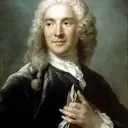
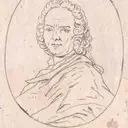
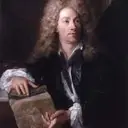
Artist
Louis Galloche
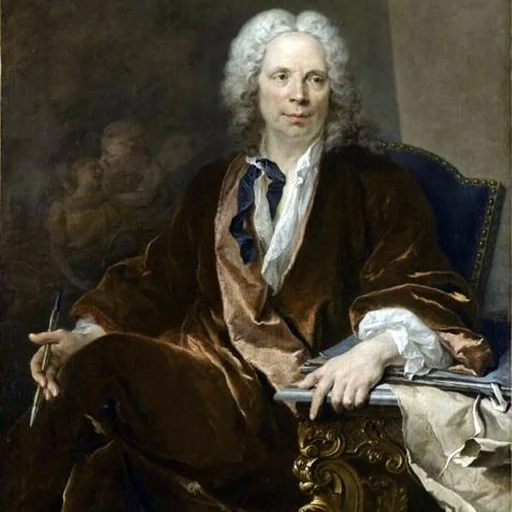
French, 1670–1761
Louis Galloche was a French French Classical Baroque artist. 3 works are cataloged here, principally at Los Angeles County Museum of Art. Louis Galloche was born in Paris.
Overview
Louis Galloche (24 August 1670 – 21 July 1761) was a French painter. A student of Louis de Boullogne, his own students included François Lemoyne, Charles-Joseph Natoire and François Boucher.
Life
He was born in Paris, the son of Charles Galloche and Jeanne Martinet. He studied at the Lycée Louis-le-Grand. Originally destined for the church, he soon found he had no vocation and began to study for the civil service. He joined a notary's office, in accordance with his father's wishes, but he didn't stay long. His father finally recognized his taste for painting and offered him a drawing master, who turned out to be a drinker: Galloche left him after six months. Galloche entered the studio of Louis de Boullogne, first painter to the King, as an apprentice. At the age of 20, the young man set about making up for lost time, so that in just four years, study and diligence enabled him to acquire the skills needed to win first prize in painting in 1695 for a large composition. The required theme was "Jacob, the patriarch"; his painting, The brothers of Joseph bringing their father Jacob his son's robe. A member of the lower middle class, Galloche came up against the harsh laws of privilege: while his prize gave him the right to spend several years in Rome, he could not claim a sufficient pension from the king, and was reduced to advancing the costs of his journey and part of his stay, which was reduced to two years. After a stopover in Venice, where he immersed himself in all the currents and practiced drawing intensively, he was forced to return to his aging father. Back in Paris, he opened a studio. One of his first pupils was François Lemoine, whom he kept as an assistant for 12 years. It was during this period that he composed two large paintings that were long placed above the doors of the refectory at Saint-Martin des Champs. One depicts St. Benedict miraculously bringing back an axe from the water; the other St. Scholastica obtaining rain and thunder from heaven to prevent St. Benedict from leaving. (1703, Musée Carnavalet) He painted a few secular subjects and landscapes, few portraits and many church pictures. Among the latter is his famous painting of the Translation of the relics of Saint Augustine to Pavia. This piece was considered his masterpiece and one of the best works of the French School. Executed for the refectory of the Petits-Pères, Discalced Augustinians near Place des Victoires, Pigalle realized that this painting, which had been paid to Galloche for only fifty écus, was beginning to spoil in the refectory from the smoke of the food, and he urged the monks to remove it and place it in their sacristy. Galloche asked, in the flower of his age, for the post of director of the French Academy in Rome in order, he said, to return to the country best suited to the study of the arts in order to help students appreciate art. It was explained to him that the post was intended for a single person and he was married. Galloche had married Louise Catherine Maillard, daughter of a fur merchant who brought a dowry of 40,000 livres. Church paintings, which were the main occupation of Galloche, these kinds of works were always paid for at a low price, in comparison with paintings of profane subjects, although painters made all the more efforts to bring them to their perfection, as they were destined to remain constantly under the eyes of the public, they provided them with the surest means of establishing or consolidating their reputation and of passing their names to posterity. M. Galloche, being in his strength, would have liked to be employed on great works, such as the paintings for the tapestries of the Gobelins, but he ha
Collections represented


Museum
Artists in a similar vein