Artist
León Ferrari
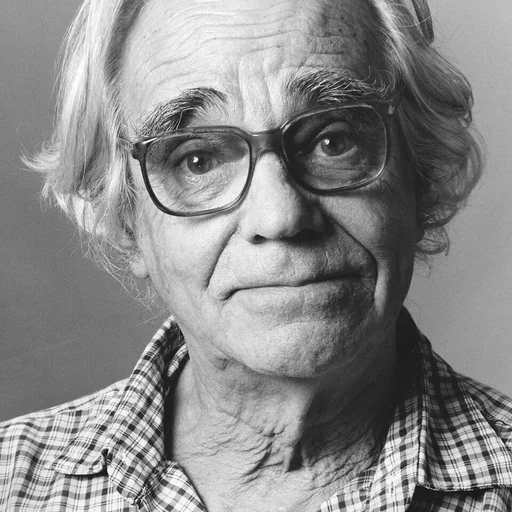
Argentine, 1920–2013
León Ferrari was an Argentine artist. 17 works are cataloged here, principally at Museum of Modern Art. León Ferrari was born in Buenos Aires.
Overview
León Ferrari (September 3, 1920 – July 25, 2013) was an Argentine contemporary conceptual artist. During his extended art career (1954-2013), his artworks often protested the Argentine government, the imperialist west, and the Church. Ferrari's protest piece "Western and Christian Civilization", which depicted a near life-size Christ hanging crucified on an American fighter jet, attracted controversy when he created it in 1965, and it has been exhibited many times since. Ferrari caused protests against his work throughout his career, including from Pope Francis when he was still Cardinal Jorge Bergoglio.
Biography
Ferrari was born September 3, 1920, in Buenos Aires to Susana Celia del Pardo and Augusto César Ferrari; his father was a well-known painter from San Possidonio, Italy. As a young man, Ferrari studied electrical engineering at the University of Buenos Aires. Ferrari worked as an engineer into his thirties. In 1946, Ferrari married Alicia Barros Castro and the three went on to have three children: Marialí, Pablo, and Ariel. He began casually making art during that same year. In 1952, Ferrari moved to Italy with his family because his daughter, Marialí, was fighting tuberculosis and he wanted her to have access to high quality medical care. Almost by chance, he began working with clay and started dedicating substantial time to ceramic artwork in 1954. His first major solo exhibition took place in Milan in 1955. That same year of 1955, he moved back to Buenos Aires. With his return to Argentina, Ferrari began to explore sculpture using different mediums including, wood, plaster, and cement, and, in the 1959, wire. 1962 marked Ferrari's first foray into paper and ink artwork. From 1963 on, Ferrari used words and handwriting heavily in many of his works. He began using plastics and objects in 1964, marking the beginning of his collages that he would use for the rest of his career. In 1976, Ferrari took his family to São Paulo, Brazil, entering into a period of exile, due to threats from the Argentine dictatorship of the time. However, just after he left, Ferrari's son Ariel, who had decided to stay in Argentina, was kidnapped by the dictatorship. The last letter the Ferrari family received from their son came in February 1977. In 1978 they received word that he had been found dead February 26, 1977. During his time in exile, Ferrari explored new forms of art, including mail art, photocopying, lithography, and he even wrote some books. Ferrari returned to Argentina in 1991, continuing to make art all the while. In 2008, he created the Augusto (his father) and León Ferrari Foundation which keeps the memory of the artist alive. He died on July 25, 2013, at the age of 92. He is buried at La Chacarita Cemetery.
Early works (1955–1964)
Ferrari took up painting in 1946, then began seriously making art in 1954. Much of his early work is sculpting, often ceramic or made of cement. His early works included pottery and sculpture, with deeply abstract roots. (See his work "Mujer" from 1960 for an example.) In 1954 he was invited to participate in the 1954 X Triennale by Lucio Fontana, then, in 1955, he held his first solo exhibition in Milan. His sculptures during this time were abstract, mostly figurative, without the veiled (or unveiled) political messages that marked much of his later work. Beginning in 1959, he started sculpting using other mediums such as wire and carved wood. Ferrari exhibited his first wire sculpture in 1961. He began to draw in March 1962, opening a period of language and word-based art that would continue for the rest of his career. He began collage and object work in 1964.
Language and writing (1962 and on)
Starting in 1962, Ferrari began to use language and letters as a common theme in many artworks. Scholars point to multiple influences as explanations for Ferrari's interest in words. One reason is that his young daughter lost her ability to hear due to meningitis and had to be taught language differently by her parents. Another reason is that Argentine political thought within the public sphere was largely controlled by a corrupt media at this time, so Ferrari wanted to present words through art as a different medium for language in protest against the media. Ferrari's reasoning for using this medium has also been said to "question the distinction between art and language—between pure visuality and codified information, and between graphic gesture and calligraphy." Ferrari did not always use language in intelligible ways. For instance, he would sometimes just use lines and letters to create the image of text, as in his piece Reflections from 1963-64. Another famous example of his unintelligible writing is Ferrari's famous piece Carta a un general (Letter to a General). This piece is written in a very loose, calligraphic style that does not allow the viewer to clearly read the message. This piece represented Ferrari's thoughts that effective communication with a political power (such as a dictatorial general) is impossible. However, when he did write intelligibly, it was often in essay, letter, or poetic forms, transcribing his thoughts on politics, current events, or his own artwork. These pieces were still written in a sloppy, calligraphic style, however one would be able to make out the words much more clearly. An example of this is the piece titled Cuadro escrito that he made in which he responds to the critiques of his exhibit at the Torcuato di Tella Institute National Prize exhibition in 1965.
"Western and Christian Civilization"
In 1965, Ferrari submitted four artworks for the National Prize of Torcuato di Tella Institute. Each piece had religious themes, but one piece stuck out among the rest: Ferrari's famous La Civilización Occidental y Cristiana (Western and Christian Civilization) – a near life-size Christ hanging crucified on an American fighter jet. The director of Center of Visual Art for the institute, Jorge Romero Brest, told Ferrari to remove this famous work or he would not be allowed to participate. Unlike the contrary manner in which he defended his artworks later in life, Ferrari agreed and withheld the work from the exhibition. Despite his removal of the provocative piece, art critics still attacked Ferrari for the way his other pieces critiqued Christianity. He responded by writing a letter in handwritten, sketch-like form, questioning his critics' condemnation of his own deeply critical art. This responsive art piece is titled Cuadro escrito. The controversy surrounding Western and Christian Civilization manifested Ferrari's central role in Argentina's political protest art.
Tucumán Arde
One of Ferrari's most prolific protests within the Argentine art world was his participation in Tucumán Arde. Tucumán Arde was a series of art shows put on by a collection of Argentine artists whose aim was to expose the Argentine government's wrongdoings in Tucumán, Argentina. The exhibitions displayed photographs, articles, and short videos collected by the group of artists which showed the hardships and economic distress of the people living in Tucumán. As these exhibits were an exposure of the corrupt government, attacking the powerful and dangerous Argentine dictatorship of the time, many of the artists who helped with Tucumán Arde remained in the background, not wanting to place a target on their back by proclaiming participation in the events.
Period of abstention from art (c. 1972–1976)
After playing such a central role in heated, highly politicized protest art, Ferrari took a hiatus from art-making. Although he may have been making art during these years, his works were not appearing in the public sphere. In addition to this, Ferrari had been heavily involved in the political protest scene of Argentina in the 1960s. He may have made the decision to lie low for a while following highly dynamic period of protest, which included his participation in Tucumán Arde. In 1976, Ferrari departed the country and entered a period of exile in São Paulo, Brazil.
Wire sculpture (late 1970s and 1980s)
Ferrari made his first wire sculpture in 1961. He drew on his knowledge of metals from his work as an engineer, making use metals such as steel, bronze, copper, silver, palladium, tantalum, and gold. Although he made wire sculptures in the 1960s and early 1970s, they were not his focus. However, he returned to the medium in the late 1970s with works like Prisma, Maqueta, and Planeta. Art scholars suggest that Ferrari's sculptures represent the way many small pieces (individual wires, for instance) can come together to create a stronger function as a whole (the full sculpture).
Instrument sculpture (1981)
In the 1980s, Ferrari discovered that many of his wire sculptures would hum or create musical tones when the wind was allowed to blow through them. In conjunction with this theme of musical tones, Ferrari created a series of sculptures with instruments embedded in them which could be played. In 1981, he held an exhibition called "Las 14 Noches de Performance" (The 14 Nights of Performance) in which he played the instruments. These sculptures allowed Ferrari to play into the idea of his artwork "making noise" in the world.
Bird defecation (1985)
Starting in 1985, Ferrari created works of art where Christian images (mainly Michaelangelo's The Last Judgment) were placed below bird cages and birds (including pigeons, goldfinches, canaries, and chickens) were allowed to defecate on the images. The idea behind these artworks was fairly overt: Ferrari wanted to show that the ideas in the Christian images were "shit." Ferrari held exhibitions of this bird display in galleries around the world, first at the São Paulo Museum of Modern Art, then later in other cities, including Buenos Aires and New York.
Heliografías (1980–1987)
Following a period of mostly unintelligible, scratchy drawing, Ferrari entered a period of print-making, creating his famous series known as "Heliografías". These works were sketches and designs for absurd urban plans, including city plans, freeway designs, neighborhood maps, furniture layouts, and other, more simplistic patterns. Ferrari is quoted explaining these Heliograph artworks: "These works express the absurdity of contemporary society, that sort of daily madness necessary for everything to look normal." Along with this concept of absurdity, scholars suggest Ferrari desired to point out the dangers of blindly following a pattern or movement. He created prints where small figures were trapped inside a closed loop, moving forward in the loop but never moving out. With this idea of blindly choosing uniformity, Ferrari hoped to draw ties to the way many Argentines simply ambivalently allowed injustice to continue with their blind adherence to the status quo. Occasionally within these prints, Ferrari would switch the pattern, such as in his piece Adulterio (Adultery), where a white king breaks the pattern and sleeps with a black queen. This was meant just to ask the question: what if we break the pattern?
Braille works (1997)
In 1997, Ferrari created two series using braille. In the first, he took lines from the poems and stories of famous Argentine writer Jorge Luis Borges, and emboss the words in Braille on erotic or nude photographs. In the second series, Ferrari used verses of scripture embossed in braille. In both cases, the idea was to force viewers to touch or, as Ferrari often described, "caress" the naked bodies depicted in the prints in order to understand the words written on the image. An example of this is Ferrari's piece titled La Serpiente in which a Japanese stamp has been reprinted, depicting a couple engaged in sex. The words "la serpiente me engaño y comí," which is Genesis 3:13 (translated: "the serpent deceived me, and I ate"), are embossed in braille over the area in the image where the couples' genitals come together. Ferrari created these artworks often as a way to push back against the Church's demonization of women, sexuality, and often of homosexuality.
Mannequins (1994)
In 1994, Ferrari held an exhibition Buenos Aires titled, "Cristos y Maniquíes" or "Christs and Mannequins". This gallery included some nude prints and paintings embossed with braille (as discussed above), but also included another form of bodily art. Ferrari took mannequins and with some, pasted Christian images over the top, while with others, he wrote in his classic scratchy, calligraphic style. The mannequins he used did not have full arms, legs, or heads, but did have accentuated curves and a clear sexualized posture. For one of these image-covered mannequins, titled Devoción, he used many different Christian images, including Jesus' miracles, martyrdoms of saints, and the birth of Christ, with a central figure was the Virgin Mary. The goal for these mannequins was to "dress" the nude body with these Christian images, while also juxtapose the virginity of Mary with the sexuality and nudity of the female body. Another mannequin figure titled Dueteronomio was a similarly sexualized, limbless mannequin, this time covered with sections from the Book of Deuteronomy, written in Ferrari's calligraphic style. The idea Ferrari is playing with here is that of the "clothing of grace" that covered Adam and Eve in the Garden of Eden, withholding the shame that their nudity would later bring. However, instead of these words and images representing that "clothing of grace", Ferrari invites the reader to think of nudity in positive terms, rather than the typically negative, shameful way that he posits to Christian thought on nudity. If nudity is positive here, then the scriptures and images withhold the natural sexuality of the body. Christianity becomes an impediment to the natural sexuality which exudes from the body.
Nunca Mas for Pagina/12 (1995)
In 1995, Ferrari was invited to submit images for the left-leaning Argentine newspaper Página/12 as a part of the magazines republishing of the 1984 government project Nunca Mas, aimed at uncovering the truth behind Argentine Desaparecidos ("disappearances") in the 1960–1980s. In his contributions, Ferrari returned to a much harsher, more overtly political-critical approach in his art. His works often juxtaposed images of Argentine people or political figures (Videla and Agosti for instance) next to figures of Adolf Hitler and Nazi Germany. Ferrari also mixed in Christian images and themes of Hell, Satan, and Damnation. A specific example is when Ferrari overlaid the Nazi swastika on a photo of the entrance sign of the Colegio Militar de la Nación, where Argentine officers received training. Critics, including political figures such as Ernesto Juan Bossi, wrote Página/12 to complain. Ferrari responded to these critics swiftly and sharply, saying that he was not the one utilizing Nazi ideas (but in fact his critics were). Ferrari's controversial images were simply meant to invite viewers to contemplate how Argentine political regimes and Nazi Germany were different, or how the might in fact be similar.
Collections represented

Museum