Artist
Roberto Jacoby
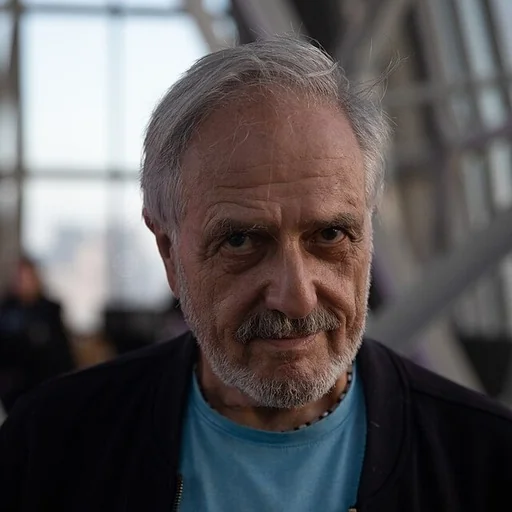
Argentine, b. 1944
Roberto Jacoby is an Argentine artist. 1 work is cataloged here, principally at Museum of Modern Art. Roberto Jacoby was born in Buenos Aires.
Overview
Roberto Jacoby (born 1944) is an Argentine artist and sociologist. Known for his conceptual art and social activism in Argentine politics, most of his work is collaborative such as his displays in Experiencias and participation in Tucumán Arde.
Biography
Jacoby was born to immigrants in Buenos Aires in 1944. He graduated from Colegio Nacional de Buenos Aires (CNBA) and studied sociology at the University of Buenos Aires. He is a member of the so-called "generación del Di Tella" and is considered one of the first conceptual artists in the world. He is particularly known for his participation in many controversial and political exhibitions, such as "Experiencias 68" and "Tucumán Arde". In 1966, along with Eduardo Costa and Raúl Escari, he worked to promote the use of alternate mediums for art such as communications media. His work reflects this, including a vast array of mediums such as installations, performances, drawings, viewer participation, comics, photographs, videos, and more, with very few of his works holding any visual similarities to each other. Later, he largely left the Argentine art scene to engage in more directly political subjects such as social conflict and political epistemology. He would later write a book, though it currently remains unpublished- Storming Heaven (El asalto al cielo)- containing information about the research he did on those. To counter the rising fear over political crisis in Argentina, he began to make some artistic contributions once again, such as writing for the Argentine band Virus that began a new Argentine rock wave on the 1980s. Happening for a Dead Boar Together with Costa and Escari, the three artists collaborated to make Happening para un jabalí difunto (Happening for a Dead Boar) in 1966. Inspired by Oscar Masotta's declaration that 'the medium is the message', their purpose was to use mass media as their primary art medium so as to question its power in society. In a piece that would later be seen as crucial in Jacoby's conceptualist works, he published his essay Against the Happening which called into question the reliability of media narrative. The trio spread word of a 'Happening' distributed through traditional media outlets, only to reveal months later, that there was not, in fact, any such event. Their art seemed to render not only the object medium of art, but any art event superfluous, a new 'genre' of art they referred to as Arte de los Medios de Comunicación de Masas (art of the mass media). This 'exhibition' was meant to draw public attention to the failings of media- specifically photographic media- and the dangers of assuming its honesty or accuracy. Experiencias del '68 In 1967, a man named Romero Brest decided to try and change the barriers or wealth required to enjoy art in the Instituto Torcuato Di Tella (ITDT); he decided to try and do this with Experiencias. These works, like many beginning conceptualist works at the time, were meant to be pieces where the viewer could see the fusion of life and art. Brest wanted the viewers to directly interact the artist's experiences rather than view those experiences through the lens of their art. Roberto Jacoby was one artist chosen to participate in this exhibition. The project fit well into his values – especially that of using and allowing art to reach wide audiences – displaying Message in the Di Tella (Mensaje en el Di Tella) in the '68 exhibition. The piece criticized art world standards and culture, and predicted that in the near future that art and life would not stay segregated: "The future is linked not to the creation of works but to the design of new forms of life". When the exhibition was censured, he, along with his fellow artists, destroyed their work in the street
Works
Maqueta de una obra (Scale Model of an Artwork), 1966 A pre-working for a sculpture that was never produced. This piece includes a sketch, a text, and a scale model, but the point of the piece was that it was never finished. Instead, the viewer must become an active participant and use their imagination to "finish" the work.
Mao y Perón, un solo corazón (Mao and Perón, A Single Heart), 1967 During gathering in Central Park, Jacoby pinned photographs of Mao Zedong and of Juan Perón (who the Argentine Left believed would lead a socialist revolution upon his return from exile) to his chest. Based on a school rally chant, Jacoby's title joins the two historical figures through rhyme, seemingly mocking the 'surety' of Perón's adherence to Leftist ideologies.
Mensaje en el Di Tella (Message in the Di Tella), 1968 In three parts, this work consisted of a manifesto poster, a teletype receiving real-time news from France in May 1968, and a photograph of an anti-war protester. The work was meant to emphasize Jacoby's belief that the action and ideas, not the medium, of political art was important.
Yo tengo Sida (I have AIDS), 1993 An awareness campaign done in collaboration with Mariana "Kiwi" Sainz, "I have AIDS" was something of a performance piece which consisted of celebrities such as the singer Andres Calamaro wearing printed shirts with this phrase on it. The campaign was designed to be a stand against the discrimination faced by HIV-positive people.
Other works
Exhibitions
Roberto Jacoby: El deseo nace del derrumbe (The desire is born of the collapse), 25 February – 25 May 2011 Roberto Jacoby & Alejandro Ros: Abertura, 1 August – 1 September 2013
Collections represented

Museum