Artwork
A Country Road near Vognserup Manor, Zealand. The Painter J.Th. Lundbye Sketching by the Roadside
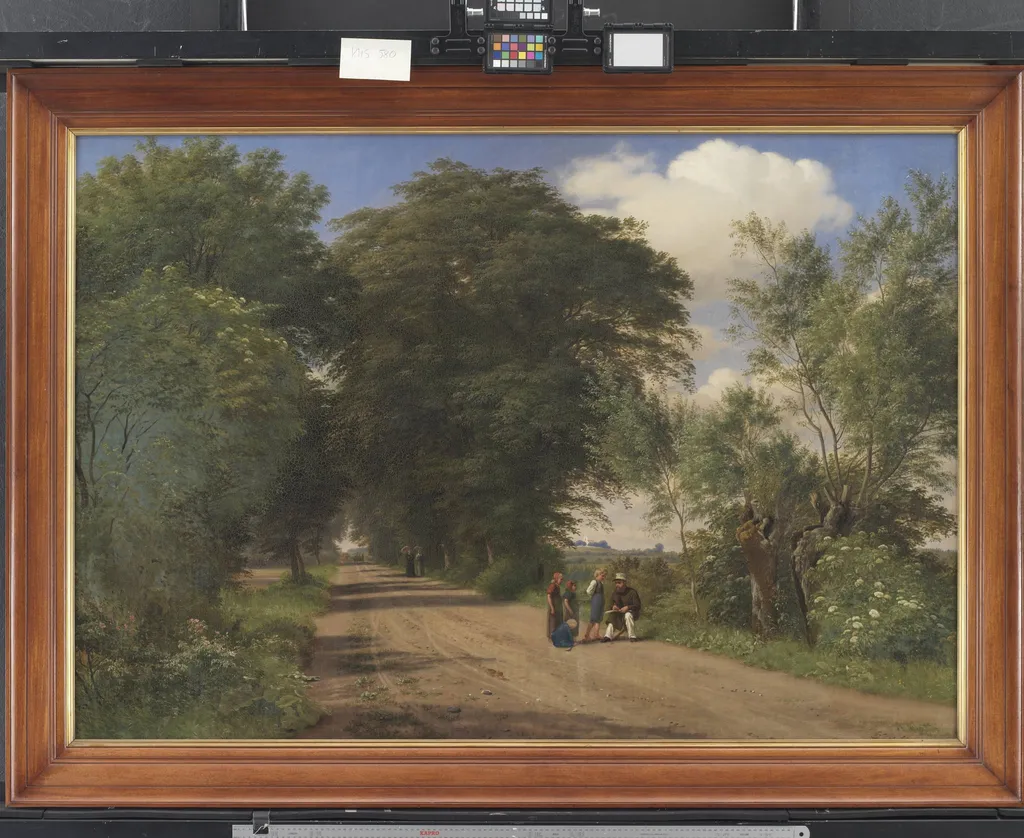
A Country Road near Vognserup Manor, Zealand. The Painter J.Th. Lundbye Sketching by the Roadside is a drawing by the Romanticist artist Unknown. It dates from 1849 and is held in the collection of the Statens Museum for Kunst. Painted in 1849, this work depicts a tranquil rural road near Vognserup Manor on the Danish island of Zealand.
About this work
Overview
The painting is held in the collection of the Museum of Ethnography, though its subject is distinctly secular and local in character.
Painted in 1849, this work depicts a tranquil rural road near Vognserup Manor on the Danish island of Zealand. It captures a quiet moment of daily life: a man sketches by the roadside while others rest or converse nearby. The scene is rendered with subtle naturalism, emphasizing the calm atmosphere of the Danish countryside. The painting is held in the collection of the Museum of Ethnography, though its subject is distinctly secular and local in character.
Subject & Meaning
The central figure, likely the artist J.Th. Lundbye himself, is shown engaged in the act of sketching, suggesting a self-referential reflection on the artist’s role in observing nature. Others in the scene—idle, conversing, or pausing—embody the unhurried rhythm of rural life. There is no narrative climax; instead, the painting values quiet presence over drama, aligning with a broader 19th-century interest in the dignity of ordinary moments.
Technique & Style
Lundbye employs soft, blended brushwork to render the dappled light filtering through dense trees and the gentle contours of the road. The palette favors muted greens, earthy browns, and pale blues, creating a harmonious, atmospheric tone. Details like wildflowers and textured dirt paths are rendered with care but without embellishment, reinforcing a commitment to truthful observation over idealized composition.
History & Provenance
Created in 1849, the painting entered the collection of the Museum of Ethnography, an institution more commonly associated with non-European artifacts. Its presence there reflects early efforts to document Danish cultural life as part of national heritage. While Lundbye was known for landscape and genre scenes, this work stands as a personal, unassuming record of his practice in the field.
Context
In mid-19th-century Denmark, artists increasingly turned from mythological or historical subjects to depict local landscapes and everyday rural life. This shift, influenced by Romantic ideals, valued emotional resonance in nature and the authenticity of the common experience. Lundbye’s work fits within this national movement, contributing to a visual identity rooted in Denmark’s own terrain and people.
Legacy
Though not widely exhibited outside Denmark, this painting exemplifies Lundbye’s quiet contribution to Danish Romantic landscape painting. It reflects a broader cultural turn toward valuing the intimate and the local. Later generations of Danish artists drew from such works as models for observing nature with sincerity, helping to shape a national artistic tradition grounded in realism and reverence for the land.
Artist & collection

 Domestic Scene
 Giacomo and Cardinal Marco, investing Andrea, Abbot of San Zeno, with his Benefice
 The Nymph of Fontainebleau
 Portrait of a Woman
 Madonna and Child with Saints in the Enclosed Garden
 Venus and Minerva
 Family Group of Four on Sofa
 Wall painting from Room H of the Villa of P. Fannius Synistor at Boscoreale
 A Funen Landscape at Harvest Time with Wedellsborghoved in the Background
 Beneath the Birches. Motif from Mälaren
 The Deer Park North of Copenhagen
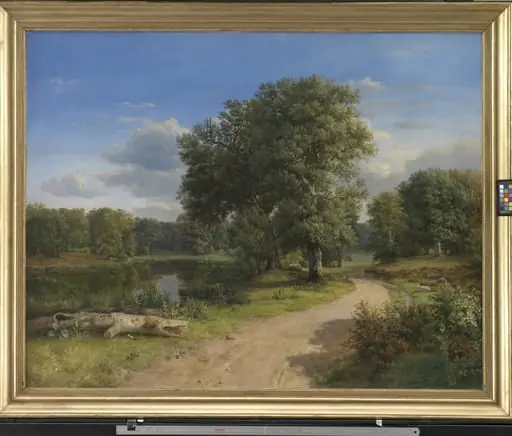 Landscape near Hammermøllen, North Zealand
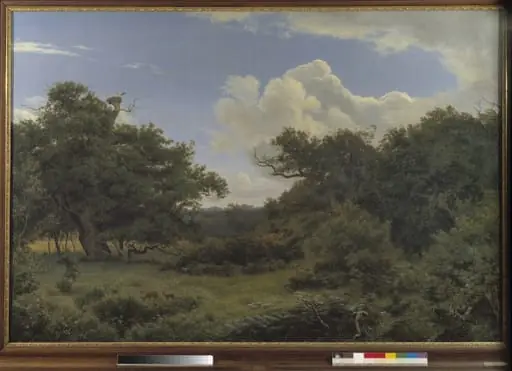 Oak Trees in Nordskoven near Jægerspris, Zealand
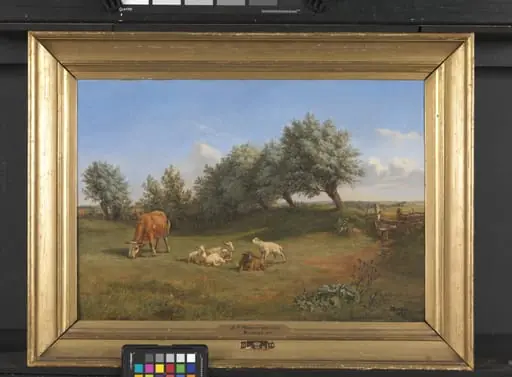 Et vænge
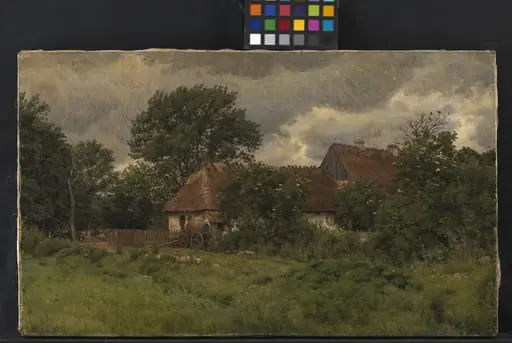 Gamle udbygninger ved en herregård
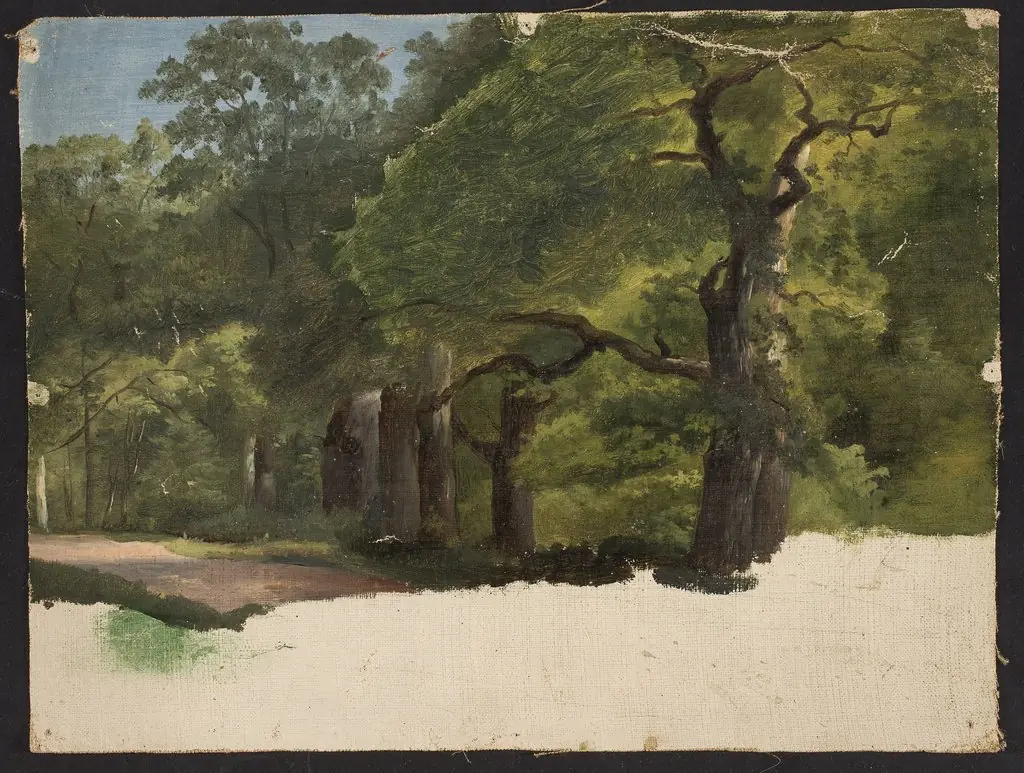 Forest landscape, sketch
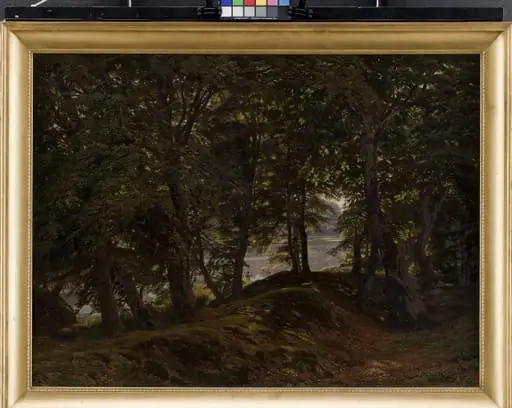 Et skyggefuldt sted i Hestehave ved Frederiksborg
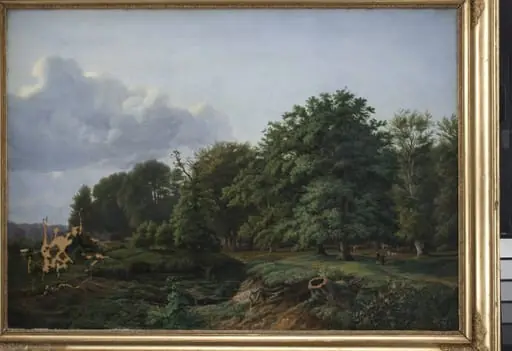 A Forrest near Hellebæk in the North of Zealand. Afternoon.