Artwork
Harvest
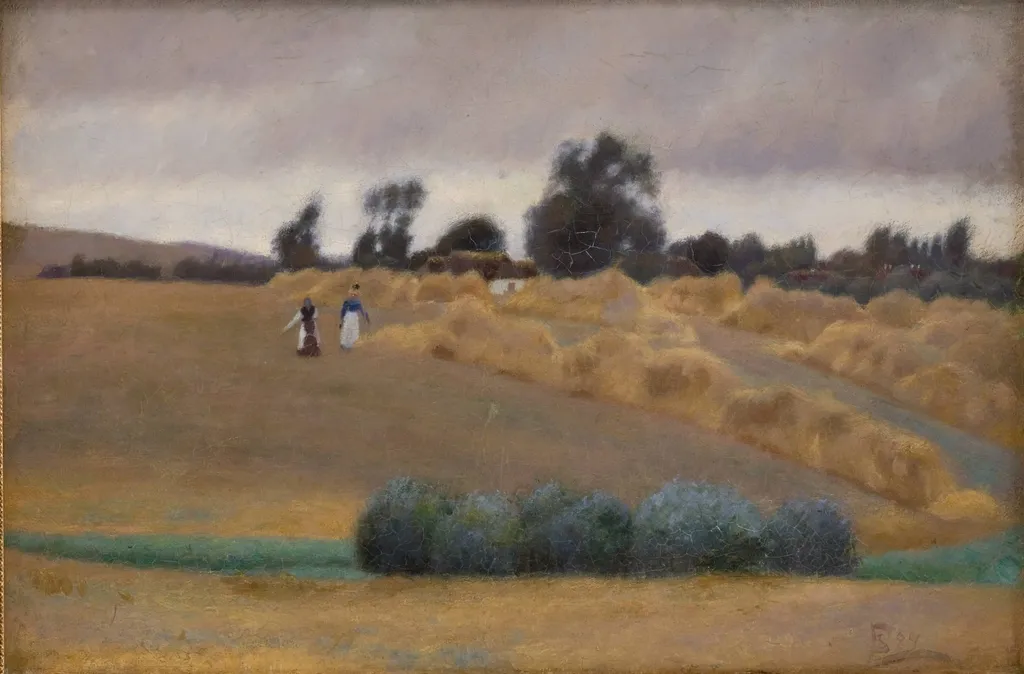
Harvest is a photography by the Impressionist artist Unknown. It dates from 1887 and is held in the collection of the Statens Museum for Kunst.
About this work
Overview
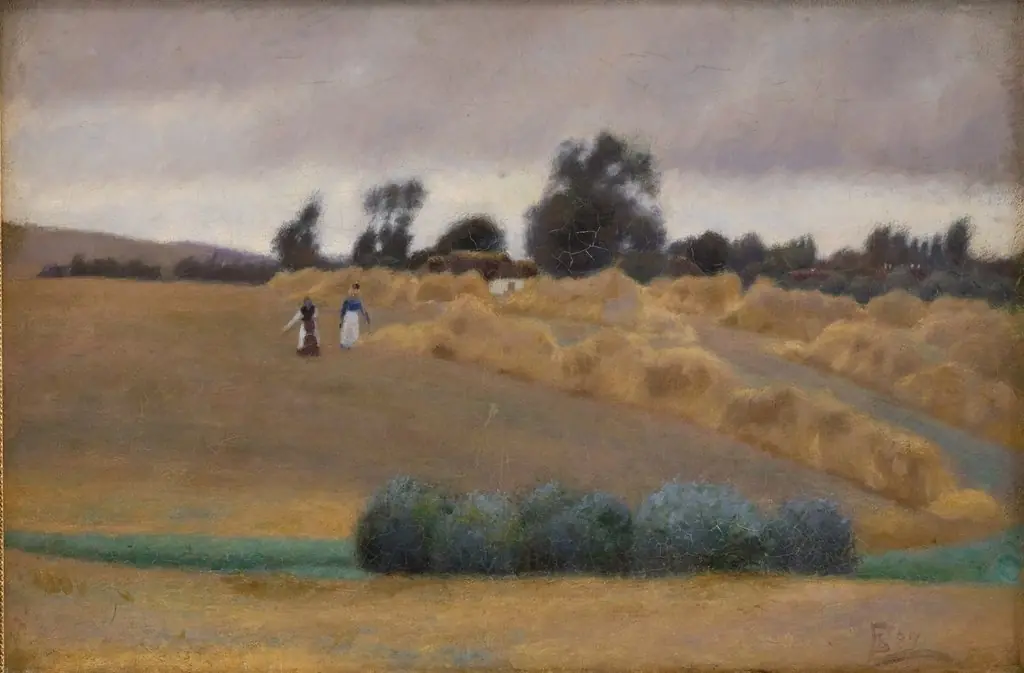
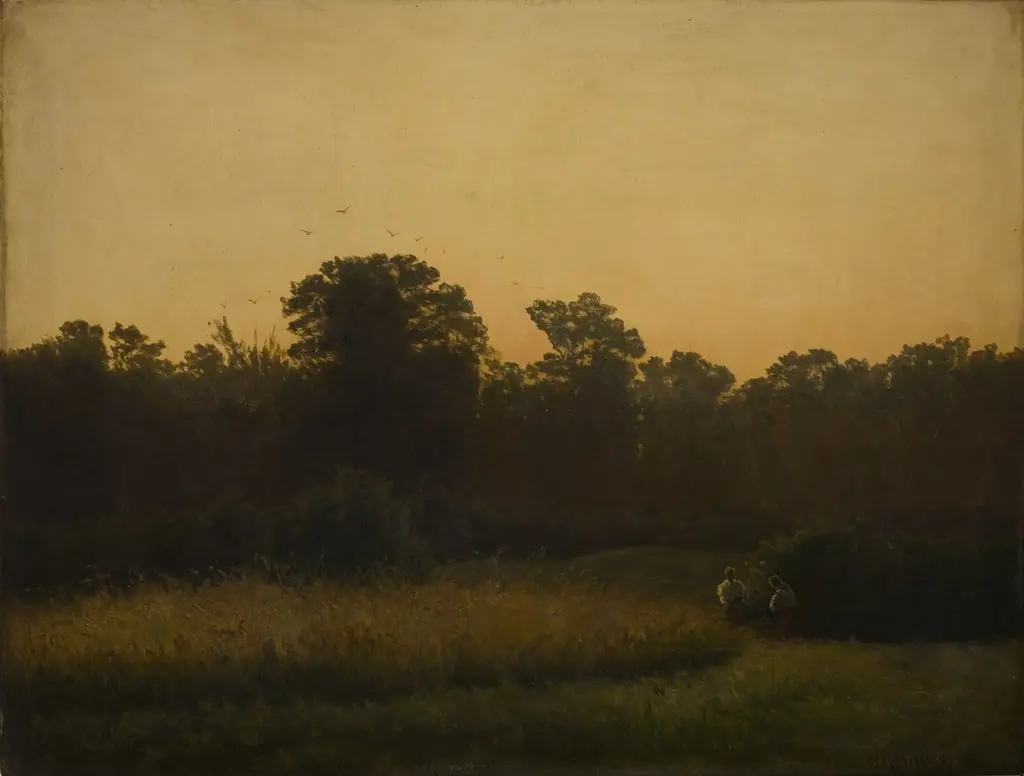
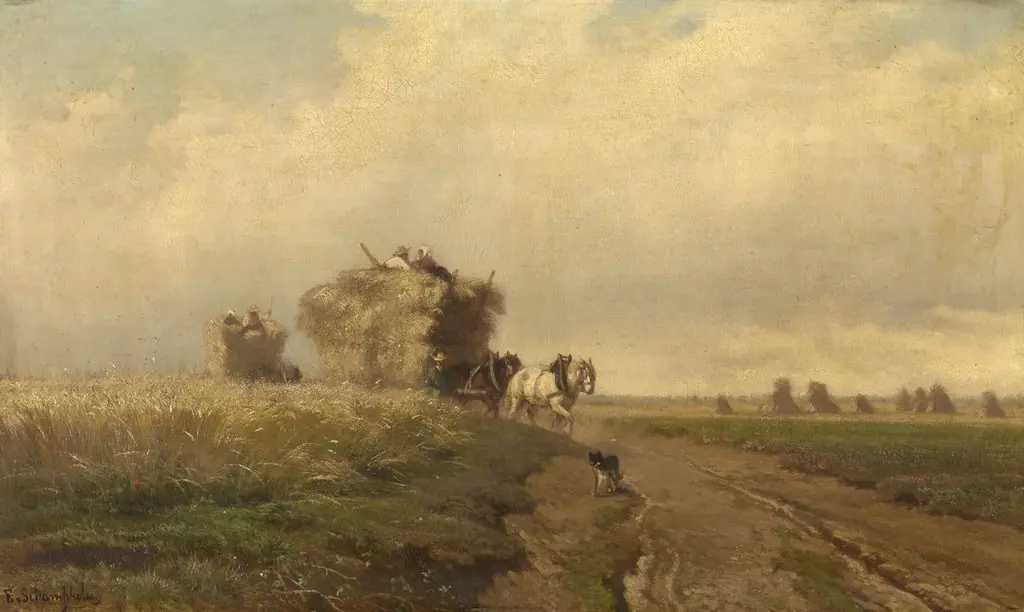
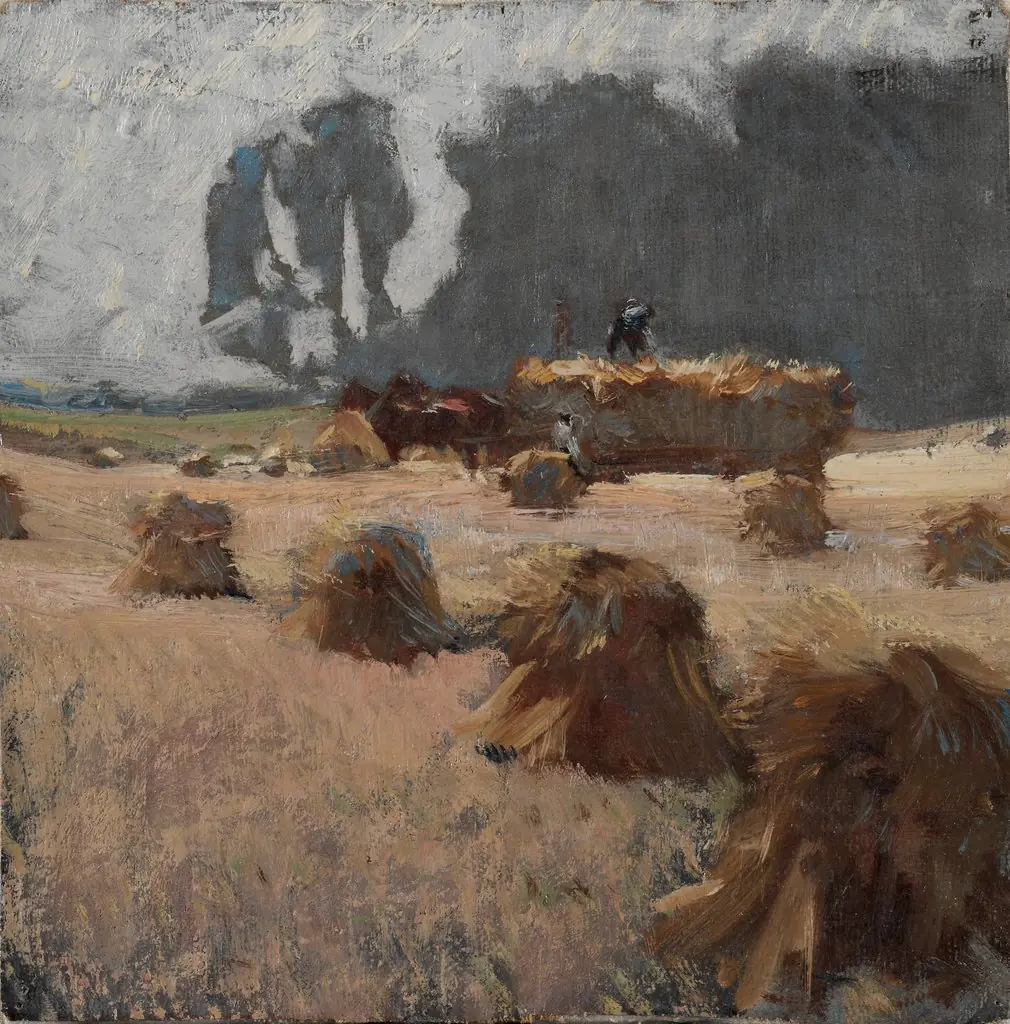
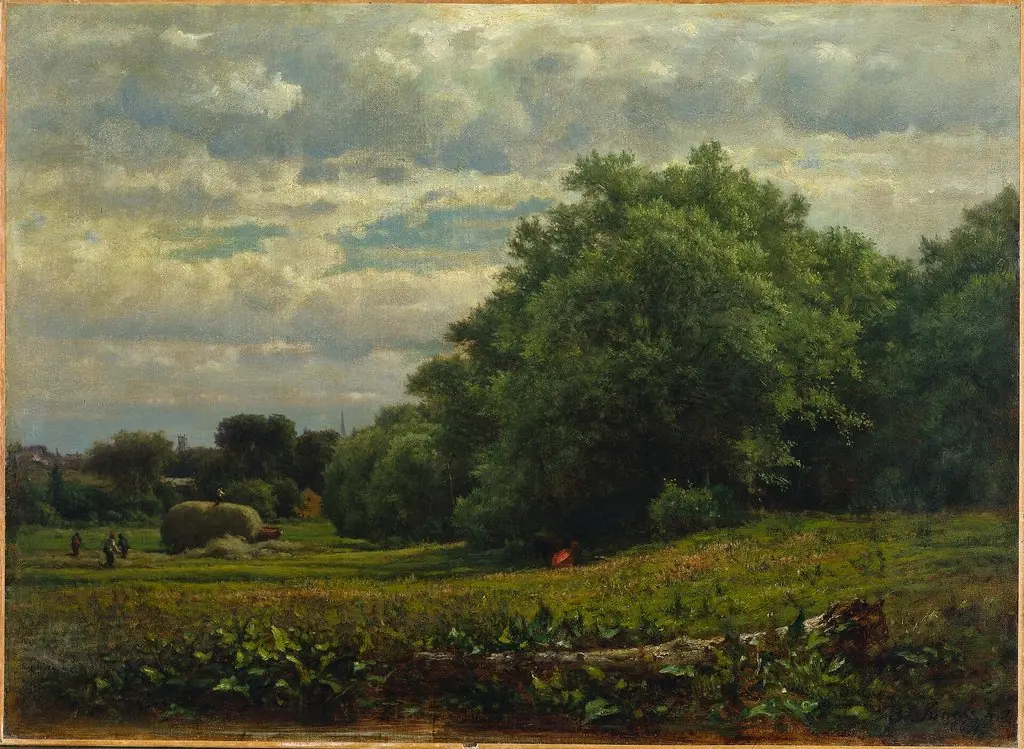
Created in 1887 by 1021_person, this painting depicts a quiet rural scene of two figures traversing a harvested field. It resides in the Museum of Ethnography and captures a transient moment in agricultural life. The composition emphasizes natural light and unposed movement, reflecting a shift toward observing everyday reality rather than idealized narratives.
Subject & Meaning
Two individuals move across a vast, dry field of cut hay, their forms small against the expansive landscape. The absence of tools or machinery suggests a focus on labor as part of the land’s rhythm rather than its exploitation. The distant trees and muted sky frame the scene with stillness, implying the quiet endurance of seasonal cycles in rural existence.
Technique & Style
Loose, fluid brushwork blends tones of gold, ochre, and pale blue to suggest shifting light across the field. Shadows are softened, not outlined, and colors merge organically to convey atmosphere. The technique avoids sharp detail, favoring an immediate, almost spontaneous impression of the moment, aligning with broader tendencies in late 19th-century observational painting.
History & Provenance
The work entered the Museum of Ethnography’s collection following its creation, likely through direct acquisition or donation. Its preservation in an institution focused on cultural practices underscores its value as a record of rural life, rather than as a purely aesthetic object. No public record of prior ownership exists prior to its museum acquisition.
Context
Painted during a period of rapid industrialization, the scene offers a quiet counterpoint to urban modernity. While not formally part of the Impressionist movement, its emphasis on light, transient moments, and ordinary subjects echoes contemporary shifts in artistic priorities. Rural labor remained a common theme among artists seeking authenticity beyond academic traditions.
Legacy
The painting contributes to a broader visual archive of 19th-century agrarian life, valued for its unembellished observation. It has not been widely reproduced or exhibited outside its institutional home, but its quiet composition continues to inform studies of everyday representation in post-academic art practices.
Artist & collection

 Domestic Scene
 Giacomo and Cardinal Marco, investing Andrea, Abbot of San Zeno, with his Benefice
 The Nymph of Fontainebleau
 Portrait of a Woman
 Madonna and Child with Saints in the Enclosed Garden
 Venus and Minerva
 Family Group of Four on Sofa
 Wall painting from Room H of the Villa of P. Fannius Synistor at Boscoreale