Artwork
Thaw
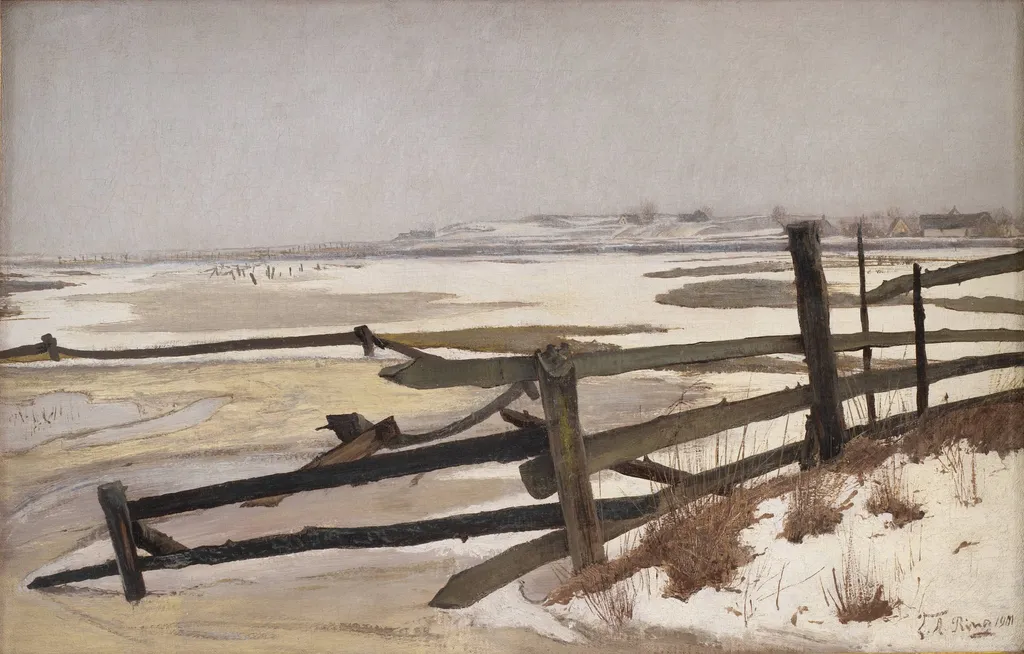
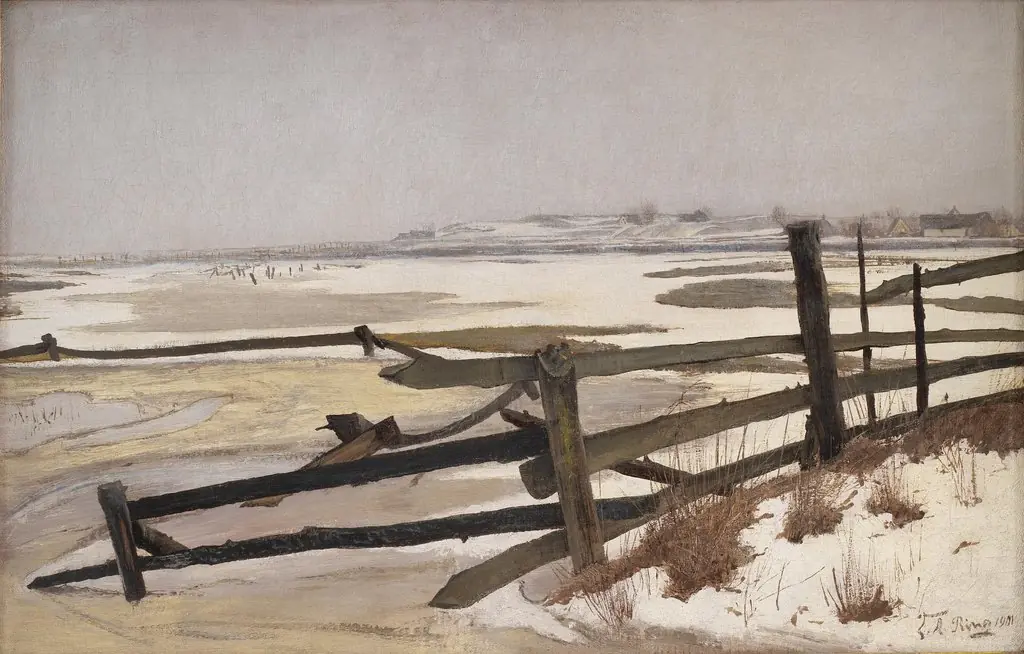
Thaw is a photography by Unknown. It dates from 1901 and is held in the collection of the Statens Museum for Kunst.
About this work
The broken fence, however, adds a touch of melancholy, suggesting that the scene may not be as idyllic as it initially appears.
The painting "Thaw" by 1049_person, created in 1901, features a serene landscape. In the foreground, a broken fence made of wooden planks stretches across the canvas, with some planks lying on the ground. The fence is set against a backdrop of a snow-covered field, with a few patches of grass and weeds visible through the snow. In the distance, a row of houses or buildings can be seen, adding depth to the scene.
The artist's use of muted colors and soft brushstrokes creates a sense of calmness and tranquility, inviting the viewer to step into the peaceful world of the painting. The broken fence, however, adds a touch of melancholy, suggesting that the scene may not be as idyllic as it initially appears.
If you're interested in exploring more works by 1049_person, you can visit the Museum of Ethnography, where "Thaw" is held.
Overview
Created in 1901 by the artist known as 1049_person, "Thaw" is an oil painting held in the collection of the Museum of Ethnography. The work presents a winter landscape in which the remnants of a broken wooden fence lie across a snow‑covered field, while distant structures punctuate the horizon.
Subject & Meaning
The composition juxtaposes the starkness of snow with the fragile presence of a deteriorating fence, suggesting a transition from winter’s rigidity toward the emerging season. Sparse patches of grass and weeds peeking through the snow hint at renewal, while the fence’s disrepair introduces a subtle note of loss or neglect.
Technique & Style
Muted tonalities dominate the canvas, with soft, blended brushstrokes that convey the quiet atmosphere of a thawing landscape. The artist employs a restrained palette of whites, grays, and earth tones, allowing the delicate rendering of light on snow and the texture of weathered wood to emerge without overt dramatization.
History & Provenance
Since its completion in the early twentieth century, the painting has remained within the Museum of Ethnography’s holdings. No record of earlier private ownership or exhibition history is noted, indicating that the work entered the museum’s collection shortly after its creation or was acquired directly from the artist.
Artist & collection

 Domestic Scene
 Giacomo and Cardinal Marco, investing Andrea, Abbot of San Zeno, with his Benefice
 The Nymph of Fontainebleau
 Portrait of a Woman
 Madonna and Child with Saints in the Enclosed Garden
 Venus and Minerva
 Family Group of Four on Sofa
 Wall painting from Room H of the Villa of P. Fannius Synistor at Boscoreale
 Karjalasta
 Ice Pack near Taarbæk, North of Copenhagen
 A Sealand Village. Winter
 Winter Landscape
 A Sealand Village. Winter
 Winter Landscape. Utterslev near Copenhagen
 View of the Kościuszko Mound from the window in the artist's studio, gray day
 Winter landscape with a stream
 Orchard in Winter
 The First Snow
 Thaw
Thaw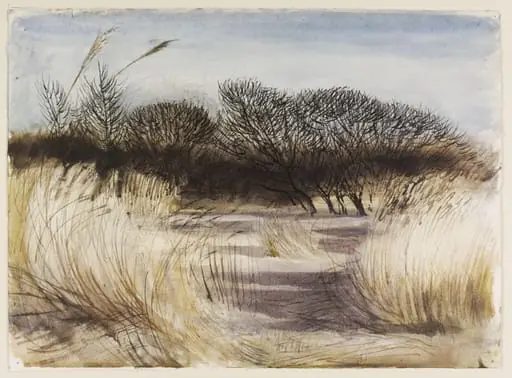 Oxwich, Gower, Glamorganshire