Artwork
Ane Marie Rohde, f. Schmidt, kunstnerens moder
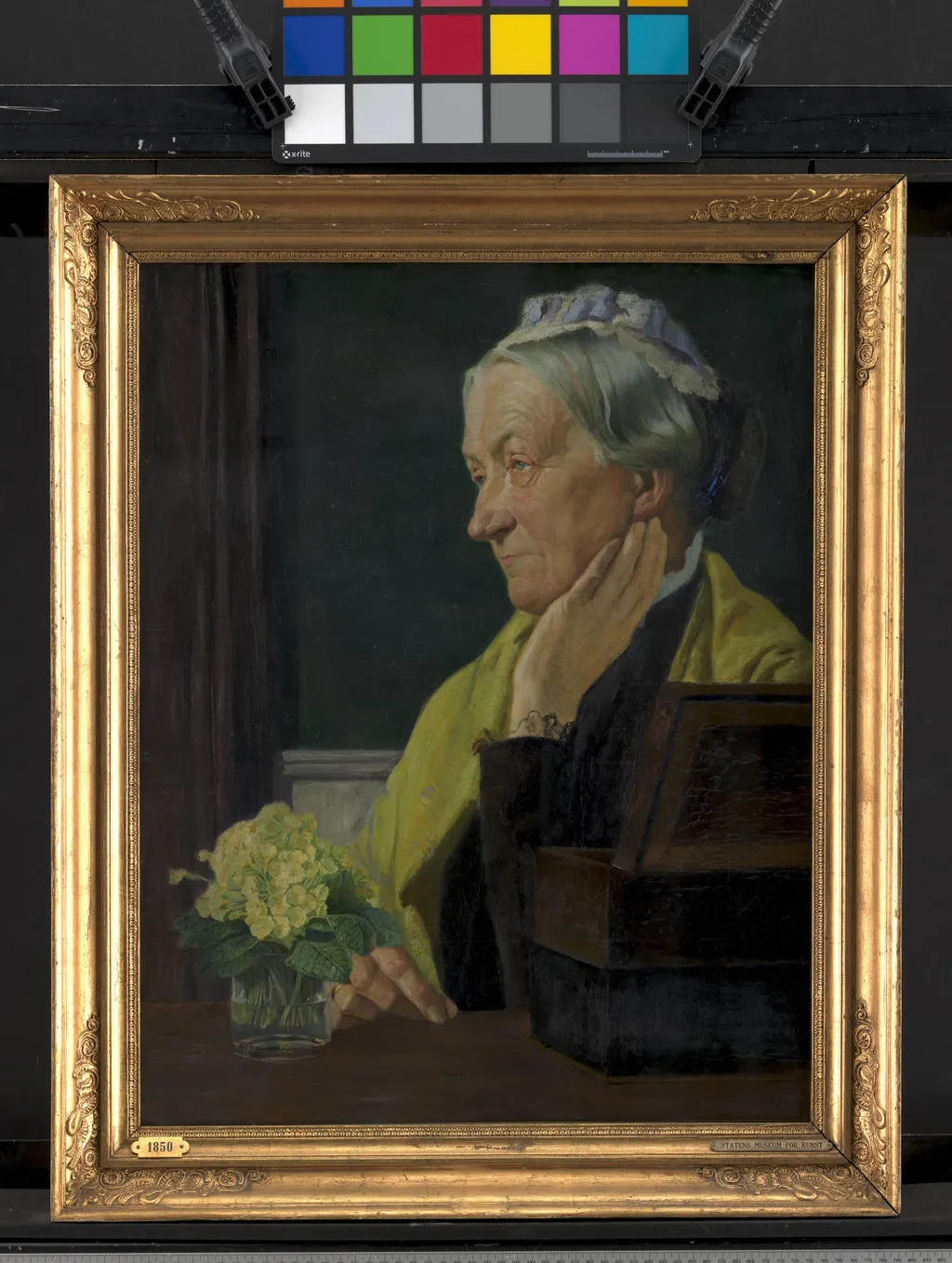
Ane Marie Rohde, f. Schmidt, kunstnerens moder is a photography by Unknown. It dates from 1903 and is held in the collection of the Statens Museum for Kunst. This portrait, painted in 1903, depicts Ane Marie Rohde, the artist’s mother, seated in a quiet interior.
About this work
Overview
This portrait, painted in 1903, depicts Ane Marie Rohde, the artist’s mother, seated in a quiet interior. She is rendered with restrained detail, her presence anchored by a dark background and a single vase of yellow flowers on a table before her. The composition focuses on her stillness, emphasizing a private, introspective moment rather than formal grandeur.
Subject & Meaning
The subject, the artist’s mother, is portrayed not as an idealized figure but as a real, aging woman engaged in quiet reflection. Her hand resting near her cheek suggests contemplation, perhaps memory or fatigue. The absence of narrative detail invites viewers to consider the inner life of an ordinary individual, elevating personal dignity over public spectacle.
Technique & Style
The painting employs a muted palette with deliberate contrasts: the yellow of the jacket and flowers stands out against the dark, indistinct background and the woman’s black attire. Brushwork is soft yet precise, avoiding overt drama. Light falls gently on her face and hands, modeling form without harsh definition, reinforcing the intimate, unhurried tone of the scene.
History & Provenance
Created in 1903, the portrait remained within the artist’s family before entering the collection of the Museum of Ethnography. Its inclusion there reflects a broader early 20th-century interest in documenting domestic life and familial relationships as cultural artifacts, rather than as traditional portraiture.
Context
In early 1900s Denmark, portraiture often emphasized social status or idealized beauty. This work diverges by focusing on the quiet dignity of an elderly woman in her home, aligning with emerging naturalist tendencies in Nordic art that valued authenticity over ornamentation and private emotion over public display.
Legacy
The portrait contributes to a quieter strand of Nordic realism that honored everyday subjects with sensitivity. It remains a modest but enduring example of how familial intimacy could be rendered with emotional depth, influencing later generations of artists who sought to portray ordinary lives without theatricality.
Artist & collection

 Domestic Scene
 Giacomo and Cardinal Marco, investing Andrea, Abbot of San Zeno, with his Benefice
 The Nymph of Fontainebleau
 Portrait of a Woman
 Madonna and Child with Saints in the Enclosed Garden
 Venus and Minerva
 Family Group of Four on Sofa
 Wall painting from Room H of the Villa of P. Fannius Synistor at Boscoreale
 Mrs. Nicholas Fish (Elizabeth Stuyvesant)
 Portrait of a Lady
 Portrait of Mrs Geale-Wybrants
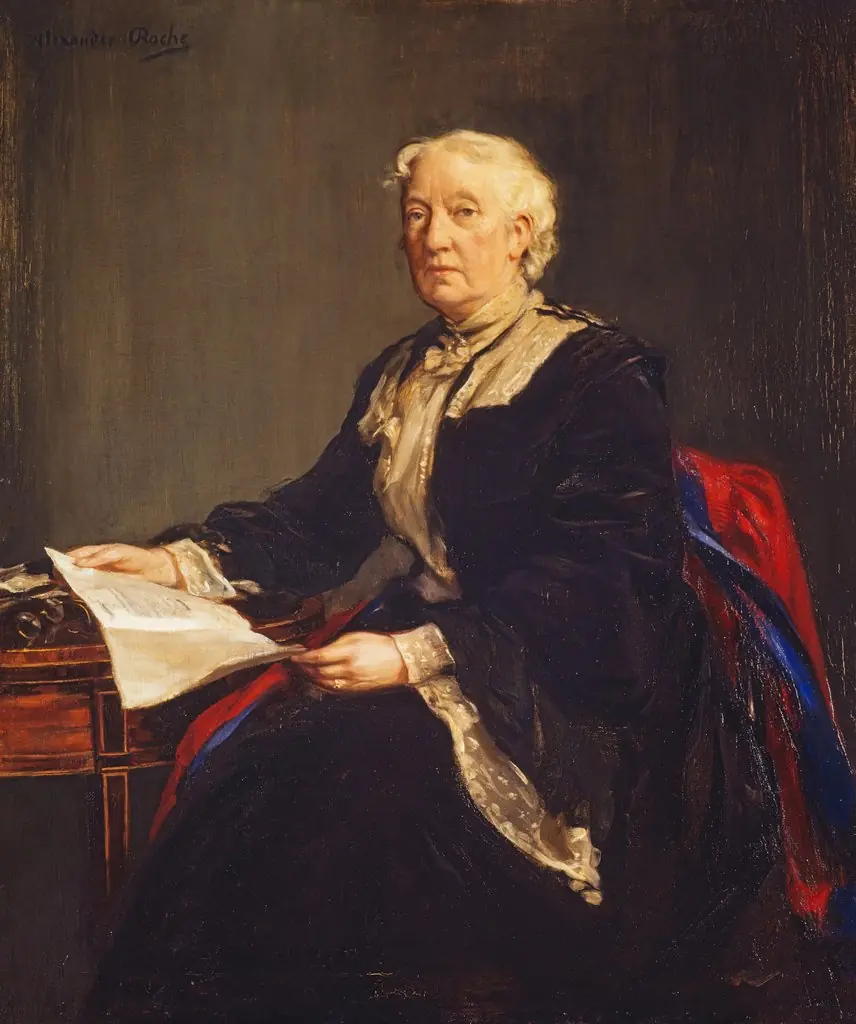 Flora Clift Stevenson, 1840 - 1905. Educationalist and philanthropist
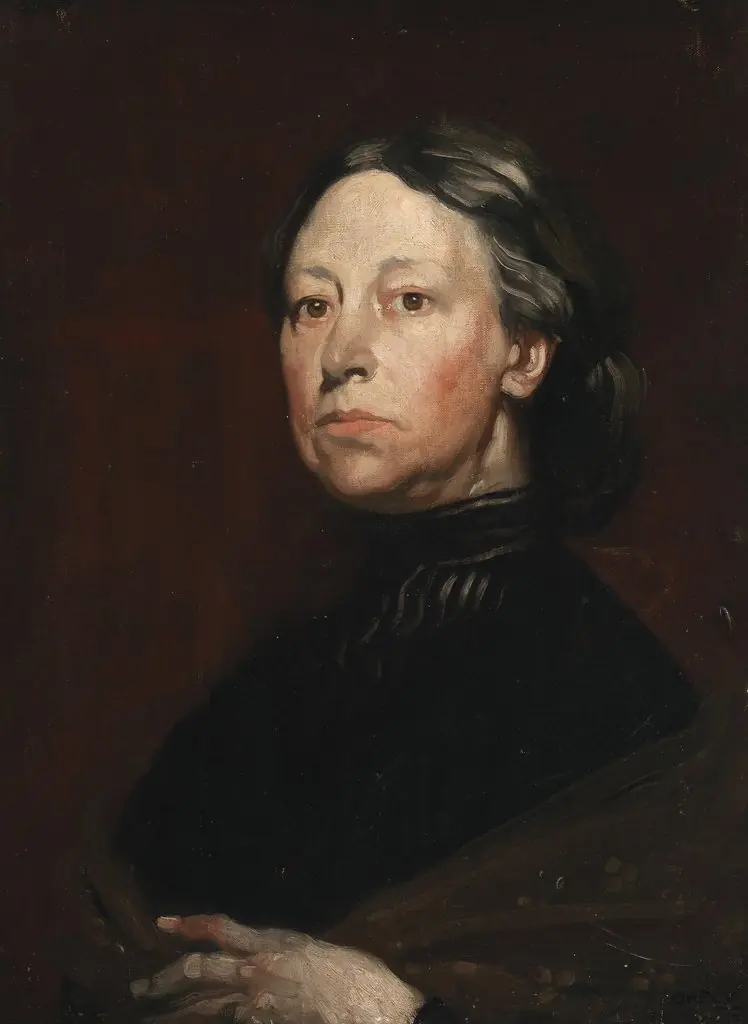 Portrait of Augusta Gregory (1852-1932), Dramatist and Folklorist
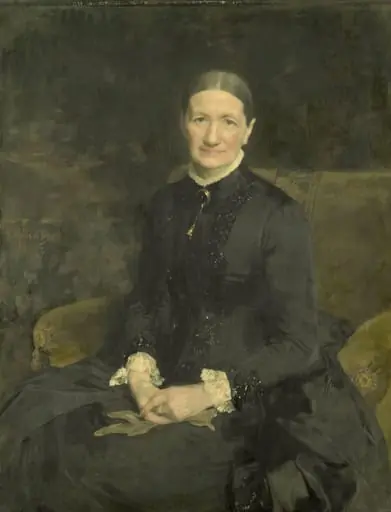 Mrs A.J. Zubli-Maschhaupt
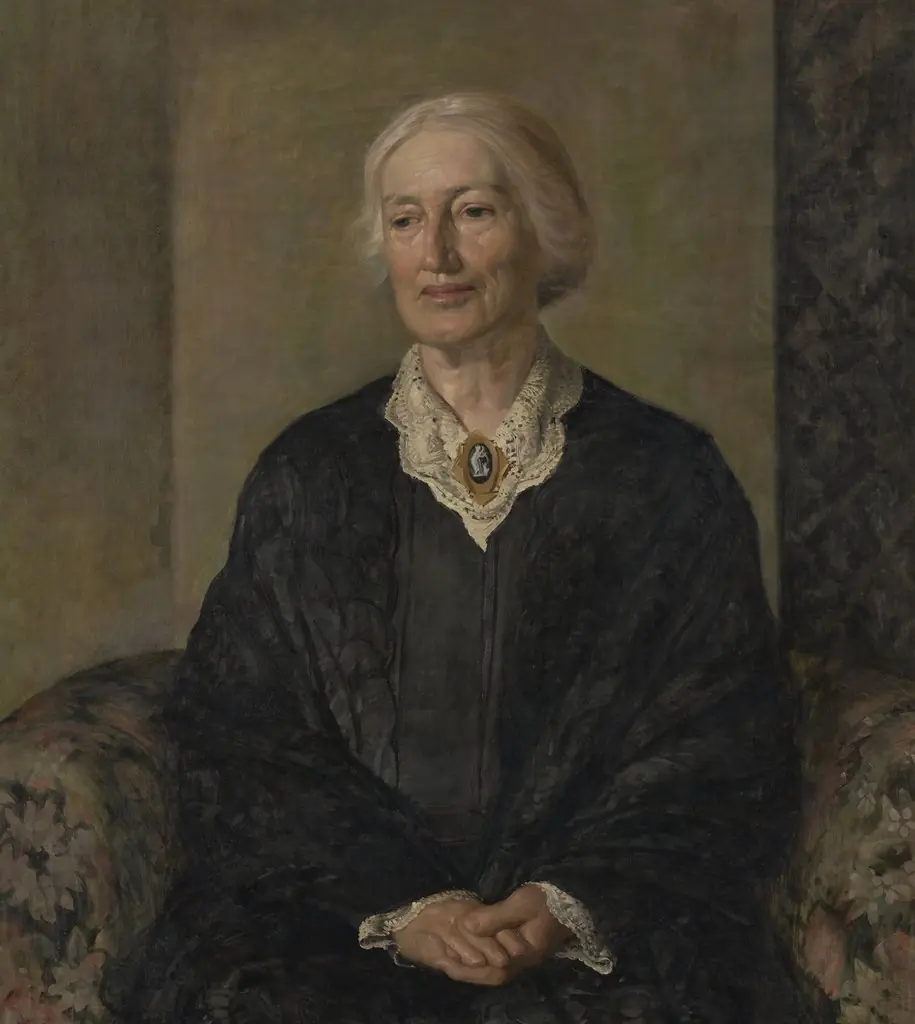 Portrait of Miss D.K. Richmond
 Emily E. Blanchard Shepherd
 Taiteilijan äiti
 Portrait of Mrs. A J Zubli-Maschhaupt