Artwork
Evening Landscape
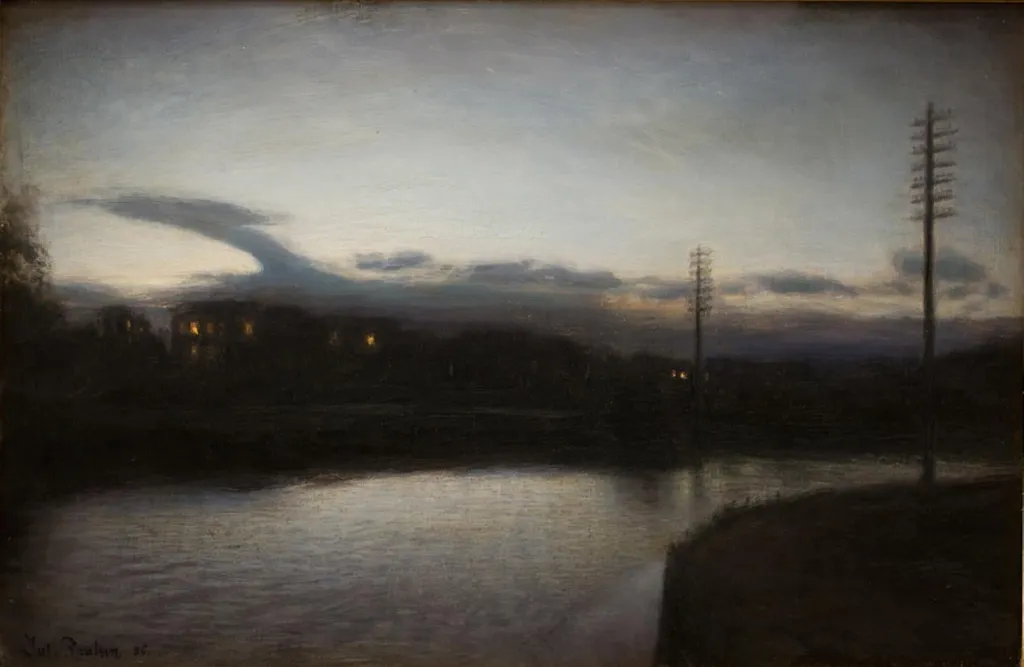
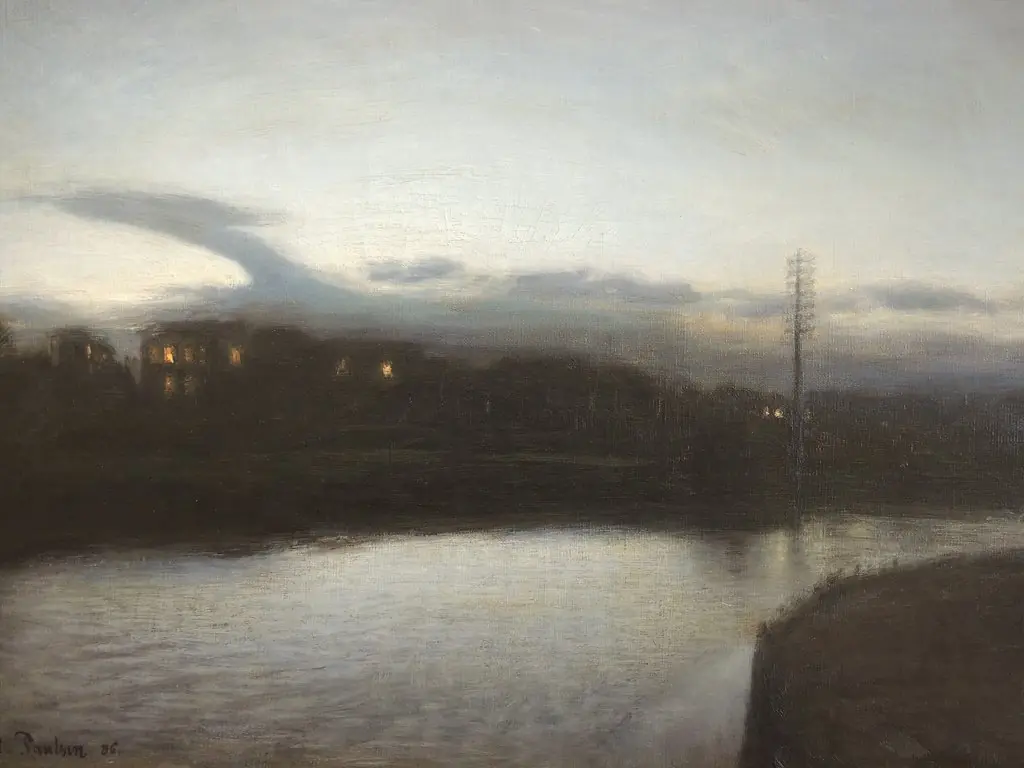
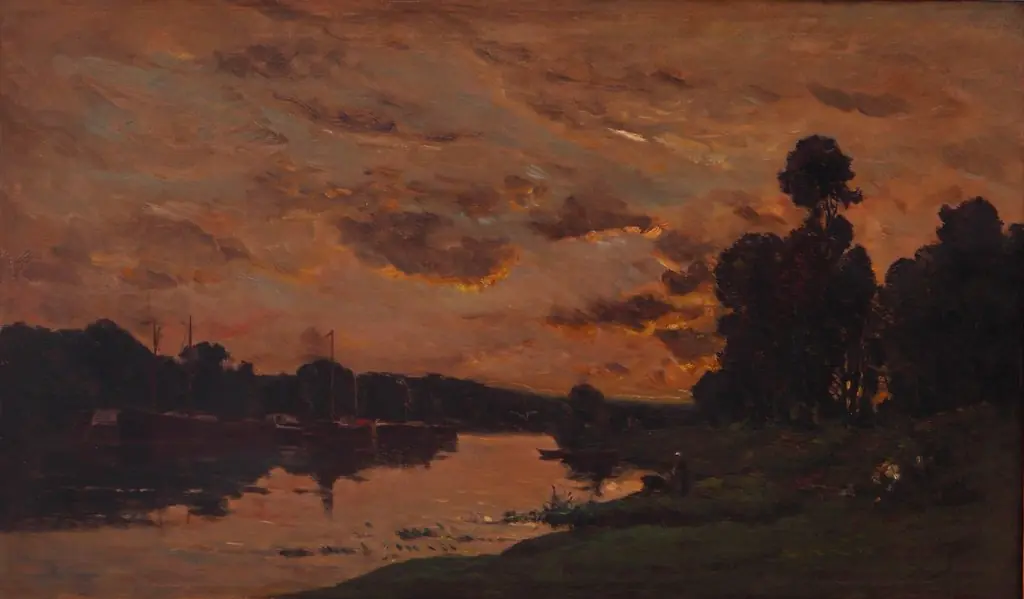
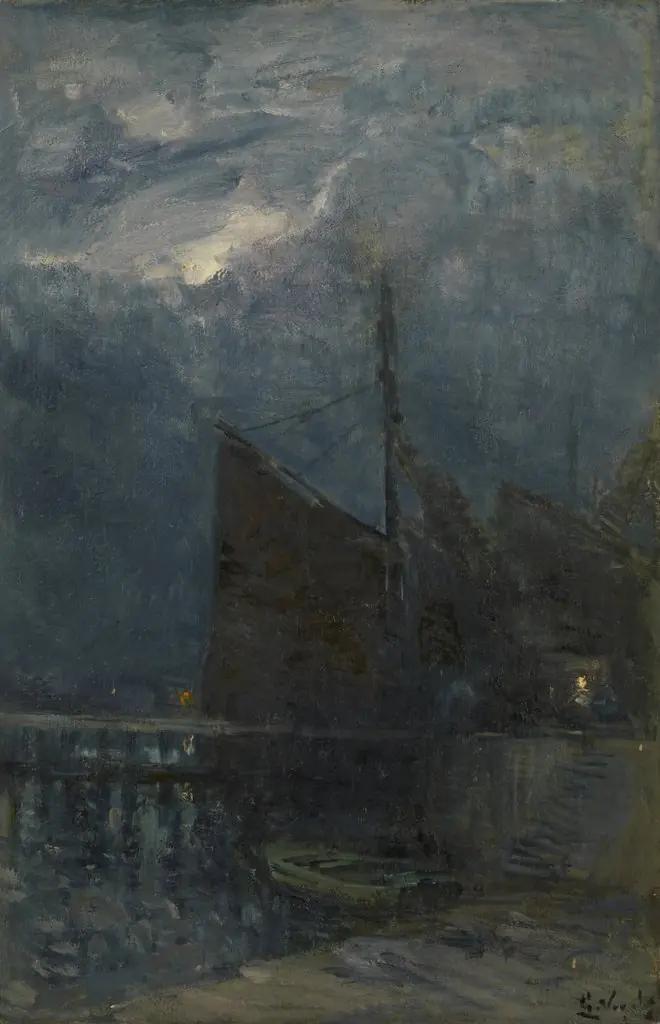
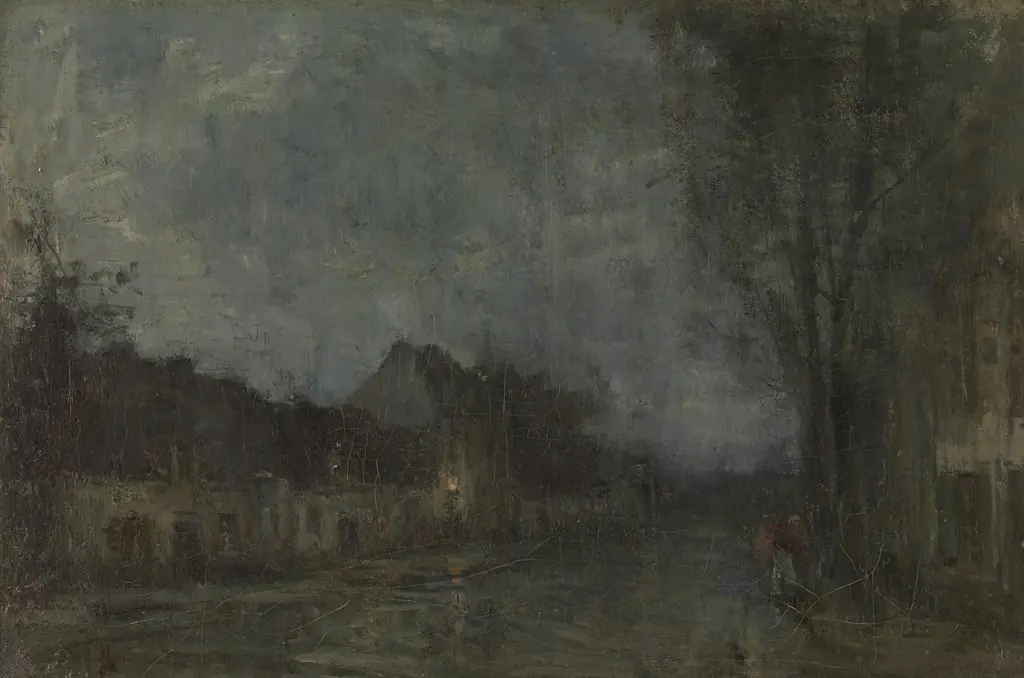
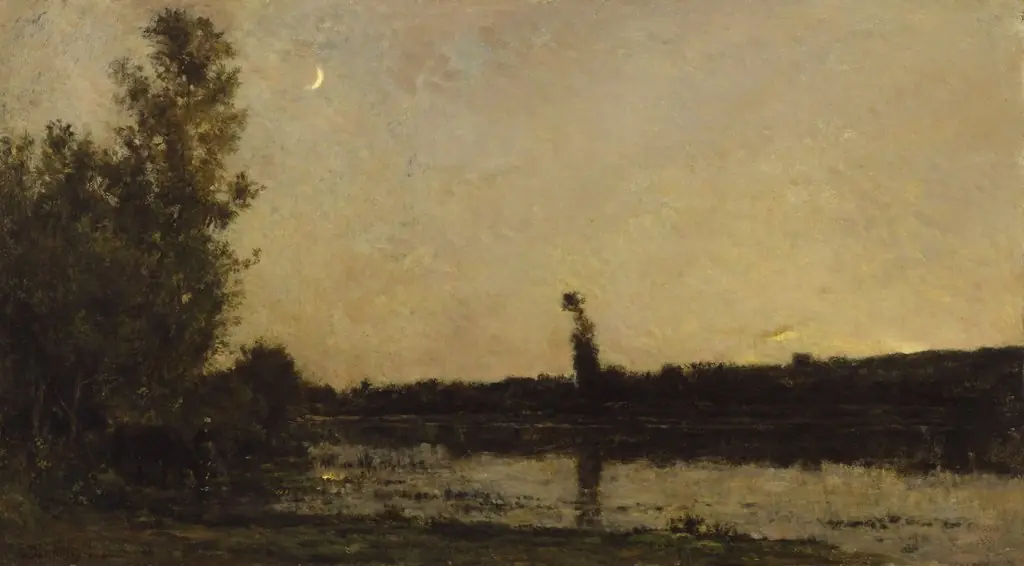
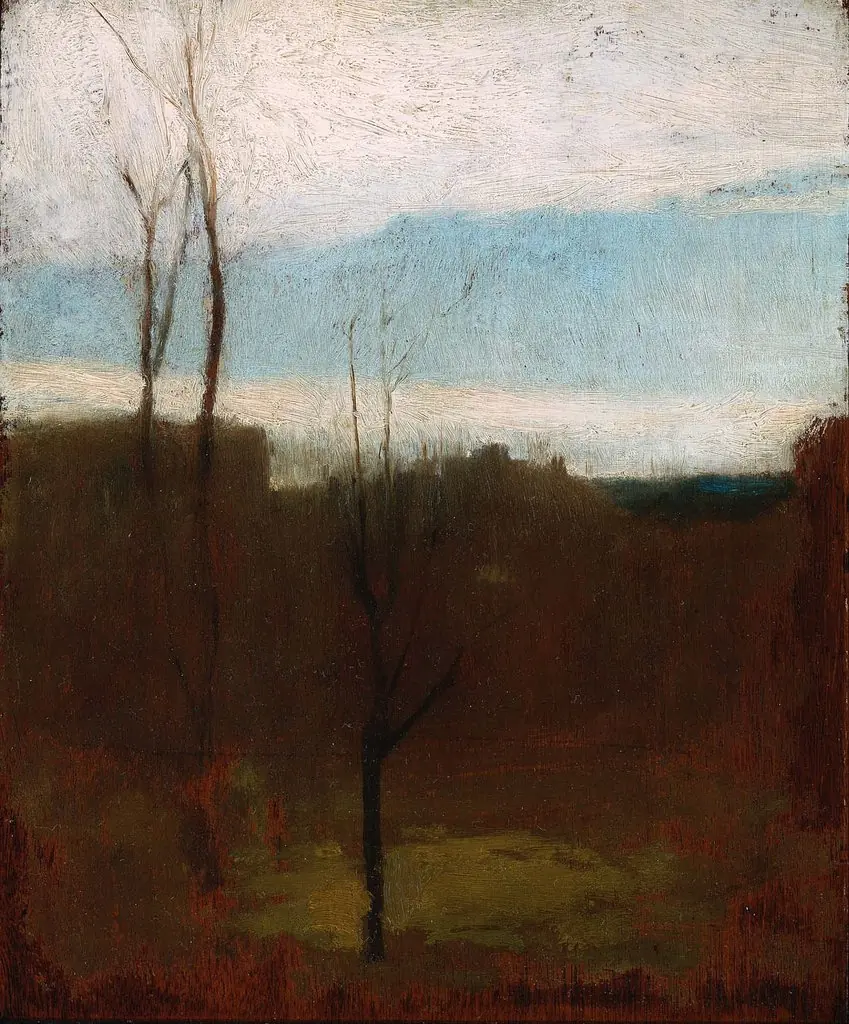
Evening Landscape is an unspecified painting by the Impressionist artist Unknown. It dates from 1886 and is held in the collection of the Statens Museum for Kunst. Created in 1886, this landscape depicts a tranquil riverside at dusk.
About this work
Overview
Created in 1886, this landscape depicts a tranquil riverside at dusk. The work is attributed to an artist active in the late 19th century and is part of the Museum of Ethnography’s collection. Its quiet composition and subdued palette reflect a deliberate focus on atmospheric conditions rather than narrative or human activity, aligning with broader trends in naturalistic painting of the period.
Subject & Meaning
The scene presents an unpopulated riverside at twilight, with calm water mirroring the fading daylight. Two vertical wooden poles near the shore suggest human presence without depicting figures. Distant warm glows hint at habitation, but the emphasis remains on the quiet transition from day to night. The absence of drama or movement underscores a contemplative engagement with the natural world.
Technique & Style
Loose, blended brushwork creates a soft transition between sky, water, and land. Colors are muted, with subtle gradients suggesting twilight’s diffused light. Sharp outlines are avoided; forms are suggested rather than defined. The technique prioritizes the sensory impression of evening—light, atmosphere, and stillness—over precise detail, reflecting a commitment to observed natural conditions.
History & Provenance
The painting entered the Museum of Ethnography’s holdings in the late 19th or early 20th century, likely through acquisition or donation. Its placement in an ethnographic institution, rather than a fine arts museum, suggests its value was initially tied to its documentation of rural or regional environments. Its attribution remains consistent with records from the period of its creation.
Context
Produced during a time when artists across Europe sought to depict ordinary landscapes without idealization, this work aligns with Realist and early Impressionist tendencies. While not part of a major movement’s manifesto, it shares their interest in transient light and unembellished scenes. Its quiet tone contrasts with more dramatic Romantic landscapes, favoring understated observation instead.
Legacy
Though not widely exhibited or reproduced, its presence in an ethnographic collection underscores its role as a record of place and atmosphere.
The painting contributes to a broader archive of 19th-century rural landscapes that document changing perceptions of nature. Though not widely exhibited or reproduced, its presence in an ethnographic collection underscores its role as a record of place and atmosphere. It remains a quiet example of how everyday scenes were rendered with sensitivity to light and mood during a period of artistic transition.
Artist & collection

 Domestic Scene
 Giacomo and Cardinal Marco, investing Andrea, Abbot of San Zeno, with his Benefice
 The Nymph of Fontainebleau
 Portrait of a Woman
 Madonna and Child with Saints in the Enclosed Garden
 Venus and Minerva
 Family Group of Four on Sofa
 Wall painting from Room H of the Villa of P. Fannius Synistor at Boscoreale