Artwork
Midsummer Night at Tisvilde Beach
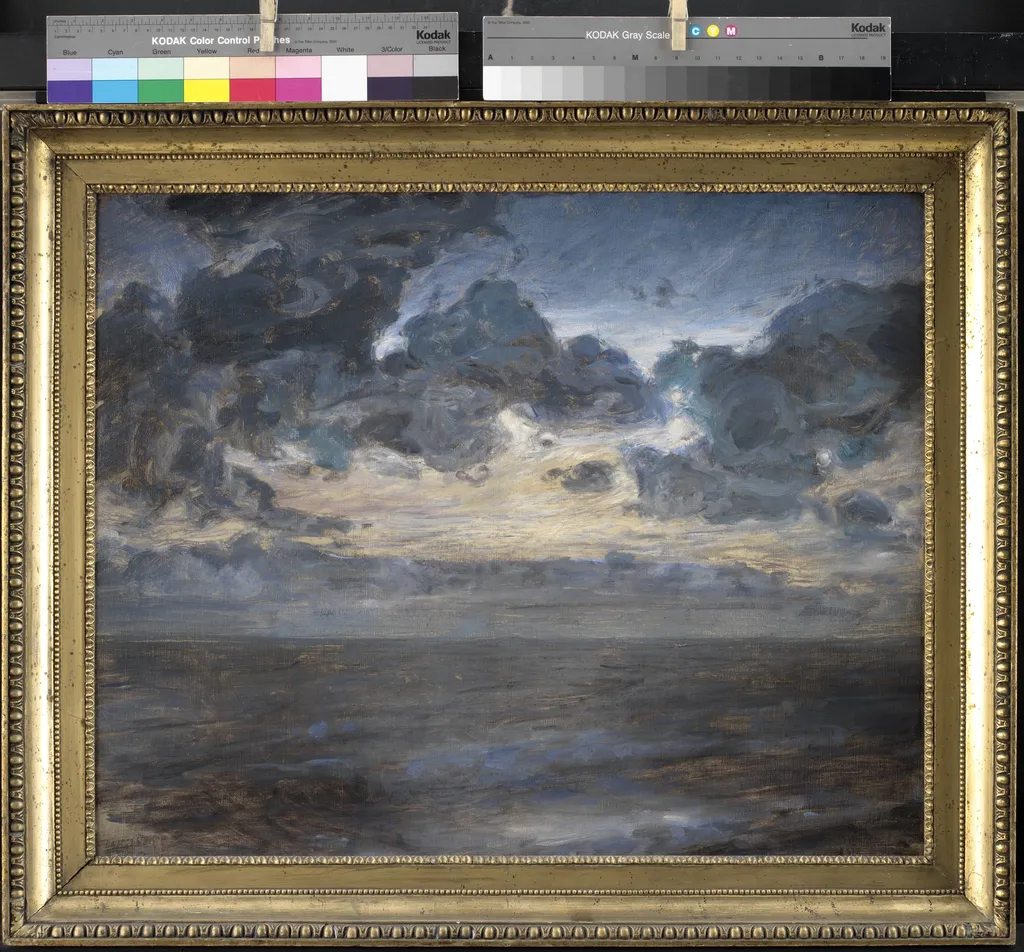
Midsummer Night at Tisvilde Beach is a photography by the Impressionist artist Unknown. It dates from 1886 and is held in the collection of the Statens Museum for Kunst.
About this work
Overview
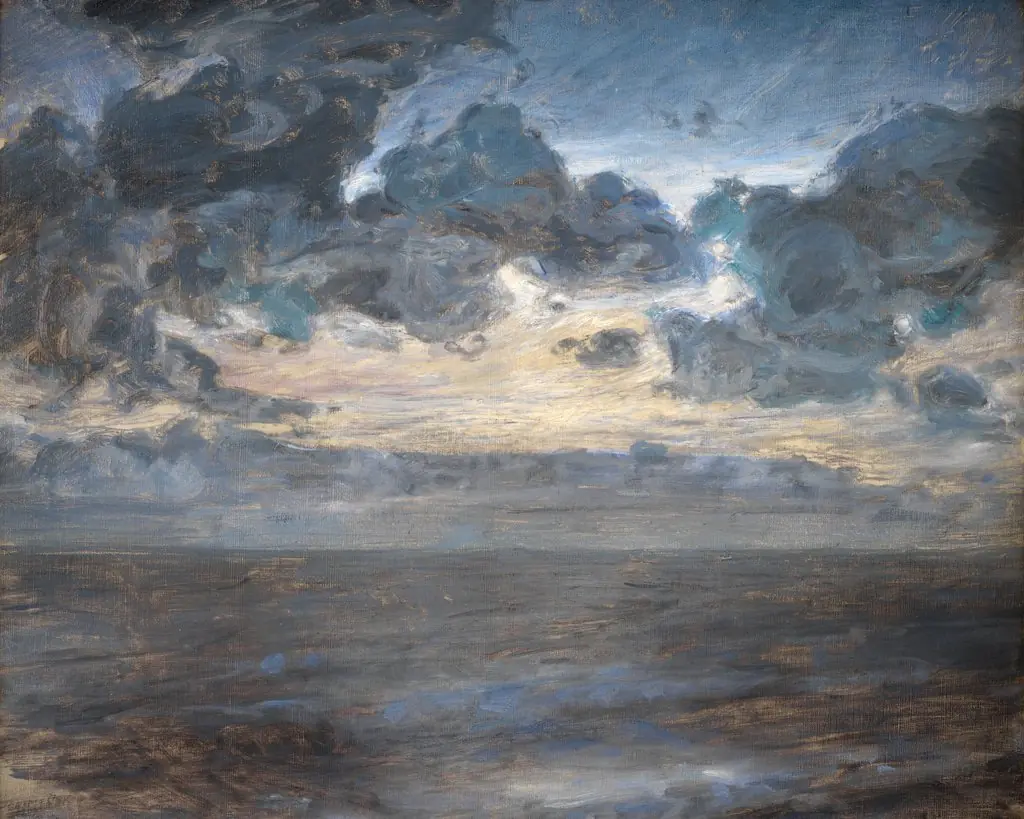
Painted in 1886, Midsummer Night at Tisvilde Beach captures a quiet coastal scene under an overcast sky.
Painted in 1886, Midsummer Night at Tisvilde Beach captures a quiet coastal scene under an overcast sky. The work is attributed to a Danish artist associated with late 19th-century Nordic landscape traditions. It is currently held in the collection of the Museum of Ethnography, though its thematic focus diverges from the institution’s typical ethnographic holdings, suggesting a later acquisition or contextual reclassification.
Subject & Meaning
The painting depicts a solitary stretch of beach at twilight, with no human figures or clear landmarks. The absence of narrative detail invites contemplation of nature’s quietude. The subdued palette and ambiguous horizon suggest a moment suspended between day and night, evoking introspection rather than celebration, despite the title’s reference to midsummer.
Technique & Style
Thick, energetic brushwork defines the sky and shoreline, with layers of gray, blue, and pale white applied in rapid, tactile strokes. The paint retains visible texture, suggesting direct, plein-air execution. Light is suggested through subtle shifts in tone rather than defined highlights, emphasizing atmosphere over detail. The technique aligns with broader Nordic tendencies toward expressive realism rather than pure Impressionism.
History & Provenance
The painting was completed in 1886 during a period of increased artistic interest in Denmark’s coastal landscapes. It entered the Museum of Ethnography’s collection in the 20th century, possibly as part of a broader effort to document national cultural expression. Its presence there, rather than in a fine arts institution, reflects shifting curatorial priorities rather than original intent.
Context
Created during a time when Scandinavian artists were moving away from romanticized landscapes toward more personal, atmospheric interpretations, the work reflects a regional shift toward emotional resonance in nature. While contemporaries in France pursued luminous Impressionism, Danish painters often favored somber tones and textured surfaces to convey mood and transience.
Legacy
Though not widely exhibited outside Denmark, the painting contributes to the understanding of Nordic late-19th-century landscape practice. Its presence in an ethnographic museum underscores how cultural identity was increasingly tied to environmental perception. The work remains a quiet example of how everyday natural scenes were imbued with psychological depth during this period.
Artist & collection

 Domestic Scene
 Giacomo and Cardinal Marco, investing Andrea, Abbot of San Zeno, with his Benefice
 The Nymph of Fontainebleau
 Portrait of a Woman
 Madonna and Child with Saints in the Enclosed Garden
 Venus and Minerva
 Family Group of Four on Sofa
 Wall painting from Room H of the Villa of P. Fannius Synistor at Boscoreale
 Hjemvendende fiskere modtages på Hornbæk Strand
 Forstudie til "Solregn. Gentofte Sø"
 Tisvilde Strand. Gråvejr
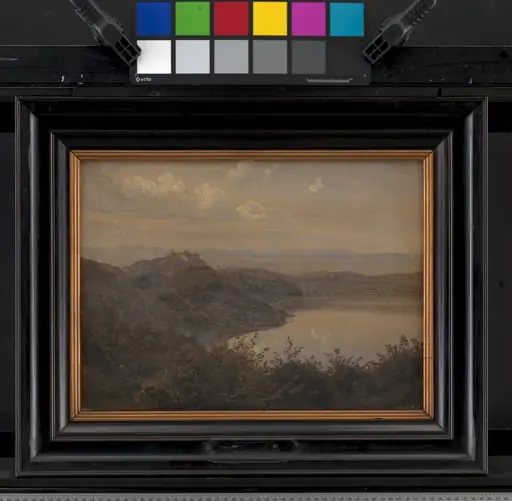 A View towards Castel Gandolfo, Italy
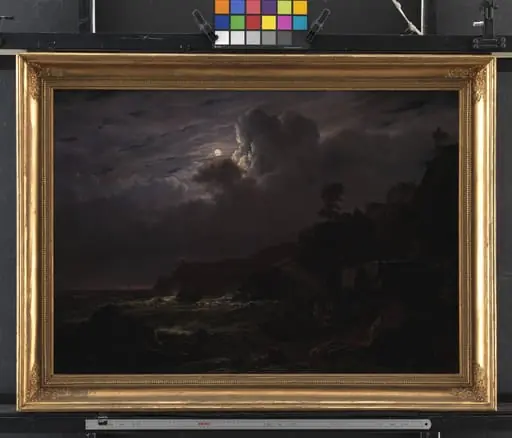 View of Kullen in Sweden. Smugglers Hiding their Goods among the Rocks. Moonlight
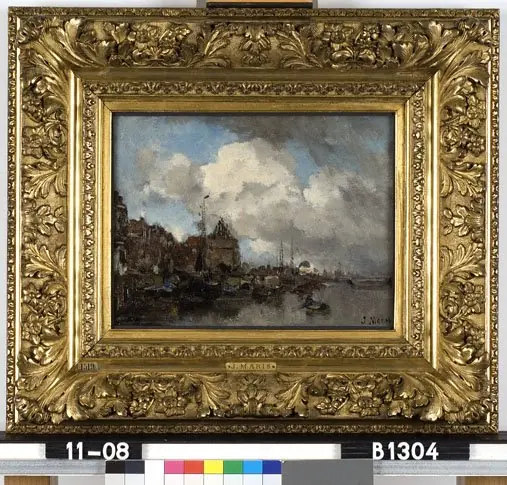 De Schreierstoren te Amsterdam
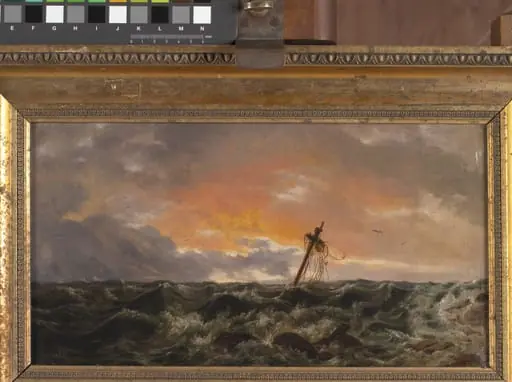 Seascape with a Wreck
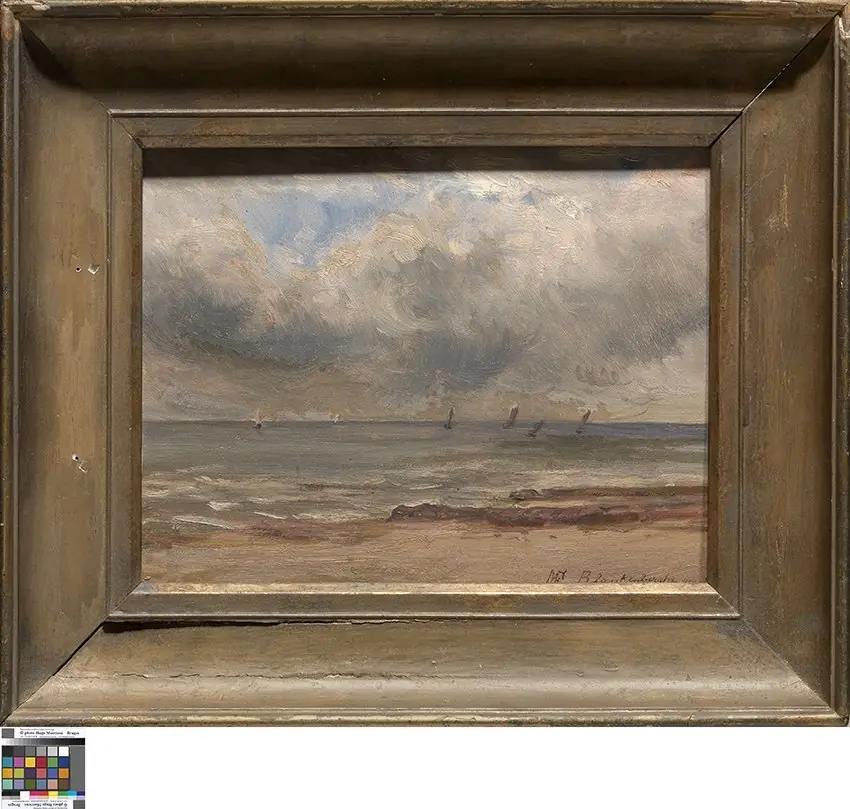 Zeegezicht in Blankenberge
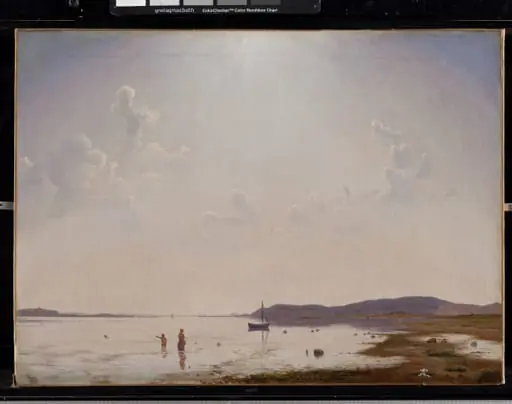 View of Roskilde Fjord near Frederikssund, Zealand
 Moonlight over the Sea
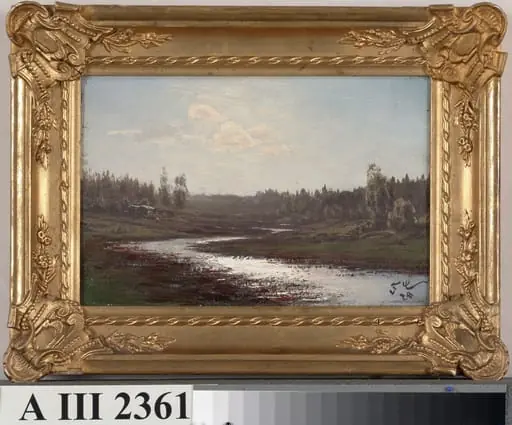 Jokimaisema
 Midsummer Night at Tisvilde Beach