Artwork
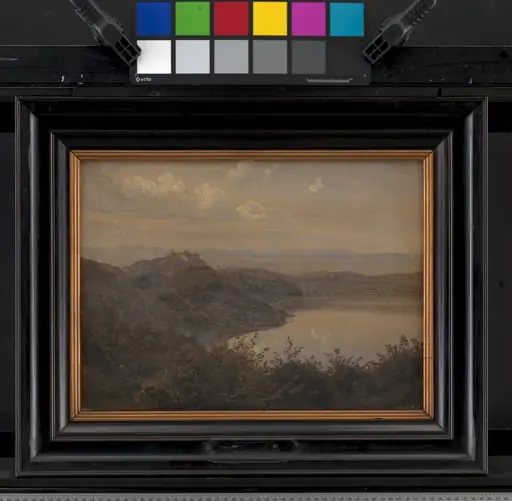
View of Kullen in Sweden. Smugglers Hiding their Goods among the Rocks. Moonlight
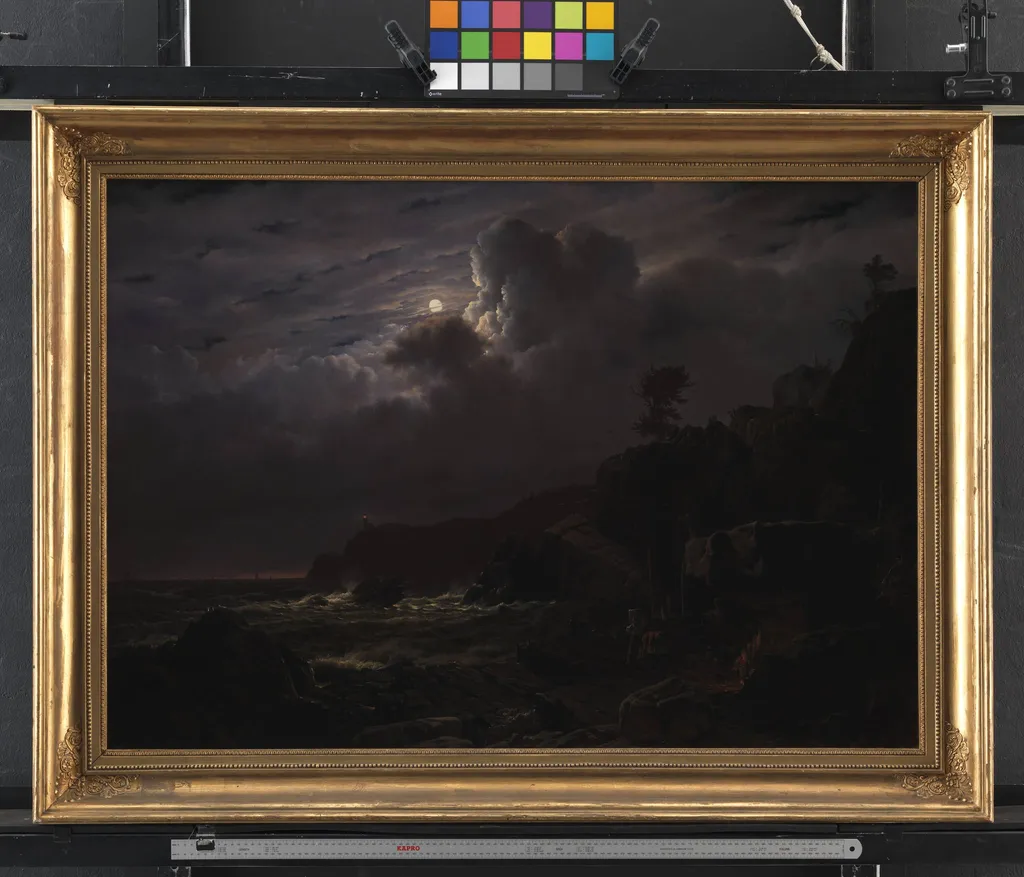
View of Kullen in Sweden. Smugglers Hiding their Goods among the Rocks. Moonlight is a photography by the Romanticist artist Unknown. It dates from 1834 and is held in the collection of the Statens Museum for Kunst. Painted in 1834, this work depicts a coastal scene at Kullen, Sweden, under a moonlit sky.
About this work
Overview
The painting resides in the Museum of Ethnography, where its atmospheric tone aligns with broader 19th-century interests in nature and human transgression.
Painted in 1834, this work depicts a coastal scene at Kullen, Sweden, under a moonlit sky. The artist captures a moment of quiet secrecy along a rugged shoreline, where figures are barely discernible amid the rocks. Though titled as a scene of smuggling, the narrative remains implied rather than explicit. The painting resides in the Museum of Ethnography, where its atmospheric tone aligns with broader 19th-century interests in nature and human transgression.
Subject & Meaning
The painting suggests illicit activity through suggestion rather than detail. Small, shadowed figures are nestled among the rocks, their actions obscured by darkness and distance. The title points to smuggling—a common practice along Sweden’s coast—but the focus remains on the environment: the storm-lit sea, the fractured rocks, and the moon’s weak glow. This ambiguity invites contemplation of secrecy, isolation, and the edge of civilization.
Technique & Style
The artist employs a subdued palette dominated by deep blues, grays, and muted whites to convey the nocturnal setting. Brushwork is loose in the sky and waves, creating movement and turbulence, while the figures are rendered with minimal detail, enhancing their anonymity. Light is used dramatically—not to illuminate, but to carve out pockets of visibility from the surrounding gloom, emphasizing mood over clarity.
History & Provenance
Created in 1834, the work entered the collection of the Museum of Ethnography shortly after its completion. Its origin as a standalone landscape, rather than part of a larger series, suggests personal or regional significance to the artist. No documented commission or public exhibition history is known, and its early ownership remains unrecorded, contributing to its quiet, unassuming presence in the museum’s holdings.
Context
This painting emerged during a period when Scandinavian artists increasingly turned to local landscapes to express national identity and emotional depth. Romanticism’s influence is evident in its emphasis on nature’s power and human insignificance. While coastal smuggling was a real social phenomenon, the work avoids moral judgment, instead presenting the scene as a silent, atmospheric encounter between land, sea, and shadow.
Legacy
Though not widely reproduced or studied, the painting contributes to a quieter strand of Nordic Romanticism focused on solitude and the liminal spaces between law and survival. Its restrained composition and refusal to dramatize the smugglers’ act distinguish it from more sensationalist contemporaries. It endures as a subtle meditation on secrecy, place, and the unseen labor of coastal life.
Artist & collection

 Domestic Scene
 Giacomo and Cardinal Marco, investing Andrea, Abbot of San Zeno, with his Benefice
 The Nymph of Fontainebleau
 Portrait of a Woman
 Madonna and Child with Saints in the Enclosed Garden
 Venus and Minerva
 Family Group of Four on Sofa
 Wall painting from Room H of the Villa of P. Fannius Synistor at Boscoreale
 En shetlandsk fiskerbåd i stormfuldt vejr nord for Orkneyøerne
 Norwegian Landscape with a Rainbow
 The Etsch Valley near Roveredo
 Et skyggefuldt sted i Hestehave ved Frederiksborg
 After Sunset in the Outskirts of a Village
 Summer Evening, Haiko Fiord
 Midsummer Night at Tisvilde Beach
 Landscape with a Waterfall and a Hut
 View of Frederiksværk from Tisvilde Wood, North Zealand
 The Gulf of Naples. Moonlight
 Arcadian Landscape
 A View towards Castel Gandolfo, Italy