Artwork
Gade i Subiaco
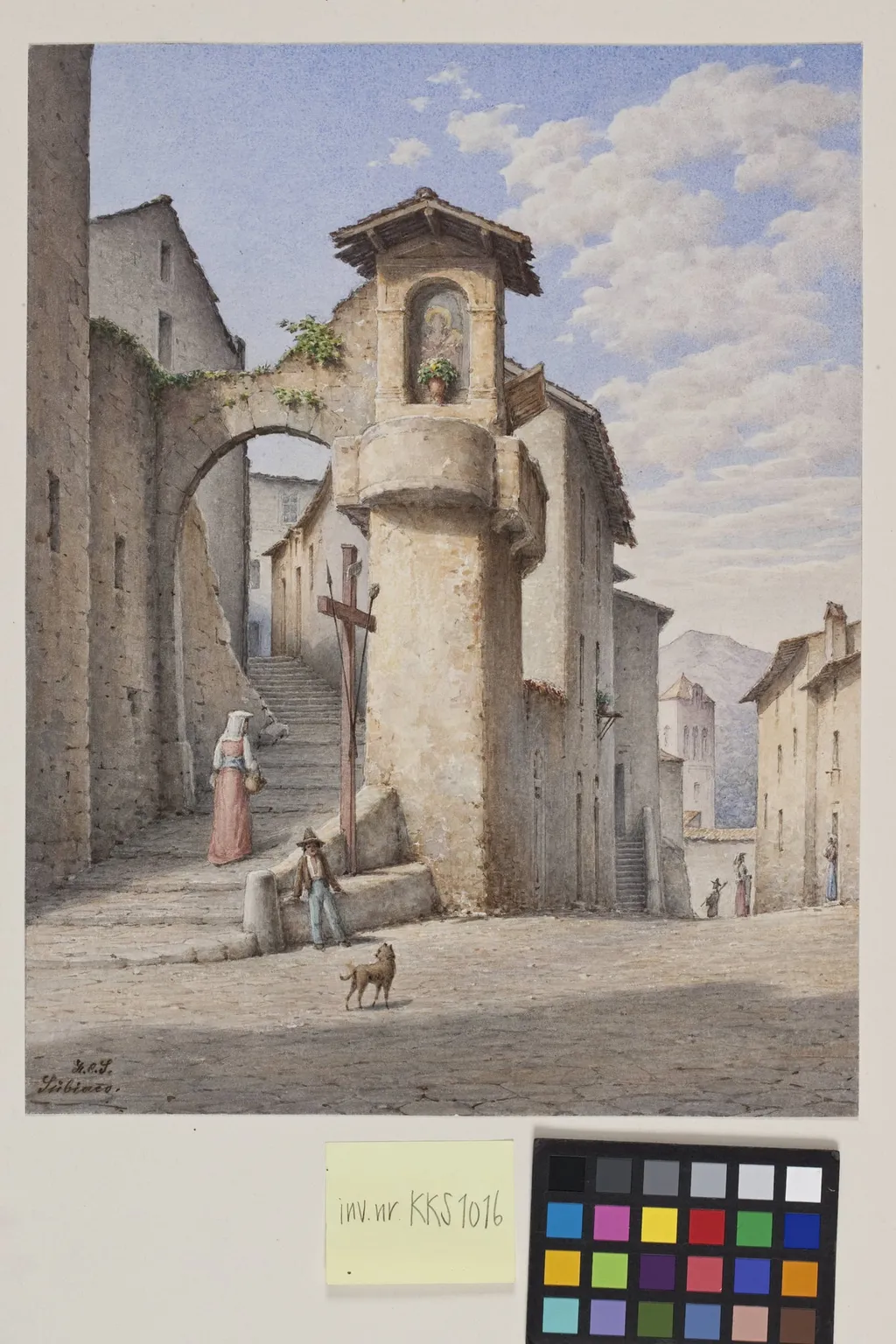
Gade i Subiaco is an unspecified painting by Unknown. It dates from 1850 and is held in the collection of the Statens Museum for Kunst.
About this work
Overview
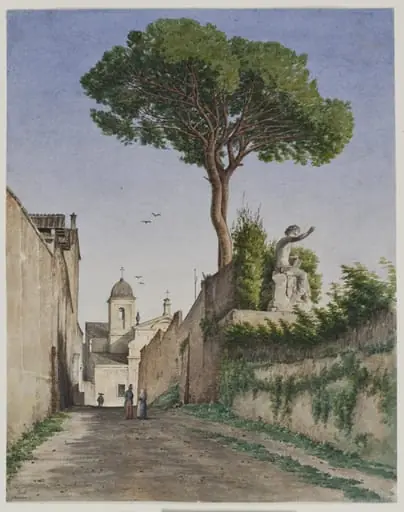
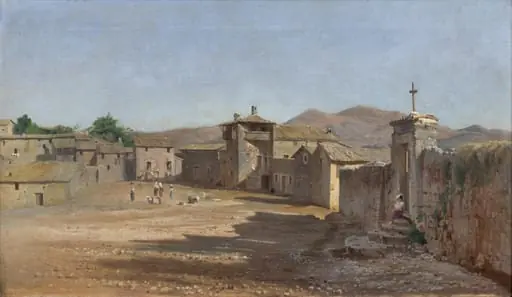
Created around 1850, Gade i Subiaco is a landscape painting depicting a quiet street in the Italian town of Subiaco. The work is held in the collection of the Museum of Ethnography. It captures a moment of everyday life with attention to architectural detail and natural surroundings, reflecting a quiet, observational approach common in mid-19th-century European genre painting.
Subject & Meaning
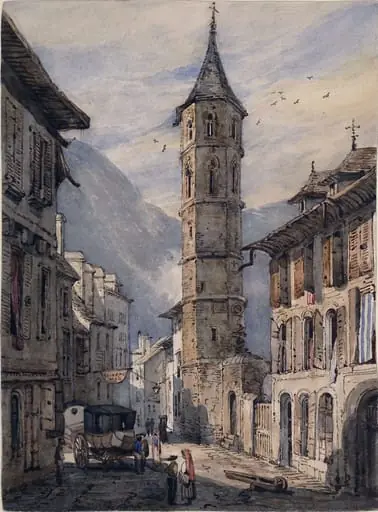
The scene centers on a narrow stone-lined alley leading to a prominent tower housing a small shrine with an image of the Virgin Mary.
The scene centers on a narrow stone-lined alley leading to a prominent tower housing a small shrine with an image of the Virgin Mary. A woman walks along the path while a man rests on the steps beside his dog. These figures suggest routine, devotional, or domestic rhythms of rural life. The presence of the shrine implies a fusion of spiritual and daily existence, common in Italian mountain communities of the period.
Technique & Style
The artist employs soft, atmospheric lighting to model the stone buildings and define the contours of the mountainous backdrop. Cool blues and earth tones unify the composition, while subtle gradations in the sky suggest depth and time of day. Brushwork is restrained, favoring clarity of form over expressive flourish, aligning with a documentary impulse in the depiction of place.
History & Provenance
The painting entered the Museum of Ethnography’s collection in the late 19th or early 20th century, likely as part of a broader effort to document regional European life. Its attribution to 10827_person remains consistent in institutional records, though little is known about the artist’s broader career or the circumstances of the work’s creation.
Context
Subiaco, located in the Lazio region, was known for its monastic heritage and isolated mountain setting. Paintings like this emerged during a period when artists and collectors increasingly turned to rural Italy as a subject of cultural preservation. The inclusion of religious iconography reflects the enduring role of Catholic tradition in daily life, even in modest communities.
Legacy
Gade i Subiaco contributes to a modest but significant body of 19th-century works that record vernacular architecture and local customs without romanticization. It remains a quiet testament to the visual documentation of everyday life in provincial Italy, valued more for its observational fidelity than for artistic innovation.
Artist & collection

 Domestic Scene
 Giacomo and Cardinal Marco, investing Andrea, Abbot of San Zeno, with his Benefice
 The Nymph of Fontainebleau
 Portrait of a Woman
 Madonna and Child with Saints in the Enclosed Garden
 Venus and Minerva
 Family Group of Four on Sofa
 Wall painting from Room H of the Villa of P. Fannius Synistor at Boscoreale